Tag Archives: love

Three Stories of Me

For my first regular blog post of 2026, I wanted to do something a little different than I have in the past. The Sector M blog has seen a lot of increased traffic over the last year and some change, so I’ve wanted to write a post that has a kind of getting-to-know-you vibe to it. This is that post.

So, I present to you three stories about me to give you some insight into who I am on a personal level. To some degree, I try to do that with all my blogs, as I write about things that I like and love, but this one isn’t all about pop-culture, games, or geeky stuff. The first story definitely is, but I think you’ll see why I included it here. With that in mind, let’s dive in, shall we?
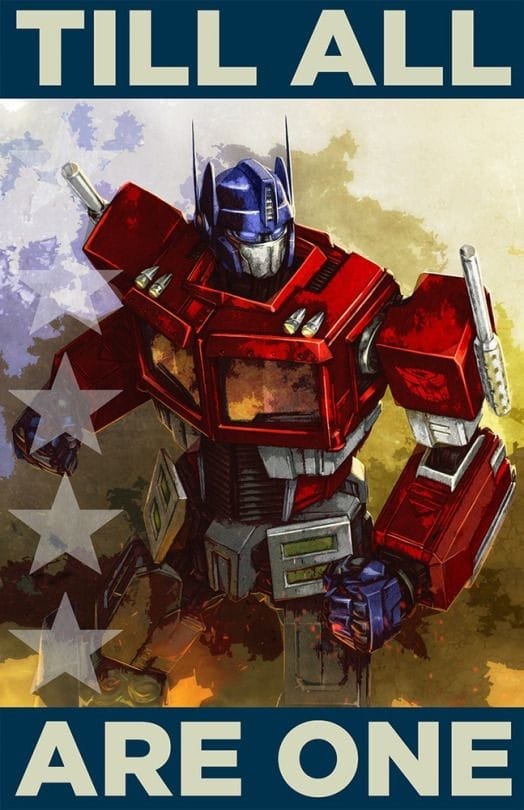
“Freedom is the right of all sentient beings.”

On Meeting My Hero

To say that I love Transformers is a bit of an understatement. Do a search for it on this blog, and you’ll see what I mean. A big part of my love for the IP is, of course, Optimus Prime. We get so few characters like him in popular fiction. He’s a wise, selfless, courageous, and honorable leader along the same lines as Captain America and Superman. In short, a paragon, and while an alien robot that transforms into a semi might seem like a strange role model, Optimus was the one I wanted to be like as a kid. (Spoilers, I never grew out of that.)

Years ago, I had the chance to meet Peter Cullen, the voice of Optimus Prime, at BotCon. Because of the number of attendees, they had to limit the number of autographs he would sign to one hundred, and he was slated to sign for only an hour. There was a lottery to determine who would be in line to get an autograph. Luck was not on my side that day, as I didn’t get an invite. However, my friend Tommy did get in, attributing this to his natural “smuggler’s luck.” (He’s also a huge Star Wars fan.) As he was more of a Decepticon-aligned fan, with Soundwave being a particular favorite, he let me have his pass. I will be forever in Tommy’s debt for giving me this opportunity.
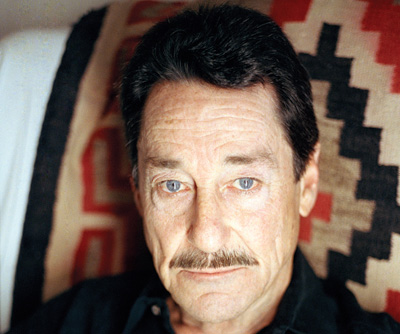
The voice of a generation.

And so, I found myself in line, waiting to see Peter Cullen, a moment I had anticipated most of my childhood and all of adulthood. Since the session was only sixty minutes and there were one hundred people, there wouldn’t be much time per person. I could see him up ahead, graciously signing Optimus-themed toys, comics, and so forth. I knew that I would only have a few seconds with him. I was not the only one with the dream of meeting him, and I didn’t want to be the one who might gum up the line and cause other people to have their moment minimized or lessened.

When the moment came, I walked up and handed him a copy of IDW’s For all Mankind, which has a super-cool cover featuring Optimus. He asked my name, and as he was signing, I said something along these lines:

“When I was a kid, Optimus was the example to me of what it meant to be a good person. Now that I’m a parent, a love of the character you brought to life is something we share as father and son.”

To my surprise, he stopped writing, and set down his Sharpie, looking me in the eyes.

Really?”

“Really,” I said. I was also really trying not to burst into tears in front of him.

He shook my hand and said, “Thank you, Matt. Thank you for sharing that with me. It means a lot to hear that.”

The thing is, his regular speaking voice does not sound like Prime. He tends to lower his voice and drag his vowels to find the character, but I could still hear it in his voice in that moment. He finished signing my book, and then I had to leave to give the next person in line their moment. 
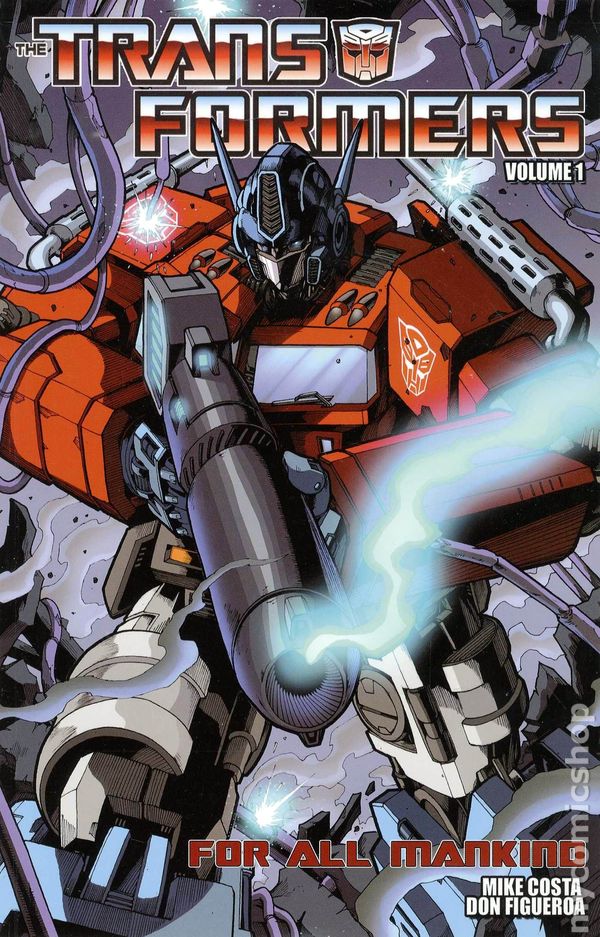
This is what the cover looked like.

Of course, I wanted to tell him what the character meant to me, even as an adult, of how Optimus’s death in Transformers: The Movie wrecked me and left lingering emotional scars, or speak to what an inspiration his work has meant to me pretty much my whole life. I famously don’t like the Michael Bay Transformers movies, but having him back to play Optimus was/is a gift. I’ll never deny that.

I wasn’t able to do any of that, unfortunately, but I was able to communicate to Peter Cullen in extreme shorthand how much I love the character he brought to life.

Later on, in one of the panels he attended, he told the crowd about how his late brother (whose vocal stylings had greatly influenced Optimus) had said to him on the day of his big audition that he should play this heroic truck as someone who “has the strength to be gentle.” I’ve never forgotten that.

I’m not sure if I’ll ever cross paths with Peter Cullen again, but I will always, always be grateful for the chance I had to meet my hero. So, Tommy, if our situation is ever reversed, and it’s Frank Welker who’s signing, consider the invitation yours without question.

The Greatest Compliment I’ve Ever Received

As a freelance writer, you often bounce around from assignment to assignment, rarely ever staying in one place for more than a few months at a time. It’s a great way to get experience in a number of different fields as well as meet a bunch of people.

Well, one of my clients a few years back was Michael’s, the crafting store. I worked at their corporate headquarters here in DFW as one of their copywriters for emails, digital marketing, and in-store signage.

The break room/kitchen area was a fair distance from the writer’s bullpen. Often we would go in groups since it was a bit of a trek, but sometimes I would go by myself just to stretch my legs or step away from my desk to figure out how to tackle the next objective. Near the breakroom, I noticed there was an older lady at one of the desks who would always smile when she saw me. Every time, without fail, a beaming, genuine smile awaited me if I stepped away to refill my water bottle or make up some cinnamon tea.

This was my go-to during that winter season.

Working for a retail store chain, the holidays are an especially busy time, with big pushes for Black Friday, Christmas, etc. One day, during all that chaos, when the stress of the job was starting to take its toll, I went to the breakroom. This time, the lady motioned for me to come over. That’s when she said it:

“I’ve been trying to build up the courage to tell you this for weeks, but I wanted you to know that you look exactly like my brother. The way you walk, your voice, everything about you is just like him. I lost him five years ago, but when I look at you, just for a moment, it’s like I have him back.”

I was, of course, gobsmacked. For all the times I had seen her in passing, we had never really spoken outside of a passing “hello.” Now I knew the reason behind that bright smile every time I passed. I asked her if she wanted a hug, and she said yes. I gave her one gladly.

It just goes to show that we can sometimes affect each other in ways we don’t even realize, and not always for the worse. I left that job a little while later, and we never had the chance to speak again, but that is absolutely the best compliment I’ve ever been handed. It wasn’t for my writing, or anything I did, but simply for just being who I am. I’ll never forget it.
This is what it looked like when I was a kid.

The Quest for Big League Chew

Okay, both of those stories had a teary kind of vibe. Let’s go for something a bit lighter now.

Years ago, when my oldest was around 10, we found ourselves at a local toy store in early December. Ostensibly, we were there on a fact-finding mission for Christmas. My oldest was never one for action figures or playsets, certainly not in the way that I had been when I was a kid.

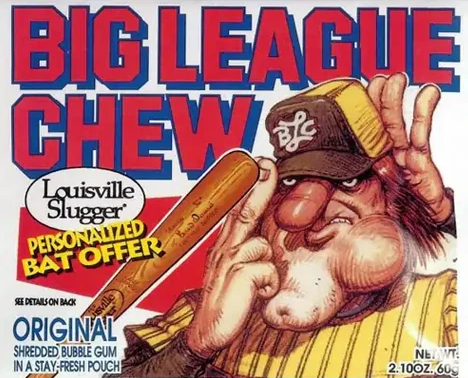
So, we took a pass through the toy store, but ultimately we didn’t find anything that really struck a spark for him. He did, however, really want some Big League Chew. If you’re not familiar with this product, it’s bubble gum that’s shredded into strips to approximate chewing tobacco. Even the packaging looks like what actual chewing tobacco comes in. The “Big League” in the name comes from the general baseball theme of it. When I was a kiddo, there was a cartoony baseball pitcher on the mound, his cheeks swollen to look like he’s already chewing. Today, the main baseball player is more square jawed with just a faint hint of a stubbled, ’80s action hero, though the packaging now features a wide array of different players to match their expansive flavor selection. In essence, Big League Chew is to actual chewing tobacco what candy cigarettes are to real cigarettes.
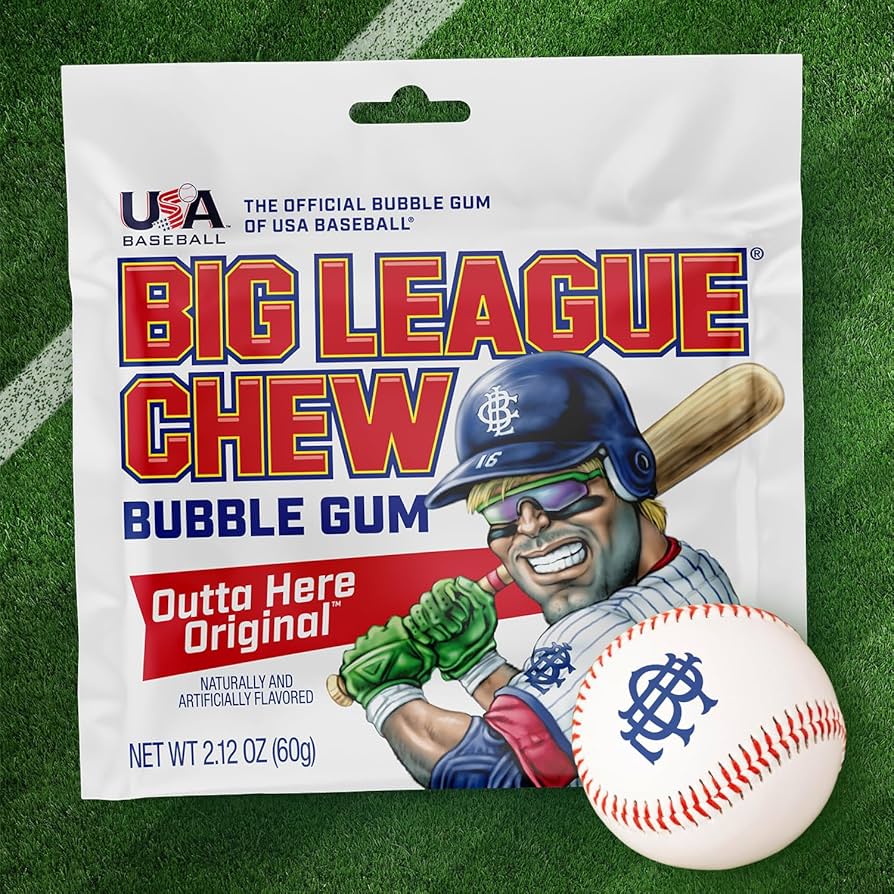
So, the kiddo only wanted a pack of Big League Chew. I took one look at the lines, which were already about nine or ten deep at every register. Each cart was largely full, and I estimated that we were in for at least 45 minutes of standing in line, if not a full hour, all for a single packet of Big League Chew. I presented my argument to the kid like this: Let’s not wait in those long lines. Let’s put the Big League Chew back, and we’ll stop by the gas station on our way home and get you some.

He agreed, so we left the store empty handed. I went to the aforementioned gas station, a place I was sure I had seen Big League Chew in the past, but they didn’t have any on the shelves. No problem. We went to our pharmacy a little farther away, another place I was sure I had seen it sold before. No luck there, either. I’m not sure how many stores we went to in order to secure at least one packet of the gum. I think it was around five or six, and we struck out each time (to use a baseball metaphor).

It was almost as if invoking the ‘we can get it anywhere’ mentality meant that the universe was obligated to grant me my own personal version of the Mandela Effect. Suddenly, Big League Chew had ceased to exist in my timeline.
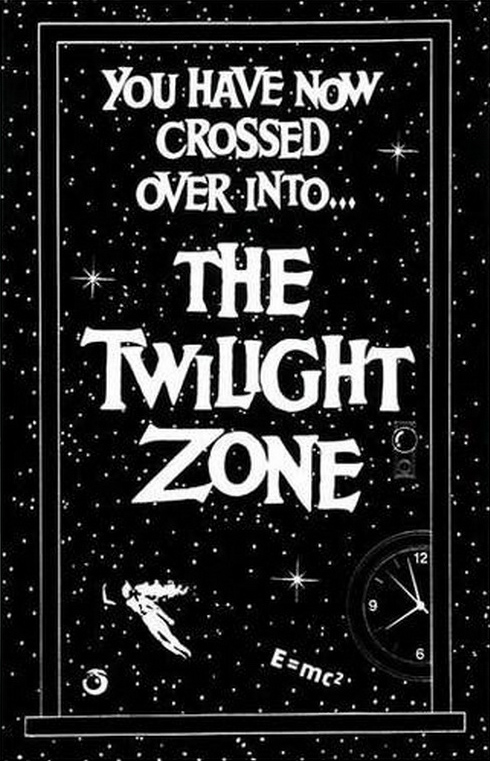
A dimension of sight and sound…but noticeably light on baseball-themed chewing gum.

Finally, we admitted defeat and returned home, having failed in our quest. I did promise him that the next time we found Big League Chew (assuming it ever reemerged into existence), I would get him several packs of it to make up for this bewildering dearth of the stuff.

Eventually, I did find a place that had some and was able to make good on my promise. The epilogue to this story is that my oldest, without realizing it, had just signed up for a lifetime supply of Big League Chew. To this day, at every Christmas, he gets at least one packet in his stocking. Sometimes I will even disguise another gift like money or birthday cards in an empty packet of Big League Chew.

He has since admitted that he doesn’t even remember the original incident I described here, but be assured, gentle reader, that I will likely remember this particular misadventure longer than I will remember my own name.

Final Thoughts

There you have it, folks — three stories of me, Matt Carson. I appreciate you tuning in to the blog even when I’m not talking about strange headcanon or other fanboy-related topics. I really enjoyed writing this one. Sharing my experiences of things like this is a rarity on this blog, and I may do more of it in the future. I suppose only time will tell.

Thanks for reading!


Of Obituaries and Empathy

Here’s a fact about yours truly you may not know: My writing career began at a metropolitan newspaper … as an obituary writer. I was 18, just starting out in college, and was recruited by the instructor of my Mass Communications class.

I stayed at this job for more than three years while I went to school. Once I graduated, I went into the world of marketing and advertising, where I have largely remained. Well, at my day job recently, I wrote an obituary for a prior employee who had passed away. For a moment, I dusted off that skillset of where I started out as a writer. It was a sad duty, but one I accepted, for reasons that I will get into later in this post.

While this was all on my mind, I wanted to put down in words some of the things I learned in this early role, why I ultimately left it, and why I think that obituaries and funeral services, in general, are important.

Life and Death in the Obit Department

For the most part, I was just a writer at a desk, working on a computer like everyone else, but there were additional elements that made the job emotionally challenging. We had a random number of obituaries that would come in each day, and this job taught me about deadlines. Do whatever you need to do, just make sure your copy is in by 3:00.

We would verify all the elements of an obituary with the funeral home, often just the spelling of a name that looked off, or a birthday if the one listed on the intake form didn’t match up, things like that. Most of the time, we would just call up the funeral home and speak to one of their representatives, but sometimes we would need to contact the family.

Understand that these were people who had lost a loved one a day or two prior to this call, or even that same day. They were often confused, angry and still trying to wrap their head around their loss, so we had to be very gentle with them. While we had to remain professional, everyone understood that a dose of empathy and understanding could go a long way.

Perhaps the most heartbreaking part was when they would show up to the office to deliver a photo of their loved one. They might even look fine and composed when they walked through the door. It was the moment that they handed the photo over that they almost always started crying. That act was what brought the realization of their grief to the forefront for them. It made the loss real. We had a special side room with a box of tissues and two chairs to give them space to compose themselves. I must’ve seen this scene play out dozens of times during my tenure there.

It wasn’t all bad, however. Because we dealt with dozens of names per day, there were times we started to see emerging trends in when a person was born and the theme of their name. For instance, from about 1908 to the early 1920s, it became popular to name girls after precious stones. Pearl, Emerald, Opal, and so forth. My great-grandmother, who was born in 1911, was named Ruby.

We also determined that the average age of the incoming obituaries was around 77, which was skewed every once in a while by a younger person, usually a teenager, who tragically died in a car wreck or a similar accident.

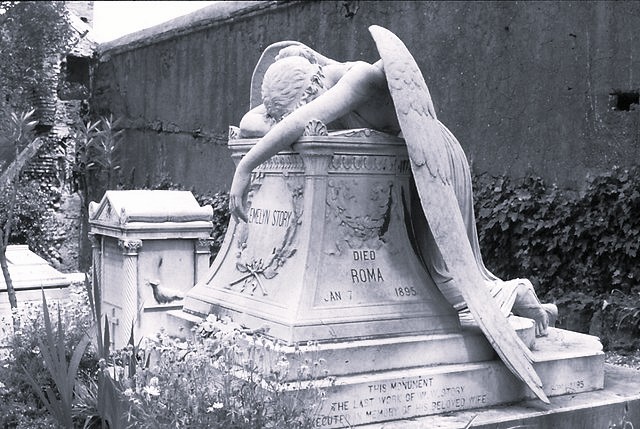
Of course there were exceptions.  

Why I Stopped

Much of what I learned about journalism in those early days drove home the idea of professional detachment, of learning and reporting the facts without getting too close as that might harm your objectivity. That wasn’t always easy when you were dealing with grieving families on a daily basis. Even when they would sometimes call up the office and yell and scream at us for getting something wrong (whether it was actually wrong or not), I knew that was just their grief talking. I still had a job to do, and I couldn’t get too wrapped up in any one case or else I simply wouldn’t be able to function in that space.

As the saying goes, it was bound to happen, and one day it did. I received an obituary for an eight-year-old boy. Any time I received an obit in my queue that was in the single digits, it warranted a second look, just to make sure that neither the family nor the funeral home had left out a digit.

This one came with the photo, an Olan Mills portrait of the kid. And let me tell you, this photo was so good that it looked like one that might come with a wallet or a blank picture frame. He had a big smile on his face like he was about to burst out laughing, a smile that was reflected in his eyes. He just looked so full of life. I was immediately saddened just by seeing this boy who should’ve still been alive, but wasn’t. My professional detachment took a major hit. All through the day, I was haunted by the thought of this boy. Often, the cause of death wasn’t reported to us, so I never found out what had taken him.

As I worked through this obituary, I found that there was some inconsistency in the information that was provided. For the life of me, I don’t remember what it was, perhaps a family member’s name that looked misspelled or a mismatch between the day of the week for services and the day of the month. I called the funeral home, but no one picked up. Standard procedure was to then call the family. This boy had lived with his family in Alaska, so I dialed the number.

This was long enough ago that folks still had answering machines. Well, guess whose voice greeted me, inviting me to leave my name and number after the beep? I sat there at my desk, looking down at his photo while that boy’s voice spoke to me on the phone, and his voice exactly matched his photo. My detachment shattered at that point. I can’t remember now if I even left a message. I likely did, but it was suddenly my turn to use the side room to try to compose myself.

I never looked at the job the same way again. Sometimes in the hustle to meet deadlines, the names and dates and associations all blurred together. Sometimes you stopped seeing them as people and viewed them as just line items on a list, as tasks that needed to be completed. This little boy stopped me in my tracks, giving me a sharp reminder that each name was attached to a family that was morning their loss. But how could something as simple as an obituary encapsulate the fullness and nuance of someone’s life? The truth was it couldn’t.

It wouldn’t.

It shouldn’t. 

I limped along in this job for another few months, but I knew I was done. I went to work for a local phone company, and while there were a few opportunities for me to come back to the obit department along the way, I never did.   

Why They Are Important

Obituaries may be a flawed and limited way to mark someone’s passing, but time and reflection have changed my attitudes toward them. The same goes with funerals and memorial services. They are sad affairs, of course, but they help us frame the loss in our minds when everything seems in chaos. They are a necessary step to help us mourn and begin to heal.

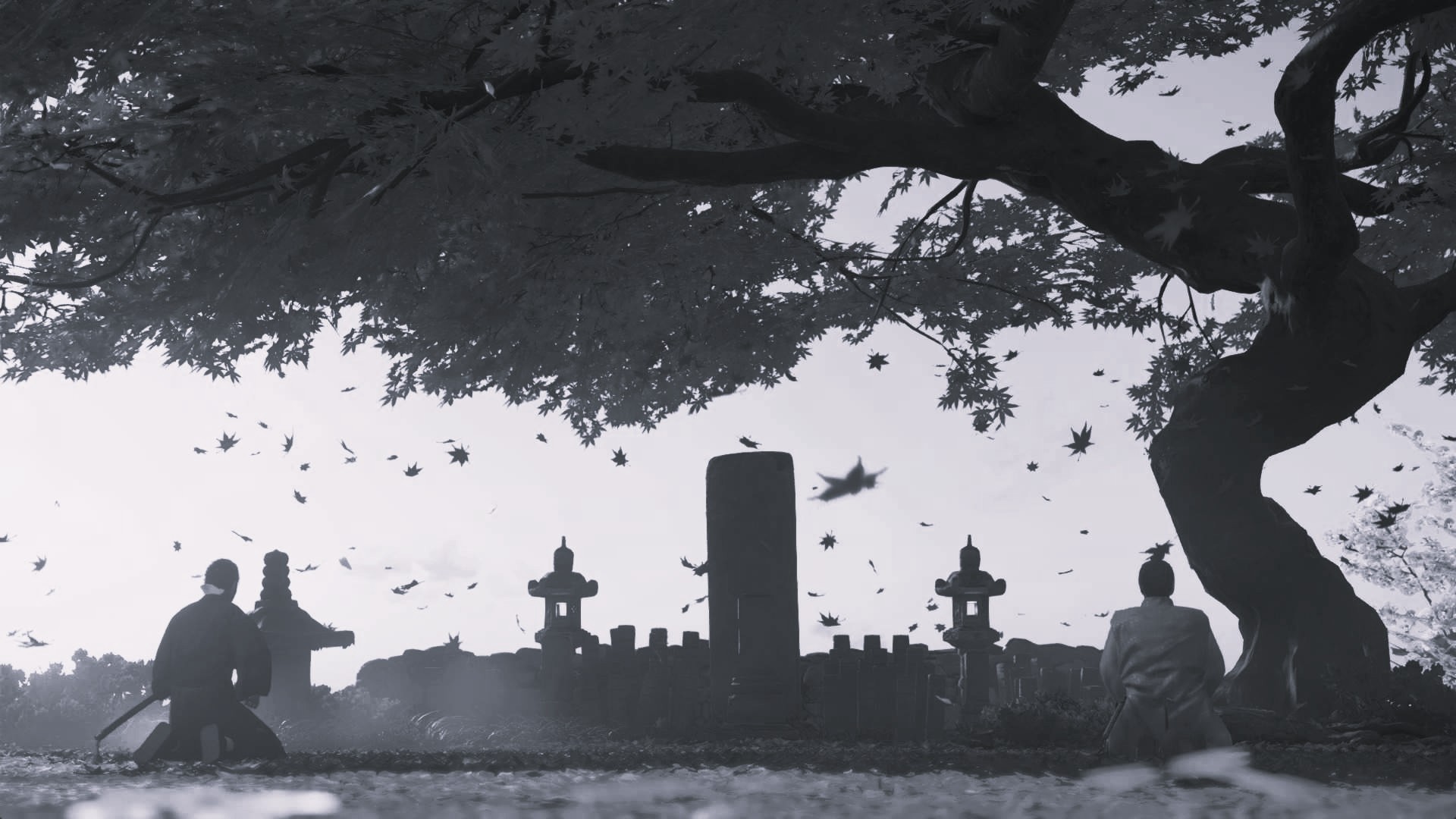
“This is where we part.”

When I said earlier that I hadn’t written an obituary in a while, that wasn’t precisely true. What I meant was a formal obituary, one where I didn’t know the individual personally. The fact is that I have been writing obituaries of a kind right here on this blog, though they are a far cry from what I did at the newspaper. In these, my detachment had completely gone out the airlock, and rightfully so. These were people that I loved, that I still love, whose loss devastated me, and I still wrestle with their loss. (You can find them here, here, and here.)

Obituaries, like funerals, are for the living. While they can help us get back on the proverbial horse, they have another function, one that I think is the most important: It’s how we remember them. When someone is gone, that’s one of the greatest honors that one human can do for another — simply to remember them fondly.

A Note On Empathy

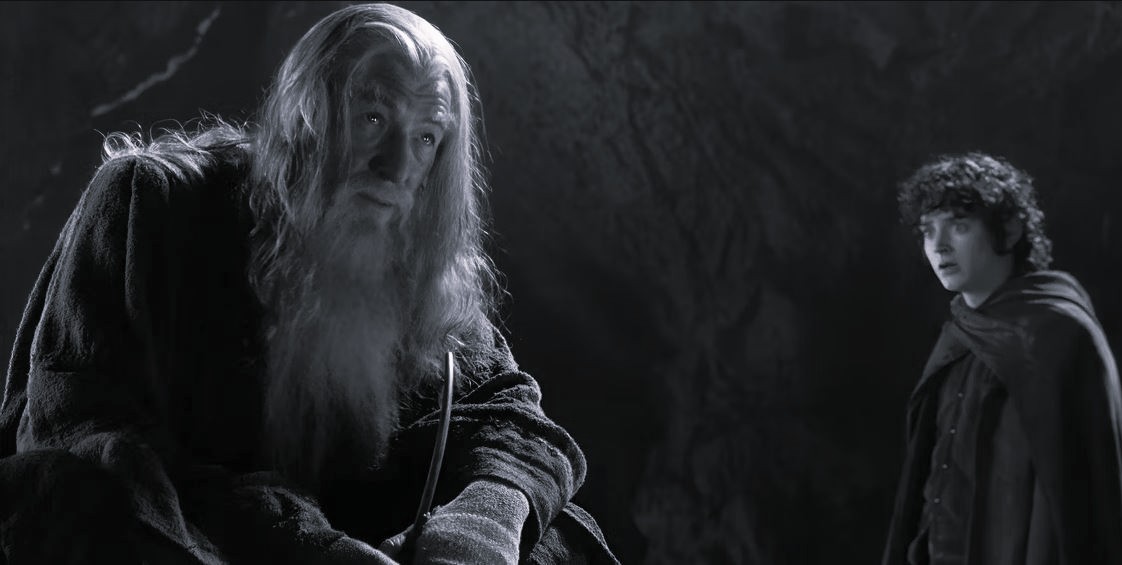
Of course, I couldn’t let a heavy topic like this go by without some sort of geeky reference, so here it is. In The Lord of the Rings, Gandalf was an angelic being known as a maiar.Other powerful figures in the story, such as Saruman and Sauron, were part of this same group. Each of the maiar were at some point apprenticed to one of the valar, much more powerful beings that were effectively gods. In Gandalf’s case, he had served Nienna, the vala whose portfolio was grief and sadness. She continually wept for all the pain in Arda, even for things that had not yet come to pass. It’s thought that the reason Gandalf understood empathy and pity so well was because of this affiliation.

With that in mind, I’m a big proponent of the adage that we should always be kind to people because we never know what war they’re secretly fighting that we know nothing about. Our friends, our family, our co-workers may be going through some seriously emotional stuff, and we may never be aware of it. Perhaps a small kindness from you is what helps someone who is struggling to get through their day. Having been in various states of mourning for more than a year now, I know this to be true.

Yes, it’s easy to be cynical about this, especially with all that is going on around us, and it seems like it’s everyone for themselves. I’ve noticed a quote from Elon Musk that’s been floating around on Twitter these days. There are a few variations, but they all more or less come down to this:

“The fundamental weakness of Western civilization is empathy.”

I’m not sure that I could disagree with this statement more. I think that it’s a lack of empathy that is the root cause of much of our suffering, and the overwhelming majority of our problems. Our worst vices, our inhumanity to each other, all stem from a lack of empathy. So, in a world where we could choose to have more or less of it, I would choose more every time.

I think that’s what makes us fundamentally human.

Thanks for reading.


Of 1:37 and the Day After

Howdy, folks. This blog post is coming to you a little late, and it’s definitely not the one I had planned. The one I was working on was pretty light and funny, and it will debut on March 15 as normal. After recent events in my personal life, however, I’ve switched to this one, which (spoilers) will not be quite so fluffy and happy.

This blog has always been about what’s on my mind, about what I’m feeling. That’s why it covers anything from museums to pop culture, author stuff, and a bunch of one-offs. While I won’t go into the events that precipitated this post, this is the topic that I need to write about in this moment. If you came here looking for something to brighten up your day, this won’t be it. Tune back in on the Ides of March (a day which definitely doesn’t have any bad things associated with it), and that should be more your speed.

Still here? Cool.

The Day After

Right out of the gate, let’s contemplate our own mortality. (See, I told you.) In fact, let’s go beyond even that — let’s take a second to think about the day after we’ve shuffled off this mortal coil. At some point in the future, there will come a day we don’t see. I know we don’t like contemplating that kind of thing, but for our thought experiment here, let’s try to gaze forward to the first day that you’re absent.

What happens on that day? Who do you leave behind? Who, on this day, is mourning your loss, but still has to go into work? Who is it that’s making arrangements for your funeral, whether it’s a simple memorial or a grave-side service? Who will be devastated and unable to comprehend your loss, and who might hear of your passing from a friend of a friend and simply shrug it off?

The fact is, as far as the world at large is concerned, it will probably be a pretty normal day. There will still be bills to pay, dishes to wash, clothes to fold, and a hundred other mundane things that will go on as normal. It’s a sobering thought, since most of us are born into obscurity and will likely die without our lives being known to the world. There are exceptions, of course, but for most of us, we will only be remembered on our Day After by those who were closest to us.

As depressing as this notion could be, I look at it from the opposite viewpoint. What I take from our Day After is that the world goes on. Life goes on. None of us are so important that the world stops turning if we leave it. Sure, not every Day After is weighted equally, but even in the cases of JFK and MLK, collectively, we kept going. We didn’t stop. That’s the way it should be.

I’m in no way trying to say that a Day After is easy for your closest survivors. It isn’t. Coping with grief and loss is one of the hardest things that we as humans are tasked with doing. Unfortunately, our lives give us ample opportunity to learn this lesson again and again and again. It hurts, it sucks, and we all hate having to go through it. Depending on the loss, some of us get stuck, unable to find our way forward through the first four of the five stages of grief.

And even if we make it all the way through, we’re changed. Emotional scar tissue is often cumulative. But, even in our darkest place, we can be sure that the sun will rise again, that people will behave like idiots in traffic, and that those closest to us will still need to decide on what to do for dinner each night. Yeah, the world goes on.

I think by looking at our own Day After, we can get a sense of this. We won’t be around to see it, but it’s a humbling thought to entertain. It’s also a reminder that our time here is limited, so we had better get to living.

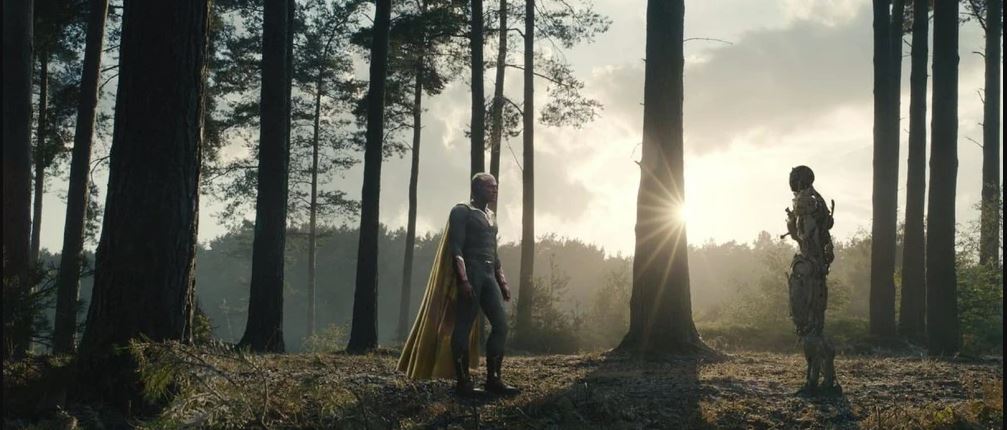
In the words of Paul Bettany’s Vision, “A thing isn’t beautiful because it lasts.” The older I get, the more that one quote resonates with me. It is my sincere wish that your Day After is many decades away. Personally, I’d love to know that you made it to triple digits and beyond. So, live long and prosper, y’all.

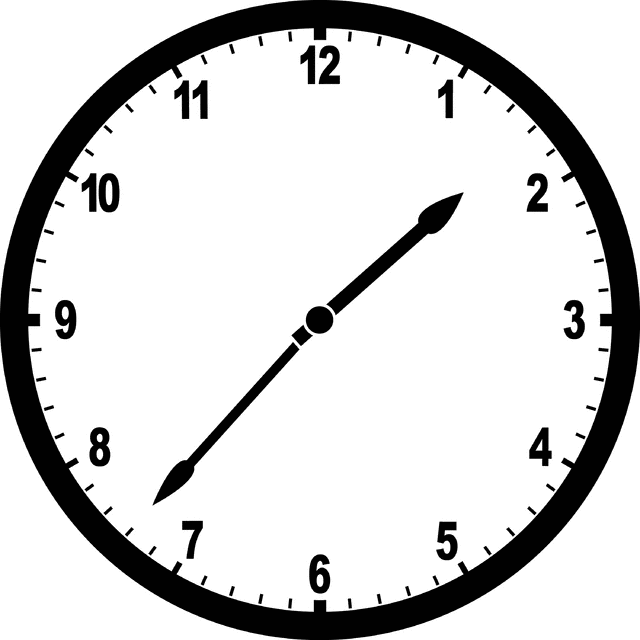
1:37 p.m.

Okay, for something a shade lighter, let’s talk about the time 1:37 in the afternoon (or 13:37 for our Veterans) and why that time is particularly special to me. So, when I was twelve, I suddenly found myself in a new city, a new school, and completely new environment. To say that I had culture shock was a massive understatement. I had no friends, and I was far from both sets of cousins who had always acted as brothers and sisters to me, as I’m an only child. A lifelong introvert, I found it difficult to adjust to these surroundings. Every day seemed like an eternity, nearly unendurable, and the amount of homework I had would often leave me with little time in the evenings to myself.

I could feel that I was quickly falling into despair, so I did something to help myself cope with these new circumstances: I told myself a story. I cast myself in the role of a master spy on a mission. If I went to my Texas history class, it was because my agency had sent me to Texas to look for vital clues. If I went to my engineering class, it was because I was studying the spy technology of the opposition and trying to gain the technological edge in the field. My math class was a complex cipher the enemy used, and each math problem brought us one step closer to breaking it. Finally, I took French that year, so naturally that was when my clues led me to France, and I had to blend in by speaking the language. It was probably more Where in the World is Carmen Sandiego than From Russia with Love, but it gave me a way to go about my day and reframe the situation to my liking.

Me going to science class.

During this time, I wore a calculator watch (yes, I’m that kind of nerd), but that also played into the gadgety spy game I was playing in my head. My French class was the next-to-last class of the day. From there, I went to Athletics, which I imagined was either going undercover or drills for my agent training. Once Athletics was over, it was the end of the day, which was a great relief. When we would line up in the gym, from my spot I could see out a set of double doors to the green football/track field beyond. Centered in that view was an office building. It wasn’t particularly tall or avant garde, but I saw it every day. Seeing this building filled me with hope. Still to this day, I give it a salute when I pass it.

But, back to French class. As it would draw to a close, I found that I would look down and see that it was 1:37. I never meant to do it intentionally, but almost like clockwork, there it was: 1:37. It meant that I had only a few minutes left before we went to Athletics, and then the end of the day was close at hand. That specific time, like the office building, gave me good feels. In the case of both of them, it meant: You’re almost there. Don’t give up. Keep going. You can do it.

I will still find myself looking up as I go about my day and smile if I see that it’s 1:37 in the afternoon. My days now are more like 9–6 than the 7:45–3:30 times I had back then. The time isn’t quite as close to the end of my labors, but it is more than half-way. So, it still represents a reminder, on particularly challenging days, to hang in there and finish up strong.

And now, I’m giving it to you. If you’re reading this, you have my permission — nay, my blessing — to use 1:37 if you find yourself at the crux of circumstances and don’t know what to do. There’s two ways you can use this. First, if it’s before 1:37 in the afternoon, keep fighting until you get to it. Second, if it’s 1:37 or later, keep fighting to the end of the day.

In other words, keep fighting. Cue up some inspirational power chords if you need to, just don’t give in, and don’t give up. You’re stronger than you know.

1:37 p.m. on the Day After

So, let me pull these two threads together. One day in the future, and I hope it’s many long years from now, my own Day After will come. Assuming the circumstances of my death didn’t involve an asteroid strike, nuclear armageddon, or some other extinction-level event, I’m going to guess that it will pass without much in the way of fanfare. On that day, there will come a 1:37 in the afternoon that I won’t be around to see or appreciate.

Some will grieve me, but most of the world will keep right on chugging along, business as usual. But you know, I’m okay with that. Like I said, the big wheel keeps on turning. Life waits for no one.

I just have one request if you find yourself alive during my Day After. If you should happen to look up in the days that follow and see the time of 1:37 post-meridian on the clock, think of me.

It will be like me whispering to you from beyond:

You’re almost there.

Don’t give up.

Keep going.

You can do it.