If you’ve followed this blog for a while, you’ll know that museums are one of my favorite things in the world. Our family trips often revolve around a museum, I write for a museum (the Perot in Dallas), and I even have a dedicated list on this blog for the museums that have moved me in some way or another.
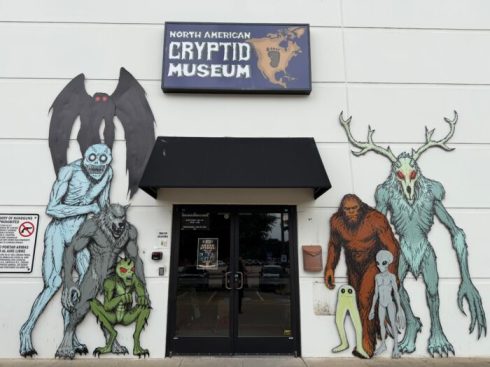
With Halloween only a few days away, I thought I would write about a unique museum that’s right here in the DFW area, where I’m located. While I tend to go with museums of a historical nature, this one deals with folklore. The North American Cryptid Museum is a standalone attraction within the larger Dark Hour haunted house complex.
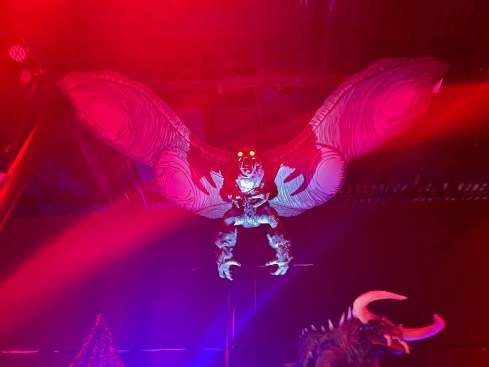
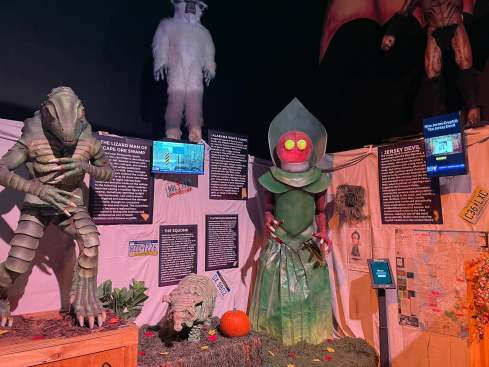
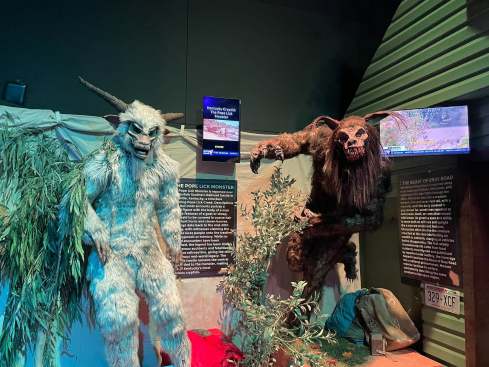
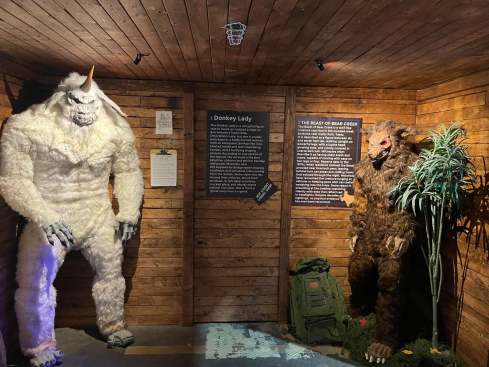
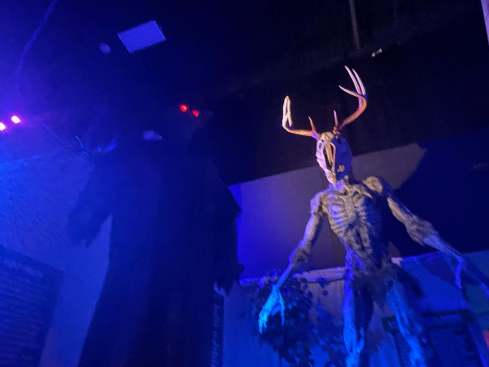
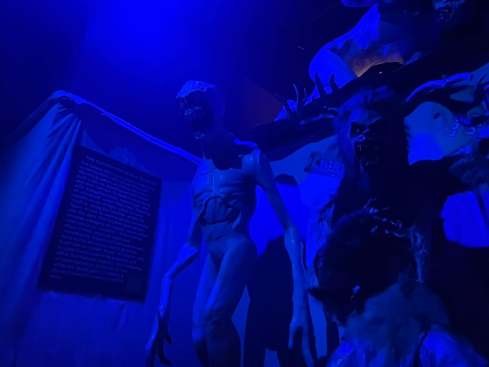
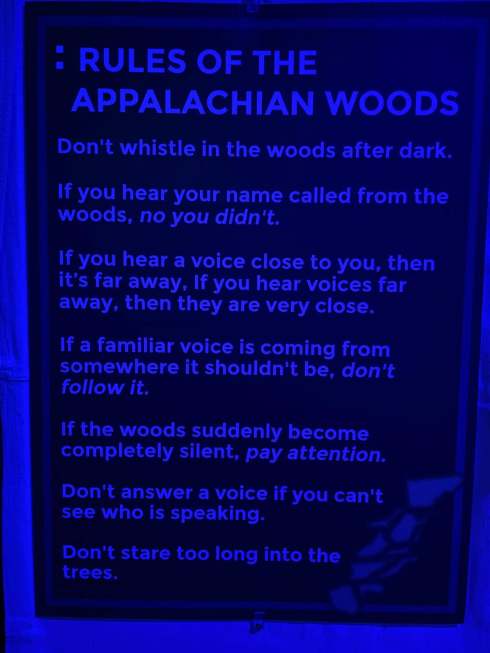
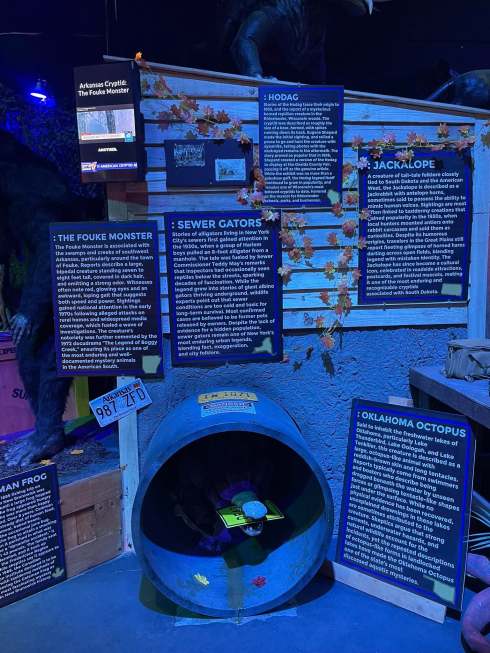
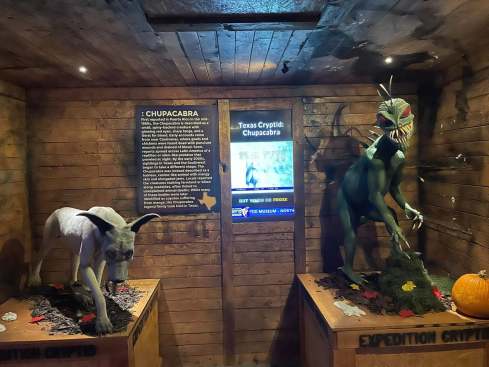
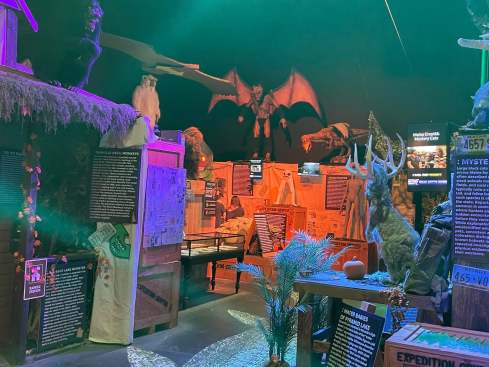
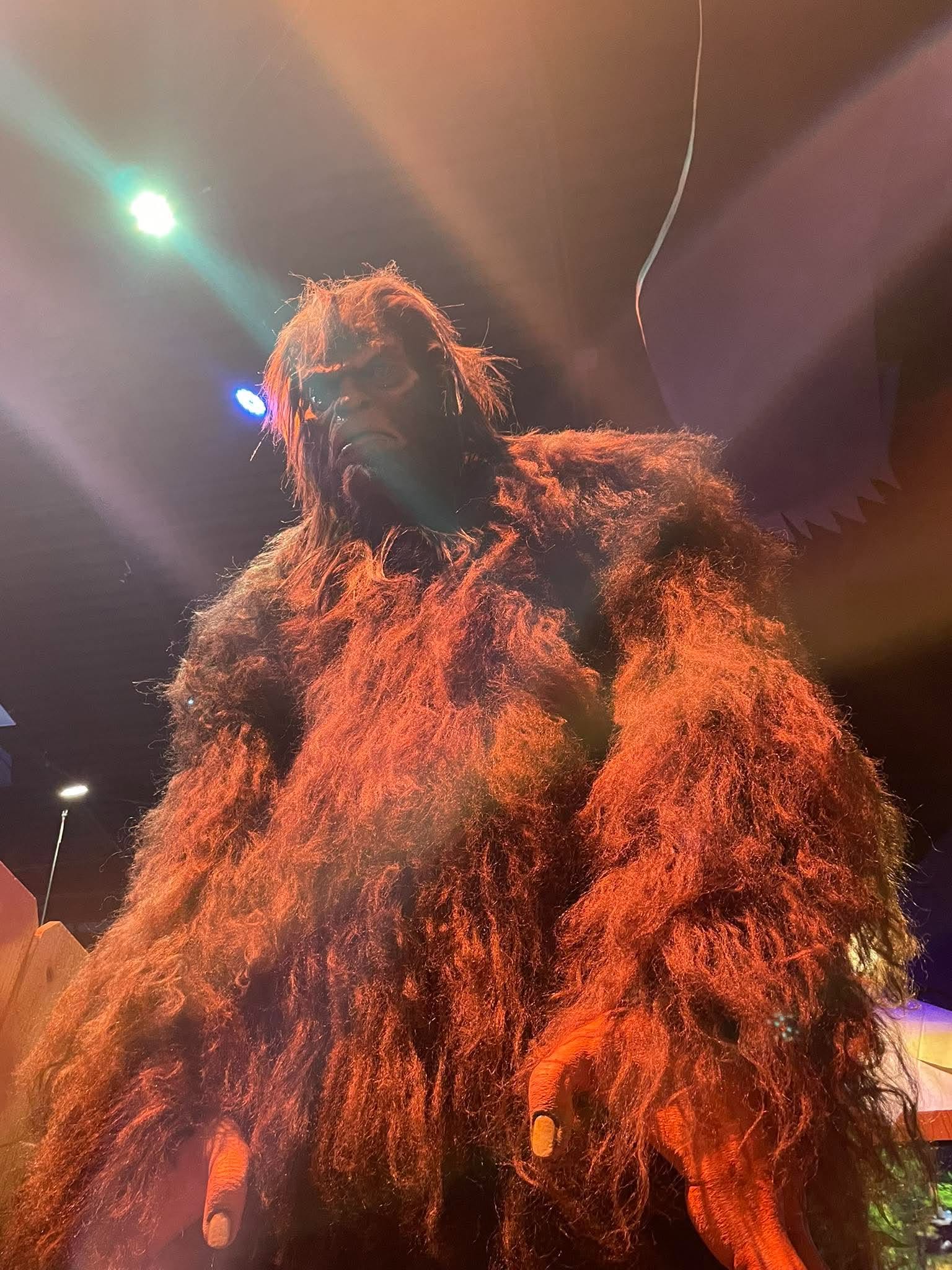
True to its name, the museum features 60+ full-scale recreations of legendary creatures, monsters, and myths that originate from the United States, Canada, and Mexico. More are added all the time, including the famous Flatwood Monster from West Virginia, which was added only a few weeks ago. You really have to see the craftsmanship for yourself; the pictures I have here don’t begin to do the cryptids justice.
Each cryptid model was created using eye-witness accounts and descriptions to give it an eerily authentic feel. Each entry has information displayed that details where the cryptid has been sighted in the past, its characteristics, and other interesting facts that even those pretty well-versed in folklore may not know. For instance, did you know that there are two Native American cryptids that merely reading or speaking their names is considered really bad? Beyond just simple bad luck, it’s tantamount to invoking them and possibly drawing their attention.
Which two are they, you ask? Well, apparently changing the names slightly or hinting at them is okay. The first one has a very famous (and weird) ranch named after it that featured in a recent TV show. The second one starts with “when” and ends with “go.”
The other thing I like about the museum is the healthy dose of skepticism in debunking or explaining claims made about various cryptids. For a museum like this one, it would be pretty easy to fall into the ‘folklore presented as fact’ trope. While the exhibits do present first-hand accounts, it’s clear that not all sightings are equal. The Rangers that guide the guests through the tour (mine was named Ranger John, though Ranger Kitt also assisted me) are quick to point out when certain things didn’t add up or were contradictory.
Of course, some cryptid sightings can be explained away, such as certain documented El Chupacabra sightings, while others have more substance to them, as in the case of the Pale Crawler that hopped into the back of a pick-up truck in North Carolina. The driver initially thought that he spotted someone standing on the side of the road who was bleeding (and curiously dressed in a Civil War uniform), so he called 911, and was on the phone when the encounter happened. If you want to hear the call itself, I’ll link it here. Be warned though — this encounter is one of the more unsettling ones on record.
If there’s a particular cryptid that you find interesting, from Mothman to the Jersey Devil, the Hat Man to the GOAT himself, Bigfoot, it’s almost certainly represented here in one form or another.
If you are in, or passing through, the DFW area, the North American Cryptid Museum is an excellent way to get into the spooky folklore of the season. And if you just can’t get enough of that sweet Halloween vibe, the Dark Hour haunted house is literally in the same building. Trust me, you’ll be glad you did.
Alien species in a sci-fi universe can be among the most memorable and interesting aspects of the entire property and story. Think about how much Vulcans and Klingons add to Star Trek, or how much the Narn, Centauri, and Vorlons give to Babylon 5. You couldn’t have the Alien franchise without xenomorphs, and what would Halo be like without the many species that collectively make up the Covenant? The examples in the body of modern science fiction are too many to count.
As we enter the final few months of the year, I wanted to present another blog post for writers and fans of science fiction in general. This time around, I want to focus on the xenos we see in science fiction and talk through some of the considerations when creating them. These include environment, biology, and society.
Without further ado, let’s dive in.
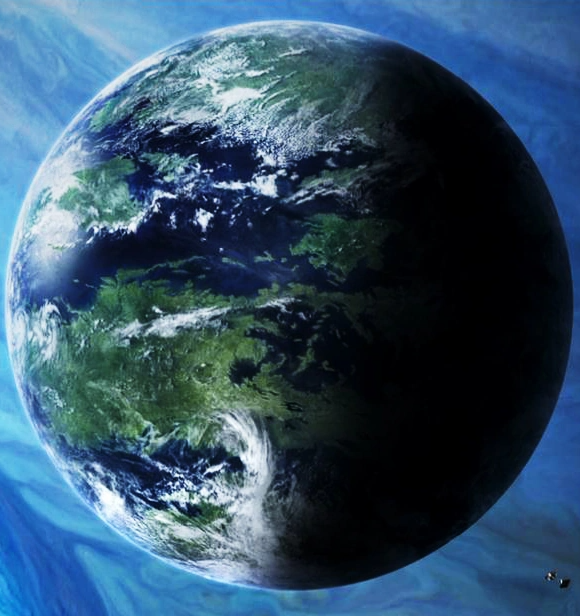
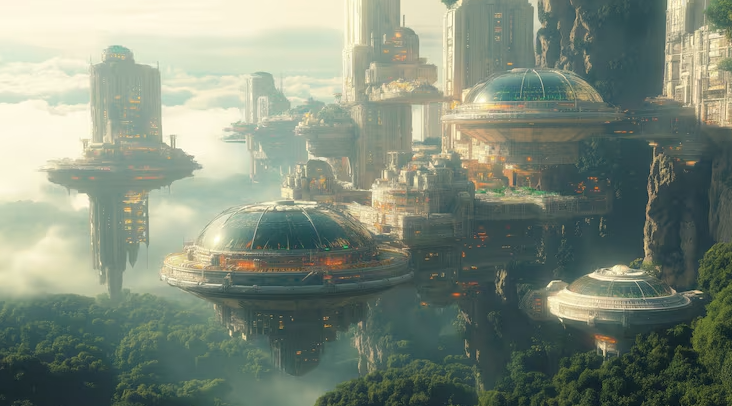
This is the planet of Pandora.
Environment
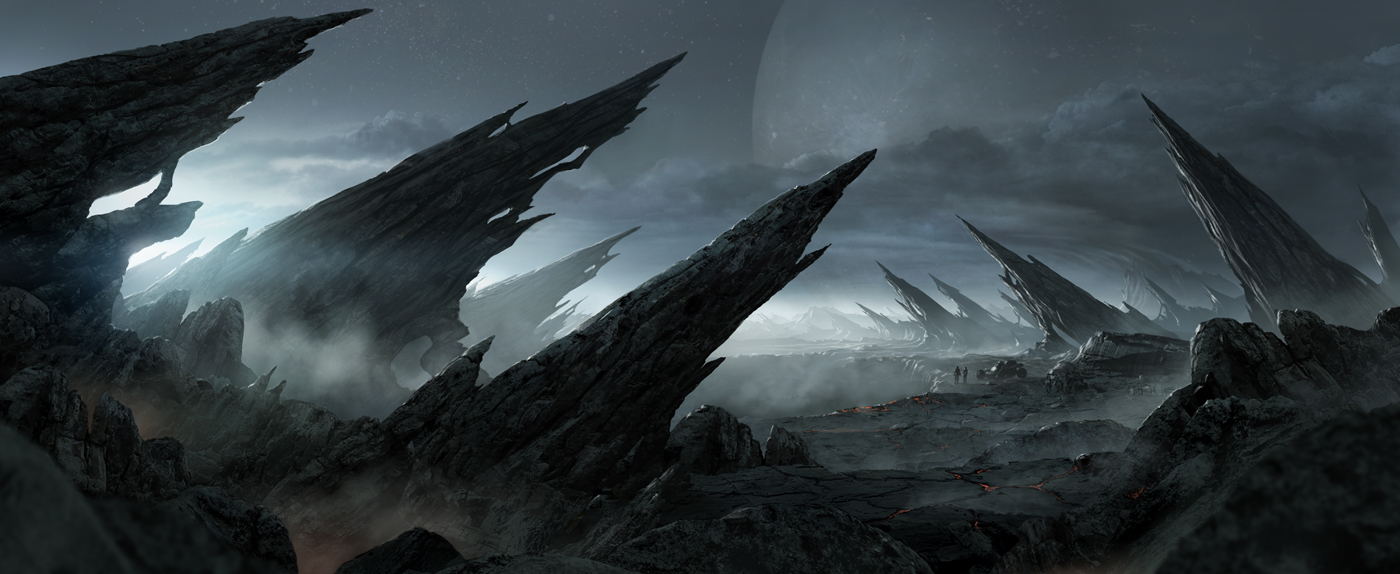
If I’m going to create a new alien species for one of my stories, I first try to imagine the place where they came from, originally. This is most often (but not always) going to be a planet. You might think of the species you’re going to create as a liquid and their evolutionary environment as a cup. That is, the species will have adapted to that environment, and the conditions under which they evolved will have left their mark upon the species.
Give some thought to what it’s like on this planet. What does the general climate look like? What is the planet’s gravity relative to our own? Is this planet in a binary or trinary star system? For that matter, what type of star does their planet orbit? Are we talking a big star, like a hypergiant, that runs hot but won’t last as long, or a red dwarf (the most common type of star) that’s relatively cool but will last a long time?
Of course, time scales are relative when it comes to the life of a star, but it can play into the overall narrative. Our sun is always a good standard of measure for this kind of imaginative work, allowing you to scale it up or down.
Once you have the star, you might also think about the overall temperature of the environment you’re building. If the alien species has water in their bodies, you’ll likely want to make sure the planet is in the “Goldilocks Zone” of liquid water. Depending on the output of your star, that might mean the planet is closer in or farther out in its orbit.
Speaking of water, what does the hydrosphere of this planet look like? What’s the ratio of land to water? Again, it’s a good idea to use Earth as a standard of measure. Our planet is about 71% covered in water, leaving 29% for land. Does your planet have more of that or less?
Can you go the Star Wars route and give your planet a single, recognizable biome like forest, swamp, ice, or desert? Of course, you can. Just remember that if a planet has one major type of biome, that’s likely to change at the poles and at the equator, if nothing else. Once you have the environment/planet of origin in mind, we can move on to the next part.
Biology
Now that you’ve established your proverbial ‘cup,’ let’s move on to the liquid that fills it. Early on, you should ask yourself an important question: Is this species sentient or not? Chances are the answer is yes. While alien beasts with an animal intelligence are plentiful in science fiction, it’s the ones who are self-aware, intelligent, and build cities and ships that really stand out.
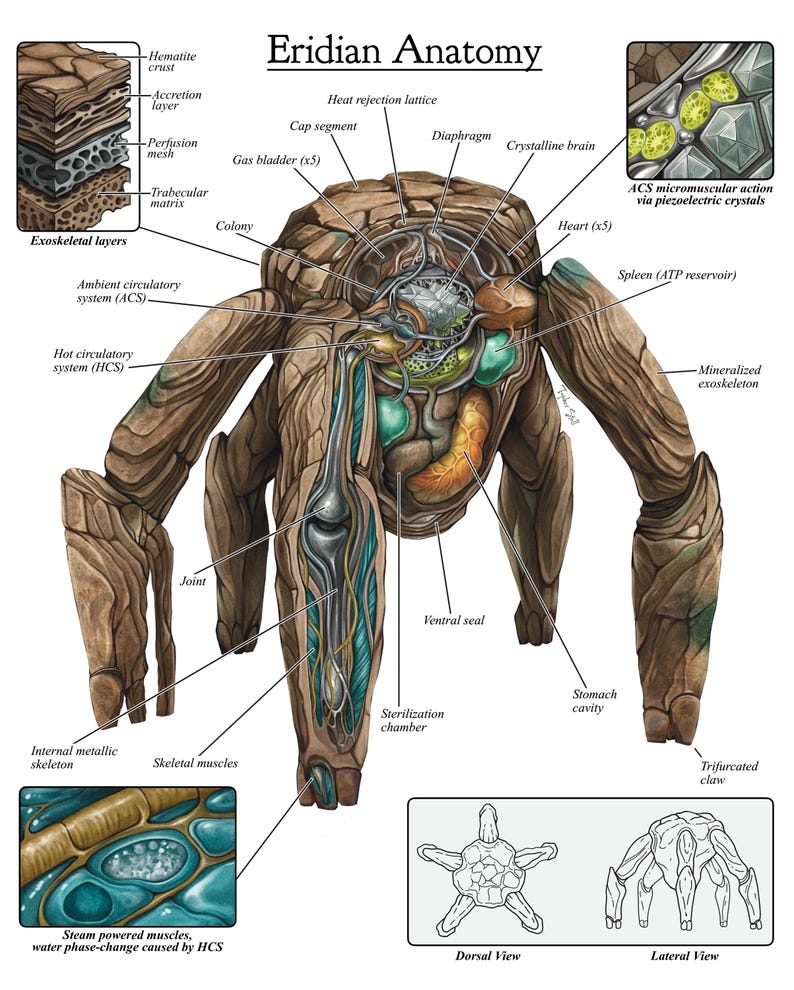
Another thing you need to decide is just how alien you want your aliens to appear. Star Trek is notorious for slapping a variant forehead on a human actor and calling it a day. This is more for practical purposes than anything else. So, do you want your aliens to appear as a bipedal humanoid with two arms, two legs, and a single head, or do you want it to look quite different? Since we do not yet know what an alien species might look like, you have a free hand here.
This is where you might turn to the species of our own planet for inspiration. Earth has an incredible diversity of life in nearly every climate. If you plan on building an aquatic species, you might look at the biodiversity in our oceans. If they are a desert-dwelling species, take a look at the critters that run around the Mohave, Sonoran, and Gobi, among others.
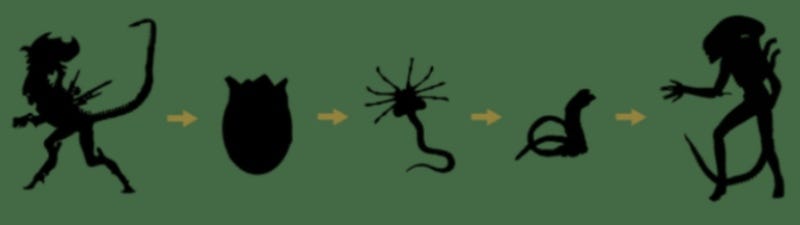
Certainly not a typical life cycle, but definitely a memorable one.
Another thing to ponder is their internal temperature and how they maintain it. Do they have a system akin to mammals on our world that self-regulates their temperature, or do they rely on external factors? This is an important one as this will determine what kind of environment and protective gear they will need as they venture out into space. The interior of their starships will need to mimic the environment you’ve established, or at least the corner of the environment where this species evolved.
In addition, what does the food chain look like on their planet? Is there a predator/prey relationship like we have here on Earth, or is it something else entirely? If you do have a predator/prey cycle going on, where does this species sit in that hierarchy? They don’t have to be apex predators (though they certainly can be). After all, humans were not evolved to be apex predators, but our intelligence and flexibility allowed us to punch way above our weight.
Amaze! Amaze!
It may be tempting to give this species the same five senses that we as humans have, but think about how the environment you’ve established might have shaped those senses, or even equipped them with senses beyond what humans have. For instance, several species of snake are able to combine their sense of sight with a kind of heat-sense to detect slight variance in temperature, allowing them to hunt in total darkness.
How this species senses the world around them can be vital to understanding how they might come together to build complex things like starships, scientific laboratories, and that most complicated structure of all: society.
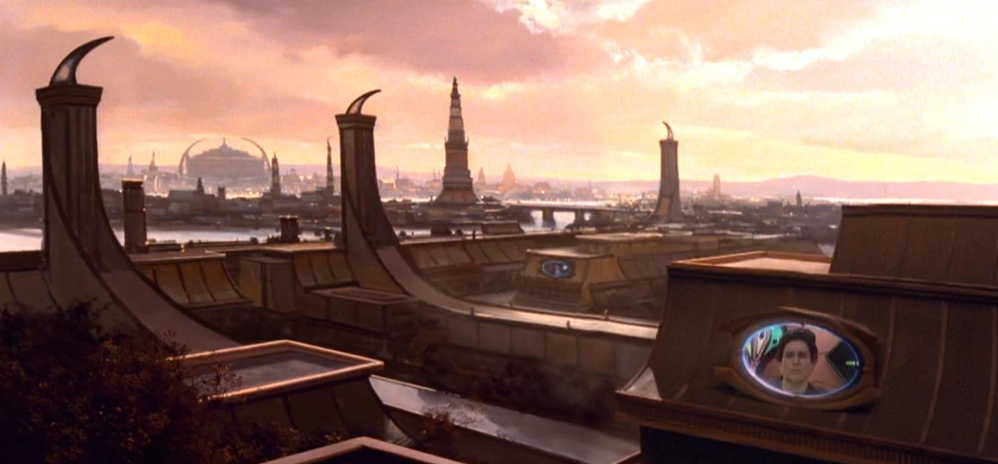
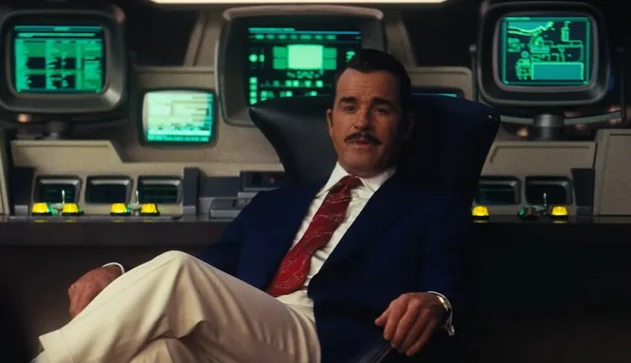
Hey, look! It’s Weyoun. I bet he has an important announcement for us.
Society
Okay, so at this point you have some idea of the planet or originating environment of the species you’re creating. You probably also have a good idea of what they are capable of in terms of their senses, their basic capabilities, and maybe even a few things like their sensitivity to radiation and harsh biomes. Hopefully you can picture what one would look like if it were to walk into the room with you.
Now that we have them in mind, let’s do a quick thought experiment. Imagine, if you will, that humanity had evolved with one slight change. Let’s say that we were somehow able to drink salt water but not freshwater. Imagine how our society might have unfolded differently.
For one, we would probably have many more coastal cities than we do now since that would give us easy access to effectively unlimited drinking water. Because so many would live on the coast, we probably would have invested more in making our structures weatherproofed. By the modern day, our homes and buildings might be able to withstand hurricanes or typhoons with relative ease as that would have been a major problem that humanity would have had to overcome.
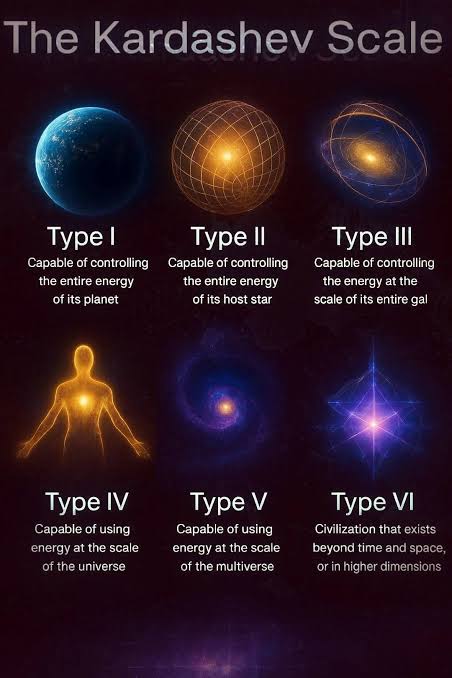
The original scale included only the first three levels. Futurists have since added three more levels.
Also, there would be places on the planet, like in China and other spots, that are so far removed from salt water that exploring them might not have been feasible until after the industrial revolution. With the proximity to the sea so necessary, we might have developed technologies for living underwater or even created artificial islands.
As you can see, changing just one little thing in our biology radically alters our whole societal trajectory. This is the kind of thinking I would highly suggest you do once you have a decent idea of your species’ biology. How would the physical and environmental needs drive them to build cities and systems that could eventually do things like split the atom and build spacecraft capable of achieving escape velocity from their planet of origin.
When you are building an alien society, it also helps to keep in mind the psychology of the species in question. How prone are they to cooperate or compete for resources? If they developed as an apex predator, does that instill in them a kind of unassailable confidence, perhaps even a feeling of destiny that they are the best at everything? Or, did evolving as a prey animal give them a sense of paranoia, perhaps acute xenophobia (pun completely intended) when they think that everything may be out to get them? Again, knowing the environment and biology can help you determine how they think.
These patterns of thought and behavior will naturally be reflected in the societies they build. Architecture, for instance, might be an instant example of how they see themselves and the user-friendly forms (to them, at least) they choose for their buildings. If you have an avian species that can fly, entrances to their buildings may not be at ground level. If a reptilian species needs a scalding hot work environment to function, the odds of them installing air conditioning are pretty low. In both examples, they might eventually add those systems to accommodate other species that they come in contact with, but they probably wouldn’t have them natively as there would be no need. Remember that function follows form in these cases.
Of course, there’s more to a society than just their buildings, right? Just think of the previously mentioned Vulcans or Centauri. When you think of those two sci-fi aliens, what comes to mind? For me, it’s their behavior and how that behavior carries over into their interactions with other groups. Let’s take a closer look at those two.
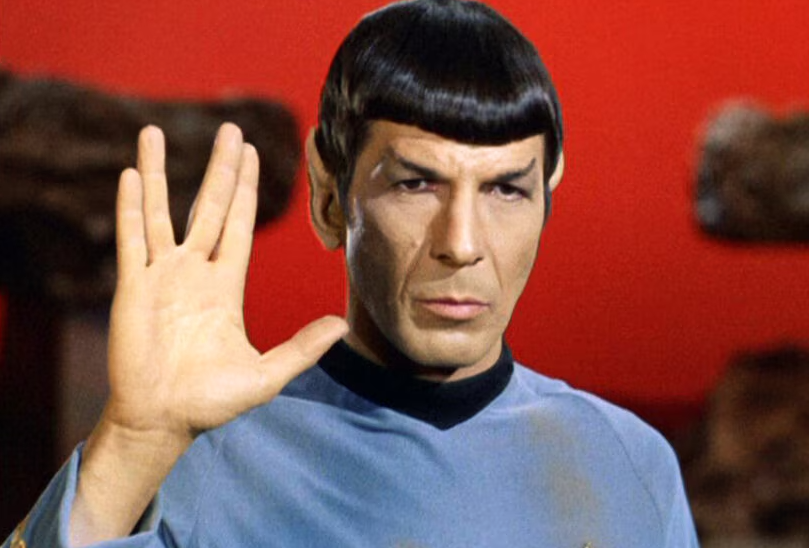
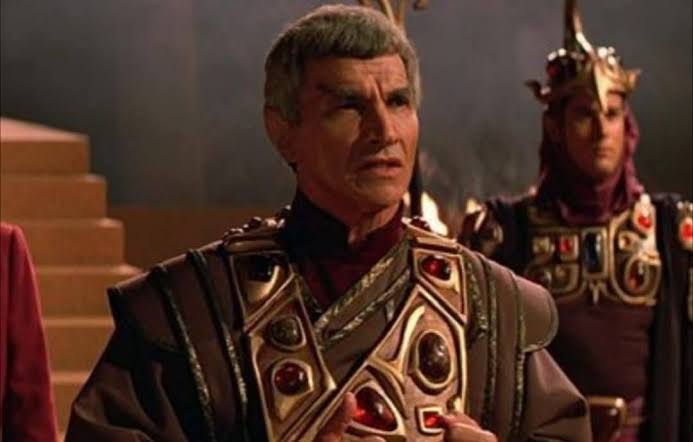
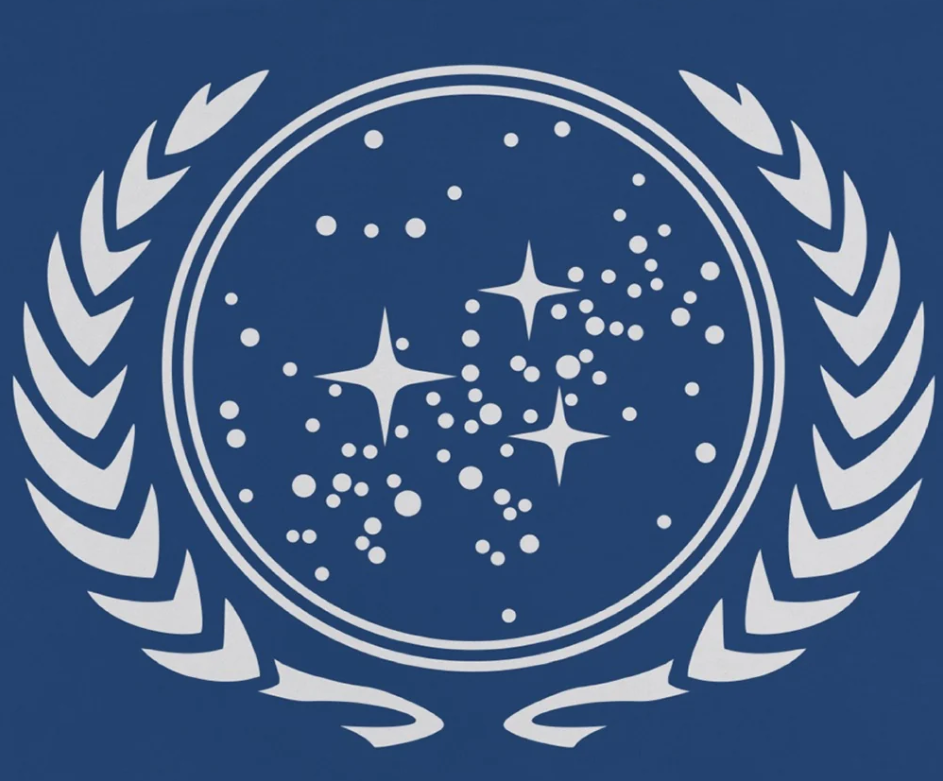
The Vulcans are all about logic. They didn’t used to be that way, which led to the Romulans splitting off to form their own society. Now that logic and the suppression of emotions is central to their civilization, they tend to focus on mental pursuits like science. The Vulcan Science Academy is one of the most prestigious scientific institutions in that universe. They tend to view the emotional outbursts of other species as infantile and perhaps not as enlightened, giving them a sort of ‘parent’ kind of status when it comes to other species. This, coupled with their calm, reassuring demeanor, makes them natural mediators and diplomats, as well as an indispensable pillar upon which the United Federation of Planets is built.
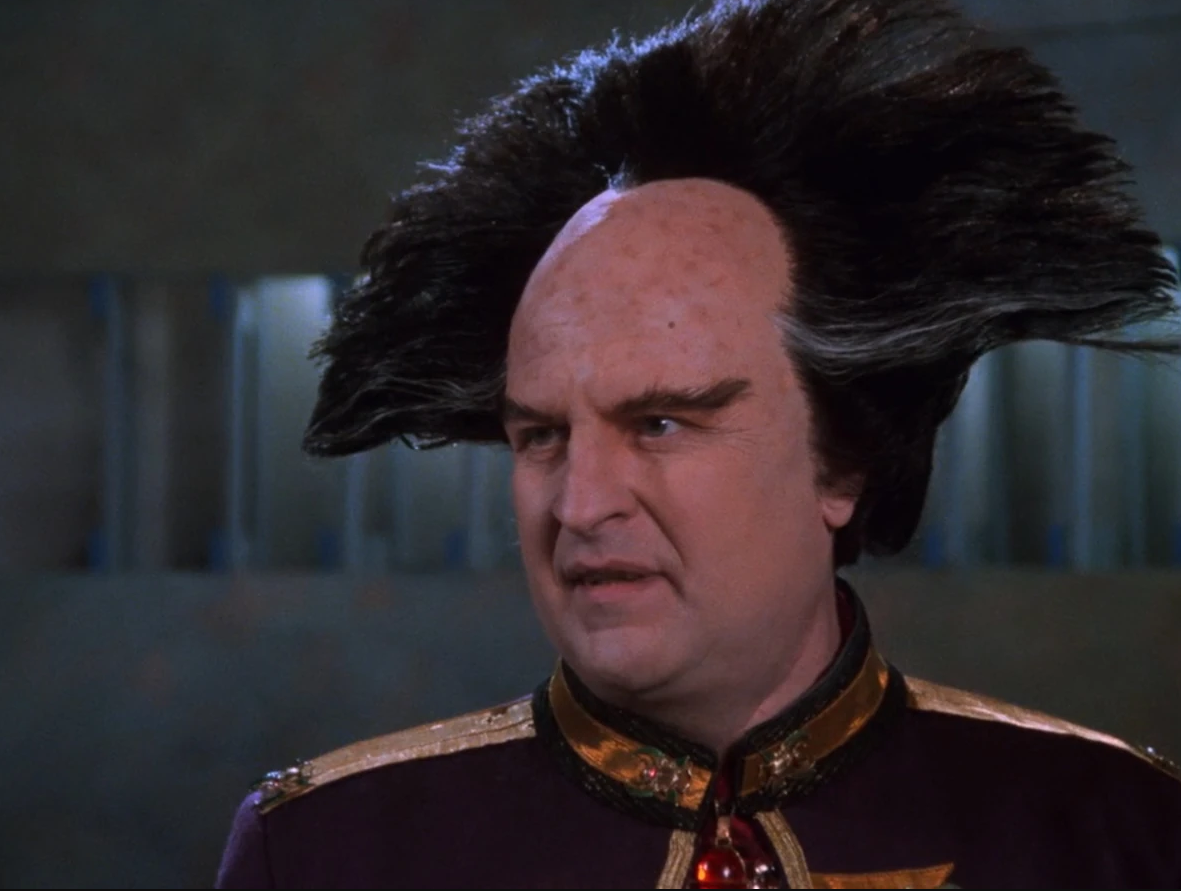
The Centauri, on the other hand, are all about letting their passions run wild. They embrace emotions at every turn and have an infectious kind of charisma. Of all the species in the B5 continuity, they almost certainly throw the wildest parties. These passions come at a cost, however, because ambition lurks behind every boast and fit of laughter. Their political system is pretty cut-throat, all told, and their society is far more on the decadent and self-aggrandizing side. At one point, the Centauri were the dominant species, forcing their will and worldview onto other alien races, including the Narn. Eventually, their empire decayed, and the Centauri lost their prime position amongst the Younger Races. This has only fueled their ambition to get back into the top spot through manipulation and subversion, and fostered bad blood between them and many of the other aliens that once saw abuse at their hands.
Two very different species, but both extremely interesting and the icons of their respective properties. If you are creating an alien species for one of your stories, these two species are sterling examples of the result you want to have at the end of this process.
Once you have an understanding of the one culture, ponder how they might interact with other species out in the universe.
Final Thoughts
It is possible to reverse engineer an alien species, to start with the end product and then go back and figure out the particulars. I imagine that route is pretty common, and I have certainly done that before with some of the species I’ve created in the past.
Even still, I think having some working notion of where and how a species evolved can help you understand how they will function and interact within a given science-fiction continuity. In other words, knowing where they came from can give you incredible insight into where they’re going.
As I said, alien species are one of the most interesting and compelling aspects of science fiction. If you are writing science fiction, or just like reading it, I hope this discussion of my thought process was of value to you. Now, I challenge you to go create your own. Be discerning, be weird, and above all else, be memorable.
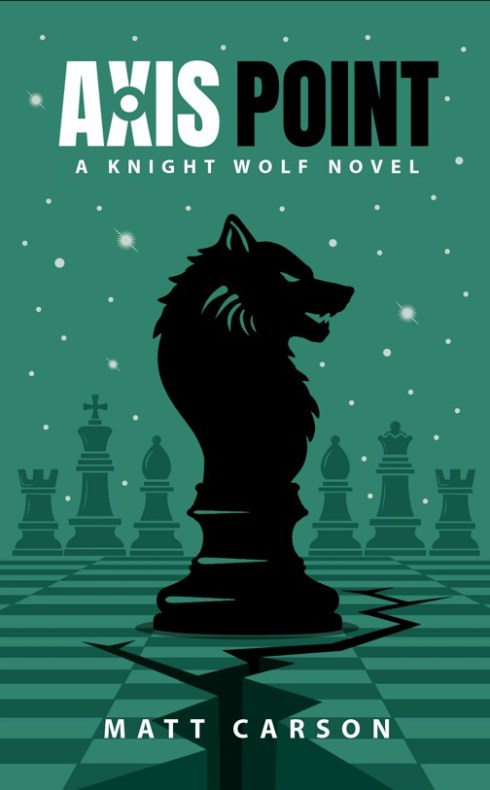
If you would like to see how I put some of these principles into action, please take a look at my science-fiction novel, Axis Point. The main character is an alien, and his species was created using this very method.
[Note: I do not consider myself a movie critic. What follows is just one fanboy’s opinion based off of a single viewing of the film. Oh, and there are SPOILERS ahead for this movie, so take heed.]
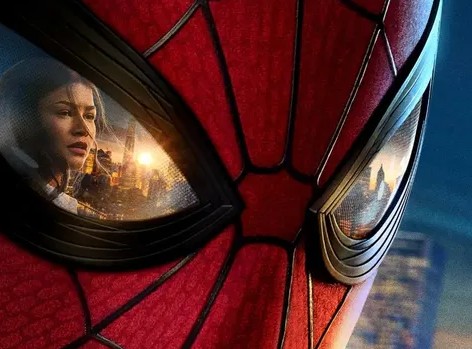
After what seems like an eternity, Spider-Man is back, baby! At the time of this writing, Spider-Man: Brand New Day has cleared more than two billion at the box office worldwide. After the last few MCU releases, Marvel could definitely use a win, and this was it.
*starts humming Dr. Horrible*
In many ways, this’s precisely what I look for in a Spider-Man story — an internal conflict that Peter is having to contend with while still facing an external battle on the streets of New York. There are several other characters that make an appearance so this story feels like it takes place in a shared universe without those extended cameos overstaying their welcome. Quite the contrary, I wanted to see a bit more of a few of them.
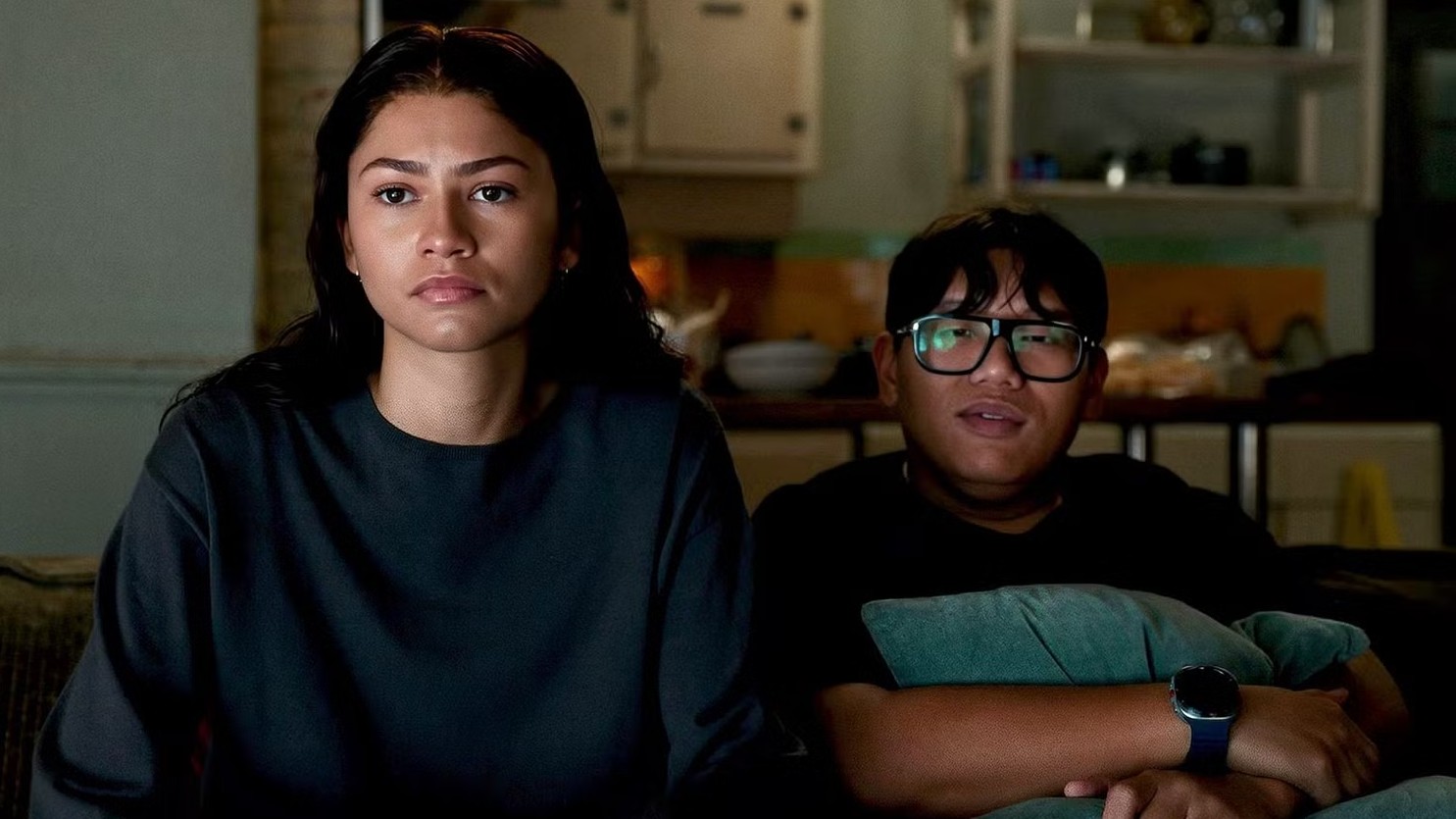
There were some really great performances here that punch way above their weight. Having just seen Jon Bernthal, Tom Holland, and Zendaya in The Odyssey, I honestly think their performances in this movie were much better.
First Impressions
As much as I like Spider-Man: No Way Home, it ended on a super downer. Not only had Peter just lost his surrogate father figure, Tony Stark, but everyone else in the world had forgotten who he was. They didn’t forget Spider-Man, but they did forget Peter Parker, including the love of his life and his best friend.
That ending was definitely a way to give Spider-Man a degree of separation from the rest of the MCU. That smacked of Sony not wanting to be fully beholden to Marvel Studios, but whatever. Suffice to say, it was pressing a big ol’ reset button.
So, I honestly had no idea of what to expect of this next movie or where they would go with the story. There were rumors of Sadie Sink’s involvement, but no source could really agree on which role she would play. There was speculation she might be Mayday Parker, Spider-Man’s daughter from the future, or even another multiversal version of MJ.
While I had some uncertainty given the current state of the MCU (and my growing anxiety over Avengers: Doomsday), Spider-Man is my guy. Spider-Man comics were instrumental in teaching me how to read, and I’ve loved the Wall-Crawler since Spider-Man and His Amazing Friends. There was no way I wasn’t going to see this movie. Let’s friggin’ go.
With great power…
What I Liked
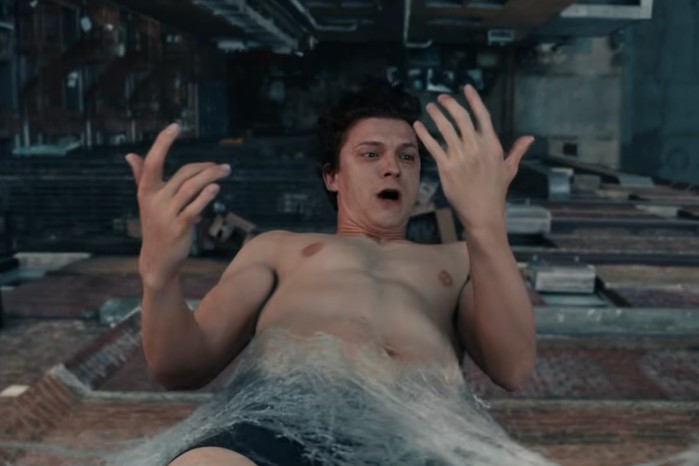
Tom Holland: Stan Lee was a master at humanizing his superheroes, of making them feel like real people who happen to have powers. (Contrast this to DC, where the characters are effectively paragons of various ideals incarnate.) Since his first appearance as Spidey in Avengers: Civil War, Tom Holland has continually brought a level of humanity to Peter Parker that is undeniable. The more I see him in this role, the more I’m convinced that he is the perfect actor to lead this telling of the character. I think his casting in this role is every bit as inspired as RDJ as Iron Man or Tom Hiddleston as Loki. Well done, sir. Well done.
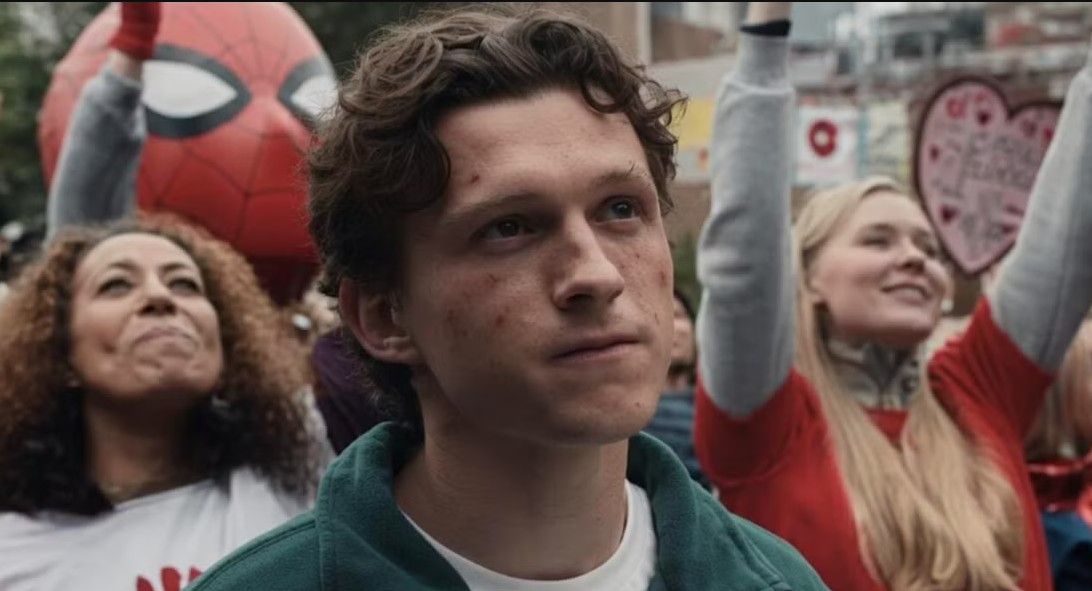
What Spider-Man Means to NYC: When Peter walks out of the hospital into a crowd of Spidey fans wishing him well, and he sees all the signs and costumes, I legit started tearing up. For everything he has sacrificed, for everything he has lost in becoming a hero, and as lonely as his day-to-day life has become, seeing that little boy flash web-shooter hands and seeing Peter return it was genuinely touching. There’s also all those times that Spider-Man shows up somewhere and everyone knows who he is. They all naturally want to help him out. Even if this version of Spider-Man is relegated to ‘small potatoes,’ he is a champion of the city, and people love him for it. He deserves it.
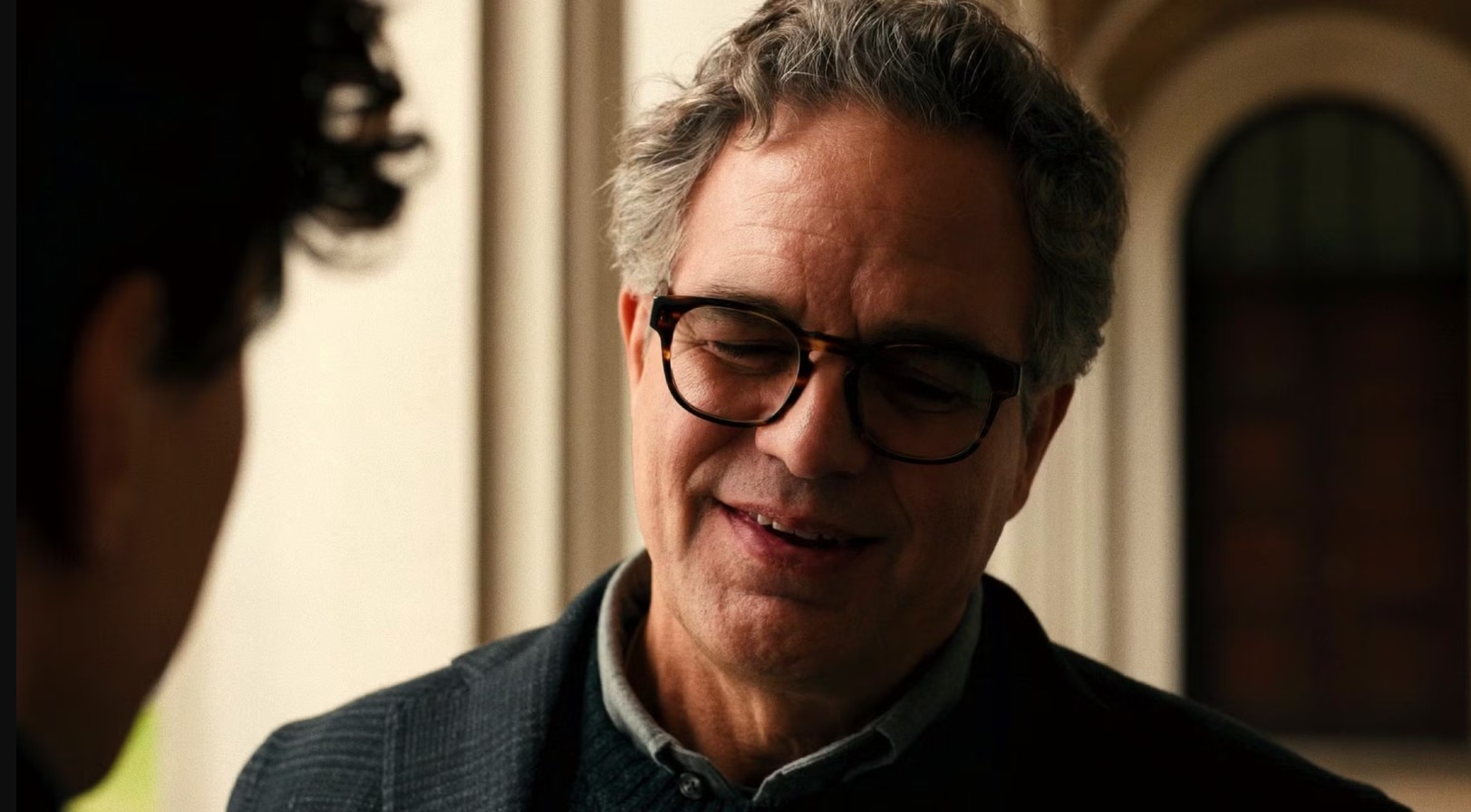
The Hulk: We haven’t seen Bruce since the weirdness of the She-Hulk streaming series, and it’s good to see him back in the classroom, complete with his fans showing up to his classes. Growing up, the two most iconic Marvel characters were Spider-Man and the Hulk, so seeing the OG, weapon-of-mass-destruction-Hulk showing up here was pretty cool. The ending of his part of the story did feel a little rushed, so I hope Bruce’s quick exit from the movie is a setup for a future story.
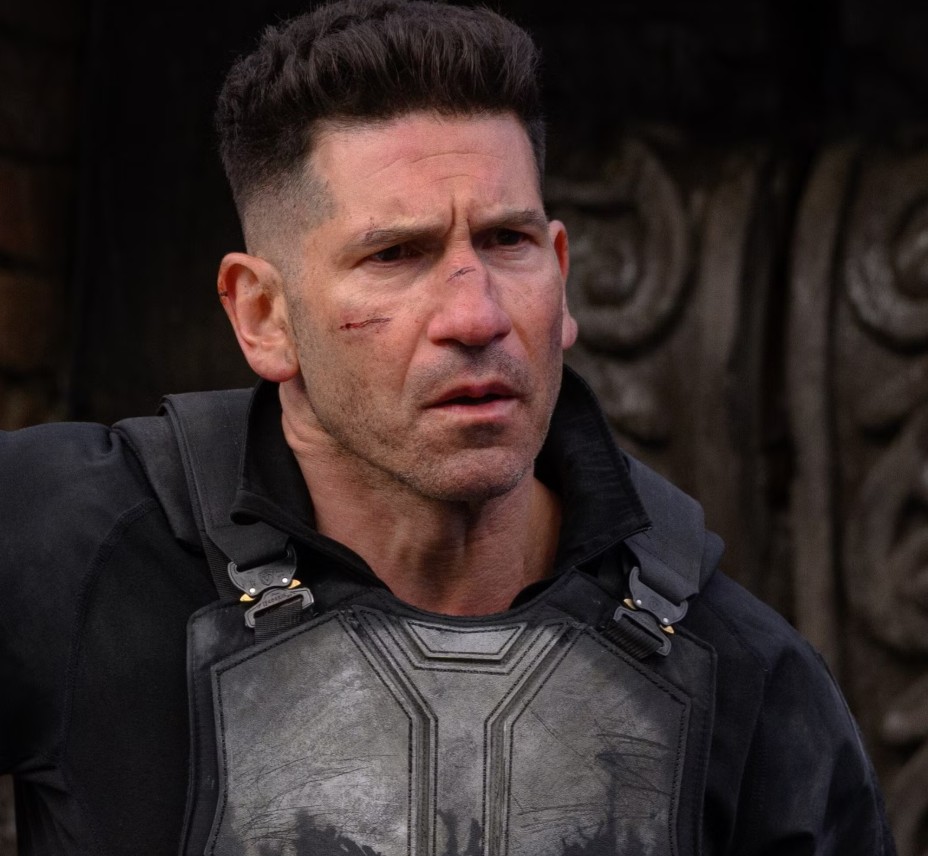
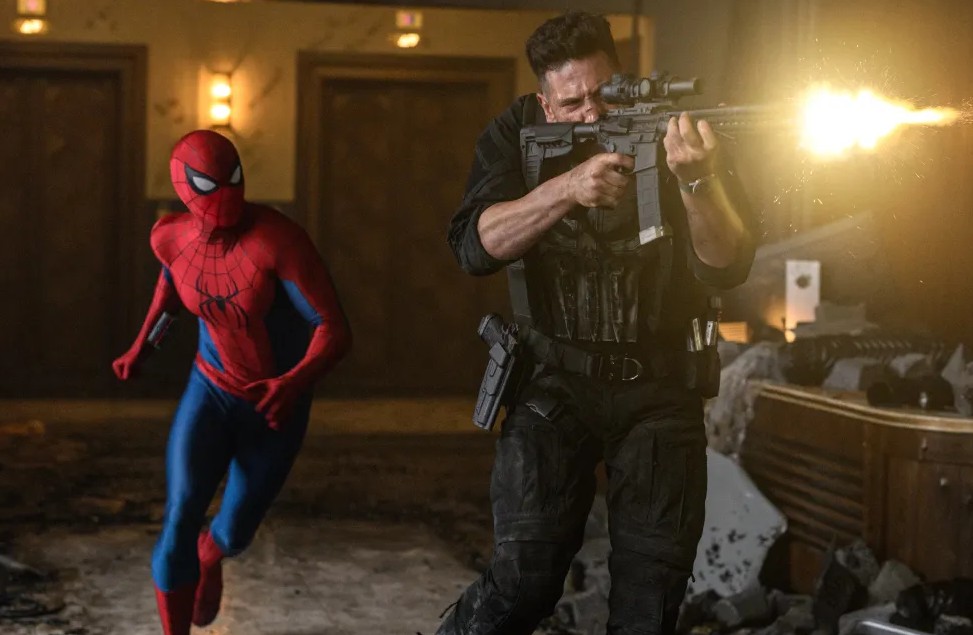
The Punisher: I’ve said it before, but Bernthal’s version of Frank Castle is my favorite. I was never sold on the character in the comics, but Bernthal in this movie is the kind of Punisher I want to see, not the shivering, unkempt, barely functional Frank we recently saw in Punisher: One Last Kill. Frank and Peter are not characters I would have thought would’ve paired well on screen, but I was wrong on that count. It’s clear that Frank’s parental instincts have kicked in here. He doesn’t want Peter to live the kind of life he does, and the slow-motion scene of Frank bringing Spidey through the door of the emergency room hit on something. As much as they disagree and bicker, Frank has come to see Peter as part of his family, perhaps even like a son. He couldn’t save his family, but Peter he could save. Perfection.
Black Widow: I had wondered if Yelena would adopt White Widow as her superhero moniker, but Ned confirms that she has taken her sister’s mantle of Black Widow as one of the New Avengers. I love how casual about everything she is, including having her office in a Russian banya. It’s a little odd that she refers to Spider-Man as ‘small potatoes’ when he was an Avenger before she was. I guess his membership didn’t survive Doctor Strange’s spell. In any case, I like Florence Pugh a lot, so any time we get to see her reprise her role as Yelena, I’m down for it.
…comes great responsibility.
What I DIDN’T Like
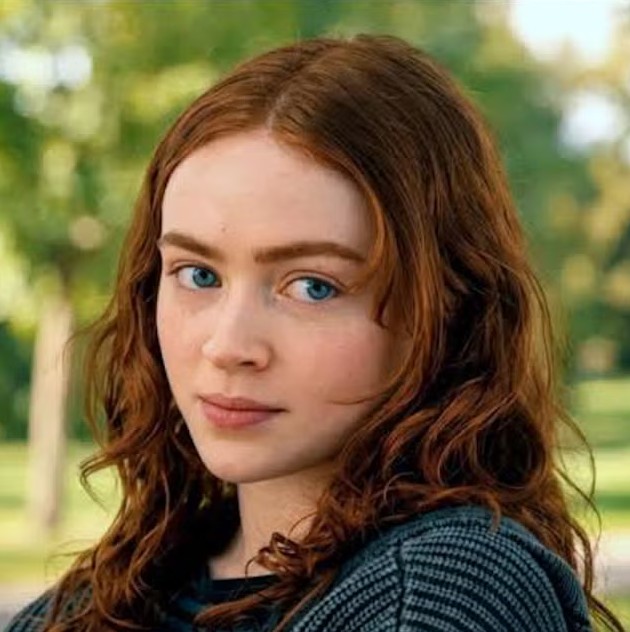
Jean Grey: Before I get into this part, let me clarify that I absolutely loved Sadie Sink’s performance here. This version of Jean is super-villain scary, merciless, and both physically and emotionally manipulative. She’s willing to kill just to make a point. While Sadie Sink played this part really well, I did not like this completely amoral, and (let’s face it), evil version of Jean Grey. I know she eventually becomes Dark Phoenix, one of the ultimate villains, if the MCU ever decides to go there, but that’s way in the future. Here, she comes off as more like David Tennant’s Killgrave from Jessica Jones with her lack of regard for anyone but herself.
Yes, I know that Damage Control abducted and killed her sister, but she drove a tank down the streets of New York, firing machine guns all around, blowing up cars, and then detonated a bomb at a prison with any number of emergency responders nearby (to say nothing of the kindly old lady that would have been inside the tank). That’s terrorist-level stuff. She is responsible for a lot of civilian deaths that had nothing to do with Damage Control. Also, why did she need Scorpion in particular for her plans? Who knows.
You think that if she could get inside people’s minds and work them like puppets, she wouldn’t need a brute-force approach to anything, especially if she could access their memories when she takes them over. She just needed to work her way up to Director Metzger and pull the information directly from his own memories.
All this doesn’t even cover the violation of MJ. Not only did she kiss Peter while puppeting MJ, she then walked MJ off the side of a building. Like, holy crap. It seems like the villain of the story was originally meant to be someone else, but Jean was shoe-horned in there, and not to her credit. Spider-Man may have lamented that he helped capture Jean once he knew the whole story, but the truth is that she needed to be stopped. Thankfully, it was Peter that found a way to stop her instead of Frank.
Frank, wait! Oh, too late…
As a Spider-Man fan, I think we ate pretty well this time around. As an X-Men fan, however, this isn’t a great introduction to the new version of the X-Men to come. Professor X is going to have his work cut out for him. Sheesh.
Inconsistent Use of Super Powers: This has become a recurring problem in superhero movies. There are times that Peter’s spider sense saves him and those around him, over and over, until it just…doesn’t. For instance, the older man with the green hat that backs into traffic (at Jean’s direction). Did Peter not sense the car speeding toward the man in time to web him out of the way? We’ve seen him react to much faster threats, but not that time. Why? Who knows. I’m willing to hand-wave a bit of this because Peter’s powers are changing, but sometimes his powers work when the plot calls for it, and sometimes they don’t.
Also, what happened with his senses getting overloaded? No adjustment or action needed, even though this is why he wears the goggles in the first place. It just goes away on its own.
Further, when Peter starts trying to web-sling around the city with his new organic web-shooters, he doesn’t have control. He’s crashing into things and making a mess. The next scene he’s got MJ holding on and he’s perfectly in control.
A Lack of Consequences: With the “You have me” line, it feels like all is forgiven. Now I don’t have an issue with Peter forgiving Jean on the spot, given all the things she had gone through. He’s that good of a person, and his empathy and capacity for forgiveness are, well, amazing.
But…Jean did a bit of terrorism, didn’t she? Even if Damage Control is not looking for her, I’m betting every law enforcement agency in New York along with the FBI, NSA, and CIA are likely still looking for her. I doubt that any consequences will ever come of that. I think as far as the movie is concerned, Jean is forgiven for everything she’s done.
The character who *will* face consequences for the actions of others. His reputation is now in ruins.
To be fair, the same is also true of the Punisher. Isn’t he still a wanted fugitive? Everyone knows who he is and what he looks like, and he wasn’t shy about wearing his skull-emblazoned armor. In Daredevil: Born Again Season 2, Bullseye calls in a fake sighting of Frank Castle at a diner, which prompts a swat team to descend on the place with a vengeance (spoilers, it doesn’t go well for them). In this movie, Frank is just hanging out at the hospital with zero issues or anyone trying to take him into custody.
There are many more examples of this in the movie, and it honestly feels like the screenplay was written by a team that didn’t always compare notes.
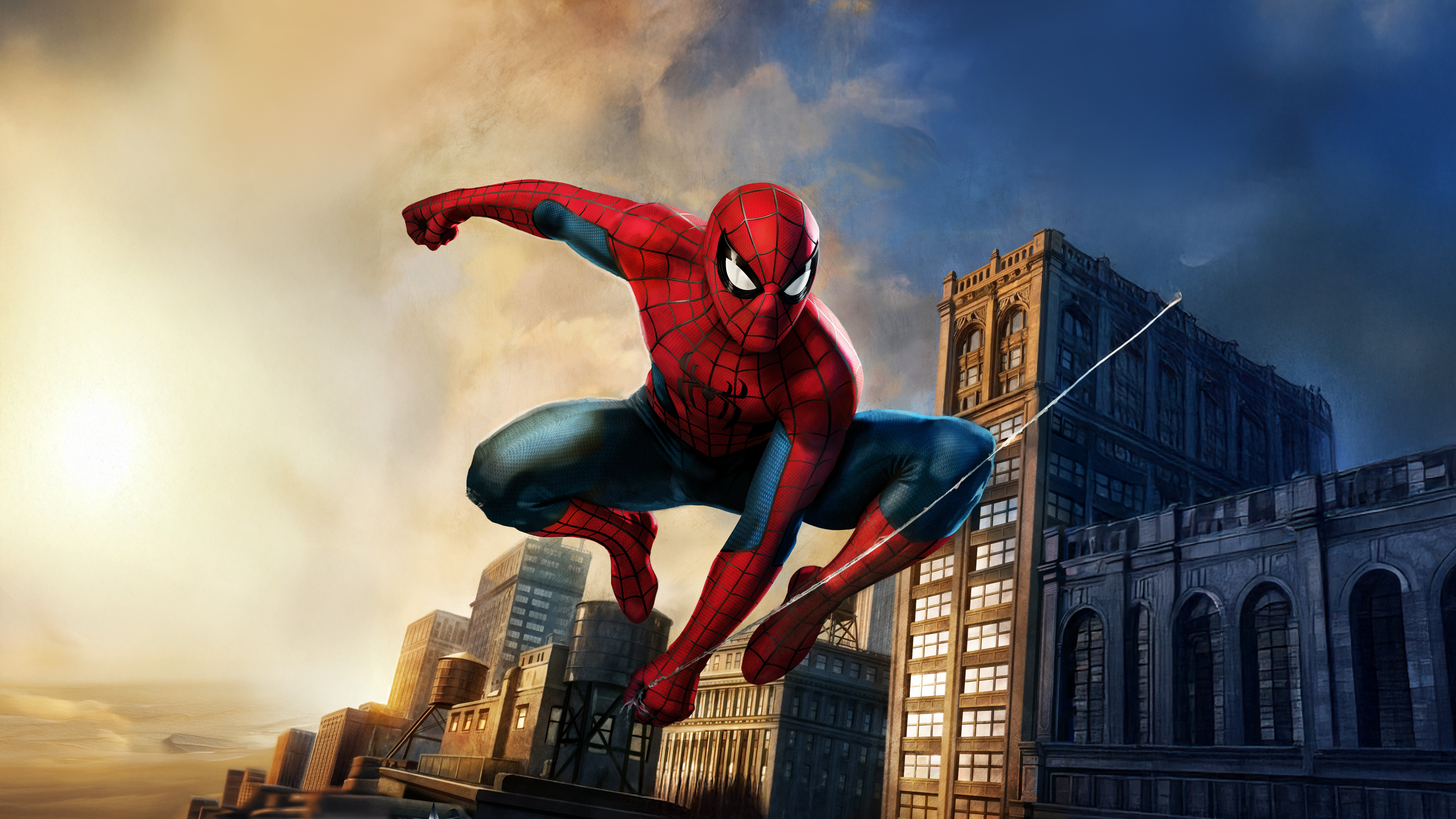
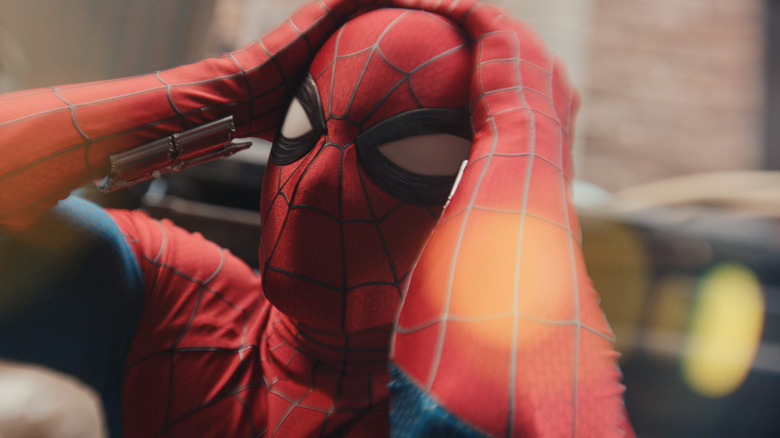
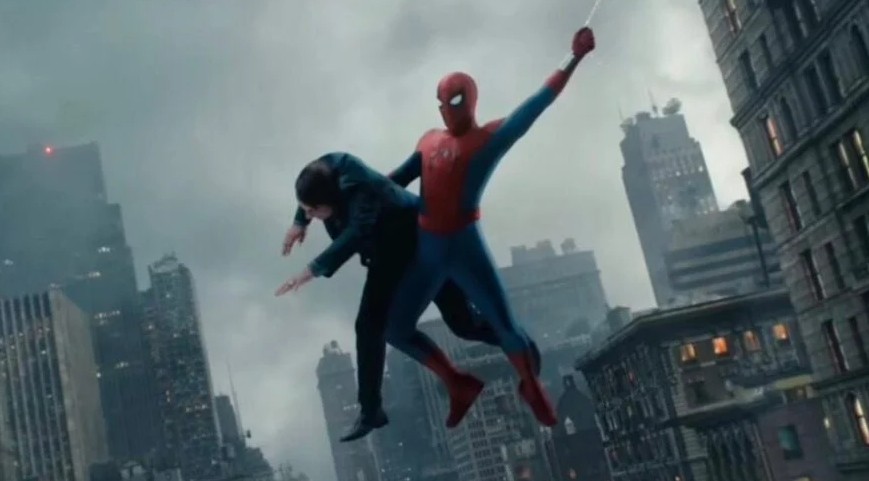
For being such an iconic Spider-Man image, it’s looks weirdly unfinished and out of focus.
The Spidersuit: I realize that Peter no longer has access to the super-slick Tony Stark spidersuits, but this one was…lackluster. The scene where Spidey going through security at Damage Control looks more like a talented cosplayer at a convention instead of the man himself. The CGI of some of his webslinging also looked unfinished in a few places, really calling attention to how previous versions of the character looked way better.
Unanswered Questions
There are so many. By hitting the reset button, it’s hard to know where Peter goes from there. It seems like he will rebuild relationships with MJ and Ned, but it won’t quite be the same. I’m glad that MJ didn’t just immediately fall back in love with him, which means that perhaps Gwen Stacy will have a chance in a future story.
I think what’s really unknown is what role Spider-Man, arguably the symbol of Marvel Comics itself, will have in the larger MCU. Will he continue to be relegated to ‘small potatoes,’ or will he become an Avenger again? Also, will we get to see a Daredevil/Spider-Man story? I loved Charlie Cox’s cameo in No Way Home, but I want to see these two street-level heroes, both suited up, watching each other’s back in a street fight. Now that the Punisher has a connection to both of them, maybe he’ll be the bridge between the Friendly Neighborhood Spider-Man and the Devil of Hell’s Kitchen.
I guess we’ll just have to find out.
Conclusions
As much as I enjoyed this movie, it’s not my favorite Spider-Man story in the Tom Holland era. If there had been a truly heartless villain at the center of the story, like Mister Negative, Chameleon, a new version of Doc Oc, or any of the established Rogues Gallery, this story would have landed much better for me. Having the central antagonist be a character that’s destined to be a hero, in an emerging super team to rival the Avengers, is definitely a choice, but not one that resonated with me.
That said, there’s so much to love about this movie, and it deserves all the success it garners. I think there are some performances that really elevate the material, however. Whatever issues I may have with the story choices, the interrelationships that we see being built between these characters here are precisely what I want out of a shared cinematic universe. Viewed from that lens, this is definitely one of the strongest Marvel entries in the Post-Endgame era.
A while back, I stopped writing these reviews for every Marvel movie or release that came out. Part of it was the sheer volume of content that came through all at once, but the majority of it stemmed from the waning quality in the offerings. After all, I started this blog to talk about the things I love, not those I dislike.
That this movie is here on the blog, tells you that, whatever flaws it may have, that the movie is easily a net positive overall. So, to Marvel Studios, I say: More of this please.
I mentioned this in my most recent newsletter (you can sign up here, BTW), but Sector M recently celebrated its first anniversary on June 11! Now we are on to Year Two, and there’s a lot of exciting things on the horizon. There’s no doubt that it’s a time of great change for me both personally and professionally, and that’s the subject of this blog post.
What do I mean when I say that I’m in my Ranger era? Simply put, it means that my mental focus is shifting away from what I’ve done in the past to meet the challenges of the present and the future. If you are familiar with Dungeons & Dragons this will make a little more sense, but I will attempt to explain in plain speech for those who aren’t up on their RPG character classes.
The Classes of My Life
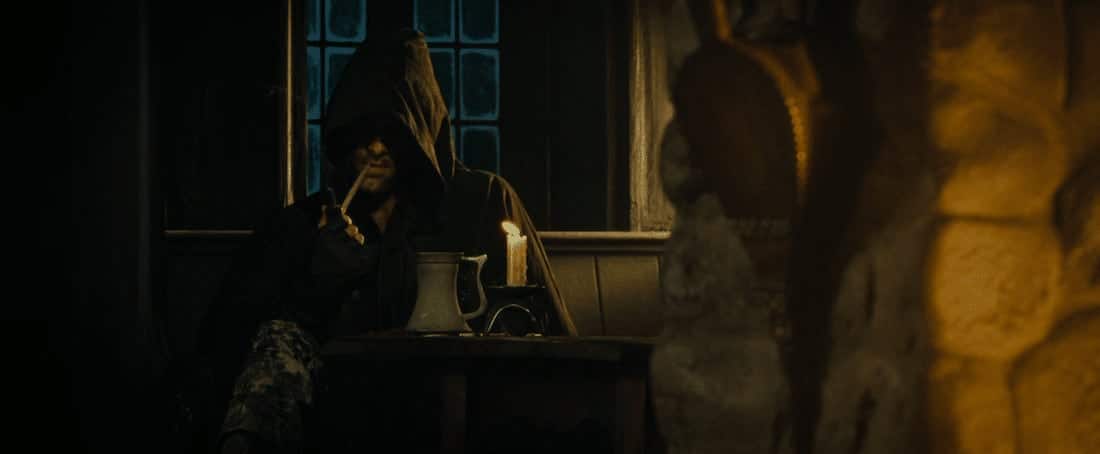
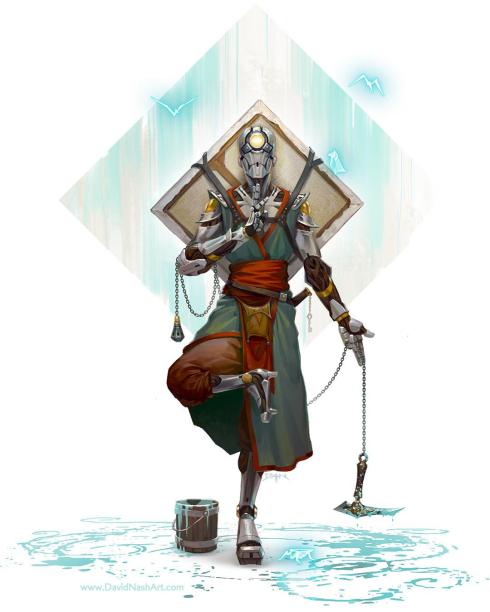
Before we get into the part about the Ranger, let’s take a look back at the other eras of my life and the classes they would correspond to on the character sheet of my life. When I was growing up, I would say that I started out as a Monk. My preferred colors were black and red, which are still reflected in the brand colors of Sector M.
Both of my parents were martial arts teachers, and even ran their own dojo for a few years. I studied a number of different styles during this time and tried to live simply. This era of my life taught me how to concentrate, how to meditate, and how to try to silence my inner devils, though that last part met with only limited success. Perhaps, most importantly, my Monk era taught me to be introspective and deeply appreciative of beauty in all its forms.
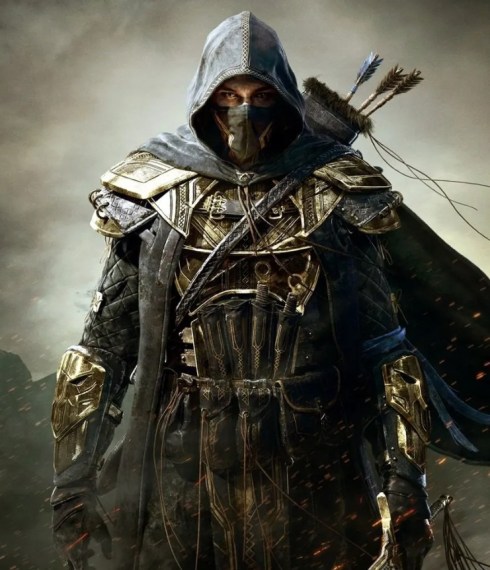
This era lasted until my early twenties. That’s when I underwent my first shift in focus or class change. I multiclassed into a Rogue. It wasn’t that I lost an appreciation for the things in my previous era, but I became much more circumspect in how I conducted myself. My colors became black and dark blue. I tried to walk unnoticed whenever I could, so I could operate and conduct myself without attention.
Despite the name of the class, I wasn’t up to anything nefarious; I just wanted to be left alone to pursue my interests without constraint. Rogues aren’t frontline guys the way Fighters and Paladins are, so they tend to look for the weaknesses in the system and save their efforts for those times when they can punch above their weight. So it was with me.
The transition to this era was definitely shaped by a character that I played for several years out at Renaissance Faires, a character who was most definitely a rogue in every since of the word. He became something of my alter-ego for a time, and he’s still there when I need him. I won’t name him here, but if you know me personally, you likely know his name. My Rogue era was predominately spent in around large cities, as Rogues are known to do in D&D, but over the last year, I’ve once again felt another paradigm shift on the horizon.
Origin of the Era
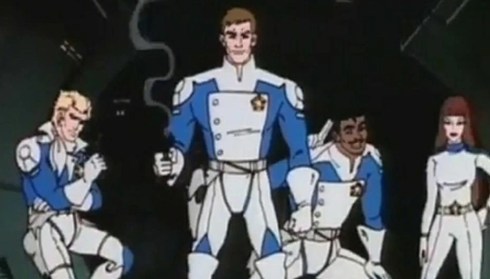
Strangely enough, the dawn of my third era arrived with the rediscovery of a song from when I was a kid. Back in the ’80s, there was a relatively short-lived cartoon called The Adventures of the Galaxy Rangers, one of my favorites. I remembered that it had a really great theme song, something the ’80s was known for. Take a look at the intro.
That synth intro, though.
We only got a snippet of the song, but it rocks. A little over a year ago, I found John Von Tongeren’s full song on Apple Music. Immediate download, right then and there. I found that the intro version of the song had been sped up, likely to keep it concise in the intro. As much as the intro song rocks, the full song is even better. It’s great when you’re cruising down the road or need something with a driving beat and catchy hook.
It sparked something within me, particularly the lyrics taking a stand, ready to prove it again. This came back to me at a time when I was already yearning for something different. My professional life at the time had proven unsatisfying. It took so much from me that little was left for any of my books, games, or creative pursuits.
This pressure had been building for years before then, but I sensed that it was all quickly coming to a head. This song had a way of piercing through all that. When I lost my godfather, I had a stark reminder that our time on this world is finite and that I wasn’t getting any younger.
If I had any hope of scratching the surface of the stories I wanted to tell, and the things I wanted to see and do, I had better get to it. It was high time for a change, and that ultimately led to a moment on a beach in Grand Cayman. I have been resolved ever since.
The new era had begun.
Into the Wilds
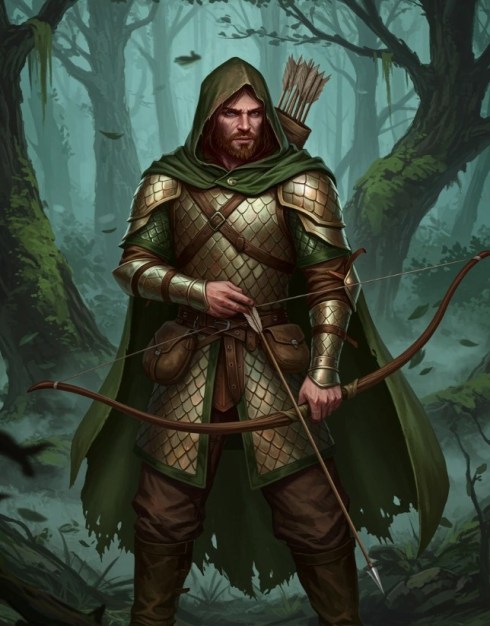
So why a Ranger this time? Rangers and Rogues do have a lot in common, but Rangers are meant to strike out from home, to make do with few resources, be precise with every shot they take, and to blaze a trail through the wilderness. Becoming an indie author would require me to give up many of the things I had taken for granted, like a steady paycheck, so I had to think carefully about how I would move forward.
Further, I would need to travel for signings and conventions to promote my work, which would carry me far outside my comfort zone to say nothing of home. Lastly, going indie would mean I would have to find my way in the harsh and unforgiving territory of self-publishing and self-promotion. No safety nets, no guardrails. I would need to step lightly, yet boldly.
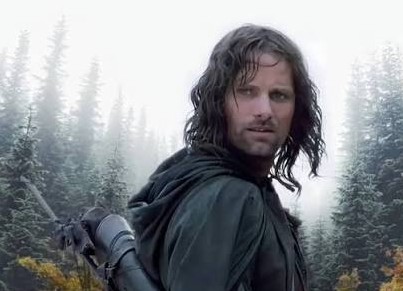
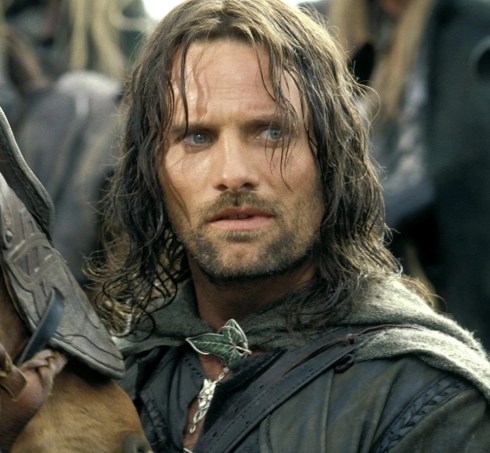
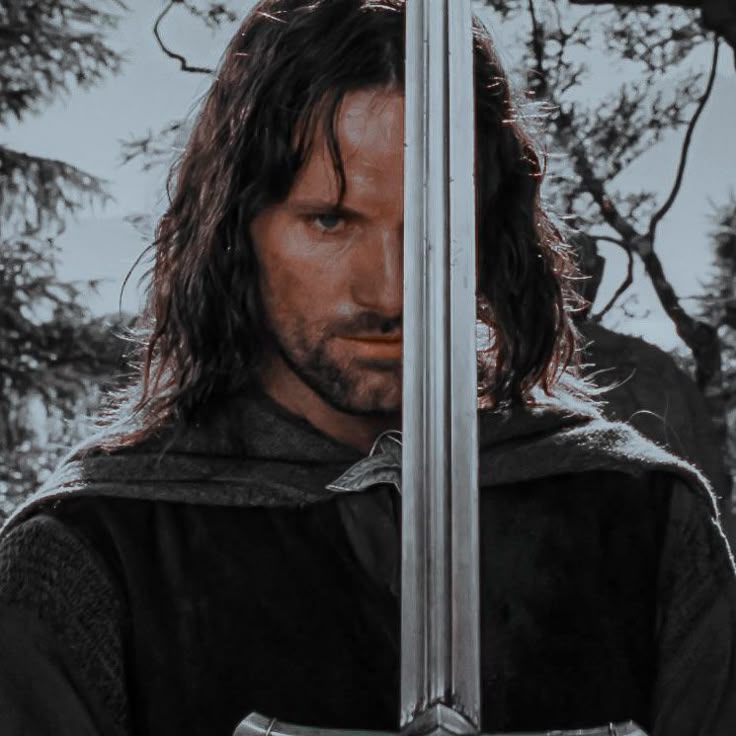
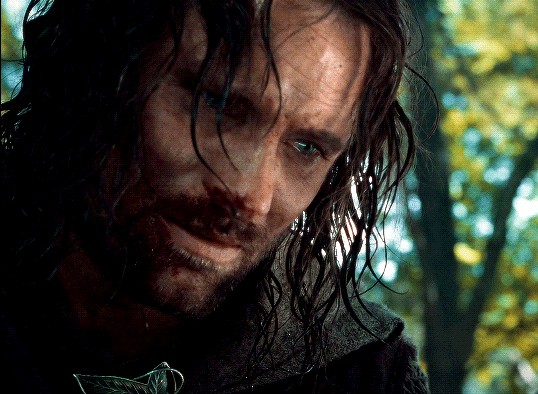
I may not be as cool as Aragorn, but I know what Second Breakfast is.
I am only at the beginning of this journey. There are marketing platforms I need to master, advertising data I need to analyze, and convention and promotion plans I need to solidify. This won’t happen overnight, and I’m bound to make mistakes along the way, but I have a fantastic team of people supporting me that I thank my lucky stars for every day.
I will say that the production of Axis Point taught me a number of things. This was the first time that I had taken a book through the KDP (Kindle Direct Publishing) process on my own. There are other routes I will pursue for my books, but KDP was the one I knew best, so it became the starting place.
Click to buy.
Now I know that I can take a book from a simple manuscript to a fully realized book. This knowledge was hard won, but it will serve me well in the future as other books make their appearance on the scene. I have a fantasy novel in the editing/rewriting phase right now, I’m finishing up the first draft of my cyberpunk trilogy, and I’m ramping up to start on my next book. Oh, and one book I have to send through edits features a Ranger as the protagonist, so it seems fitting for him to finally get his day at last in this era of my life.
What Kind of Ranger?
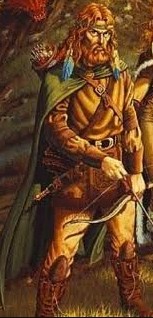
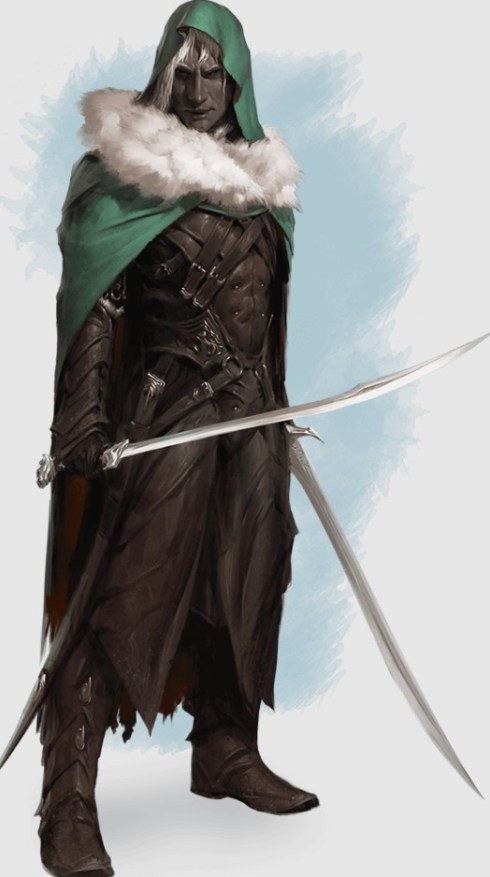
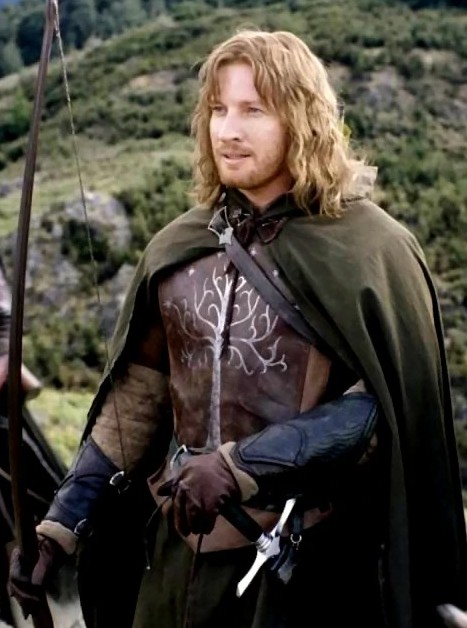
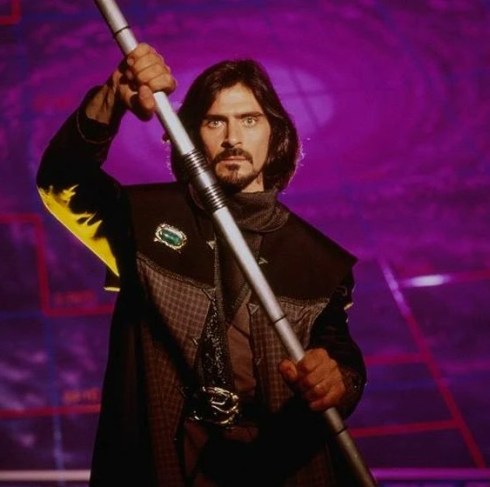
Rangers persist throughout speculative fiction. The most resounding example in fantasy has to be the Rangers of Gondor and the Dúnedain. Let’s face it, you don’t get much more Ranger-y than Faramir and Aragorn. Let’s not forget Drizzt Du’orden, Tanis Half-Elven, and the Night’s Watch. Sci-fi has its share of them as well. There’s the Power Rangers, merrily morphing their way through teenage drama and kaiju fights alike. There’s the Anla’Shok from Babylon 5. (Marcus Cole is one of my favorite characters from the show.) Then, of course, there are the Galaxy Rangers who helped me to realize that it was time for a change.
Which one of these Rangers will be the shining example for me to follow moving forward?
Yes.
There’s a bit of each of them that I will try to apply to my actions as I stride forward. I’m hardly a teenager with attitude anymore, but the mercy and wisdom of Aragorn, the iron resolve of the Night’s watch, walking in the dark places no others will enter, and taking calculated risks — the proverbial “no guts, no glory” — will serve me well now that colors are black and green.
The Ranger’s Code
Since I’m undergoing my transition to this new era, it strikes me that I should put down a few tenets that I will attempt to live by in the uncertain days ahead.
Pursue my objectives without fear: I know what I want to do and where I want to be. I’m just not entirely sure how I’m going to get there. Truth be told, it can be a scary place to be. I’m likely to get lost a few times, but I must be persistent, tenacious even, to find my way through the unknown.
Endure through hardships and setbacks: Whether it takes the form of delays in production, technical issues, negative reviews of my work, or things not panning out the way I thought they would, I need to be able to take all of that in stride to keep going. In all this, I should do what is necessary to keep moving, keep flying, without compromising my principles.
Use what is at hand to greatest effect: I will need to be resourceful and thoughtful with what I already have. If/when new resources become available, I will need to use them as efficiently and productively as possible. Even if I should get to a point where there is an abundance, I should still proceed with a mix of caution and discernment.
Find the path forward: Regardless of what new (proverbial) forest I may enter, I must find my way through it, either by seeking the advice of those who have already traversed it or by blazing a trail of my own if a suitable one is not available. A brute force approach will almost never be the answer, so I will need to be tactical and clever in my approach to matters.
Take only what is needed, and preserve the rest: Any level of success should not be an end unto itself; it should be a stepping stone to something more. Complacency is the eternal enemy, and I don’t want to get too comfortable wherever I land. I should always strive to be better for as long as I’m able. Where possible, I should help those struggling in the wilds along the way.
Just passing ’em out!
Final Thoughts
Do I know how long this era of my life will last? No. Do I know if I’m eventually due for another class change, either returning to a previous focus or finding an entirely new one? Also no.
What I do know is that this is the way I will walk for the foreseeable future. The previous eras of my life taught me certain life lessons that I won’t forget, and will certainly apply what wisdom I can in all of this. The Ranger is not a replacement for those other classes; it’s in addition to them.
While a Monk/Rogue/Ranger build in the current edition of D&D would likely be a disaster (just think of the competition over your Bonus Action!), I think this is what I need right now not only as an indie author but as an individual. It won’t be easy, but then again, nothing worth doing ever is.
I am incredibly thankful for everyone who has supported me during my writing career. And, if you are someone out there who is new to Sector M, and wishes to help Ranger operations move forward, please check out the Support page here on the blog. My new novel, Axis Point, is out now. I have a Patreon as well. If you want to take a look at what all Sector M has to offer, I have a free email newsletter you can sign up for here.
[Note: I do not consider myself a movie critic. What follows is just one fanboy’s opinion based off of a single double viewing of the film. Oh, and there are SPOILERS ahead for this movie, so take heed.]
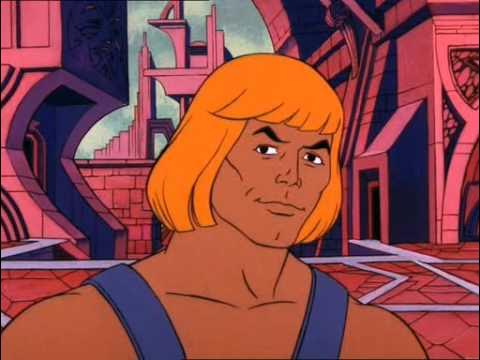
Full disclosure, Masters of the Universe was never my favorite toy property (that accolade goes to Transformers), but it does have a special place in my heart. The He-Man and the Masters of the Universe cartoon was not actually a Saturday morning cartoon. It aired in the afternoons (at least in Texas), just as I was getting out of school, but that only made me love it more. Instead of getting one episode per week, we got five. Even today, there’s just something about hearing that strange bone-chime/xylophone sound that announces a Filmation cartoon to take me back.
Unfortunately, the box office for this year’s Masters of the Universe isn’t looking so hot, which is a real shame. While there are hits and misses in this movie (as we’ll discuss), genuine effort was put into it, and it has a level of heart that I rarely see in movies these days. I’ve heard rumors that there will be another installment of this franchise regardless of the box office, and I definitely hope that’s true. Here’s hoping it does well enough when it goes to streaming to get Amazon to loosen the purse strings again.
First Impressions
While the Dolph Lungren movie from 1987 has been panned, and even credited with the death of the MOTU franchise, I loved it when it came out. But even then, I knew it wasn’t quite like the cartoon. The characters, the sets, the costumes were all very different from what I had seen on the small screen.
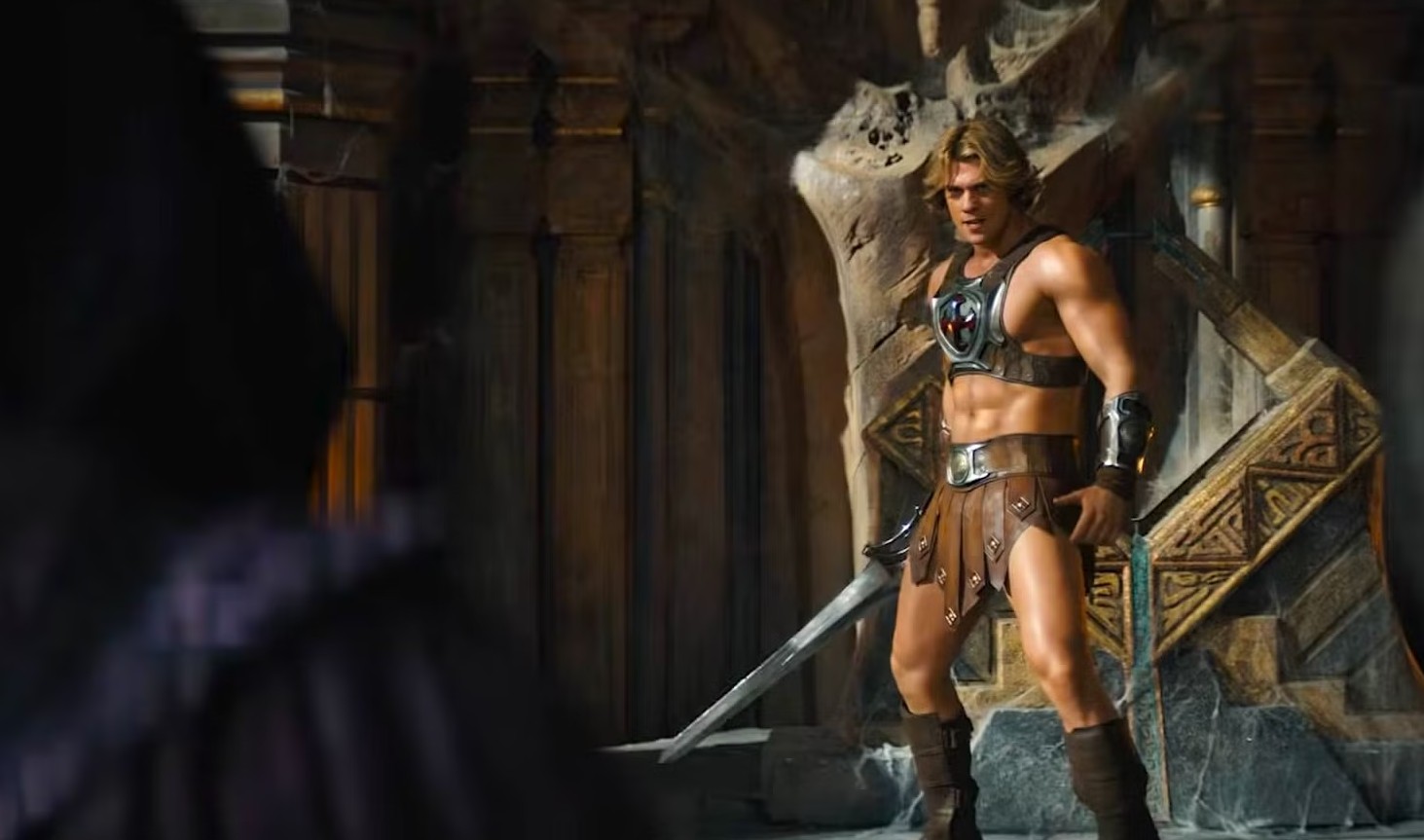
When I first saw the trailers for the 2026 movie, it was abundantly clear that great pains had been made to make all those elements look like a direct live-action translation from the cartoon to the screen. I was intrigued by this, but of course, I’ve been burned by almost every other attempt to bring the various beloved ‘80s franchises to life for a new generation, Transformers and G.I. Joe being chief among them.
So, I set my expectations to mid, especially when I heard that Jared Leto was going to play Skeletor. Even with some trepidation on my part, I knew I was still going to go see it at least once. I wound up seeing it twice, and I hope to catch it one more time before it leaves theatres. Let’s get started and make it official.
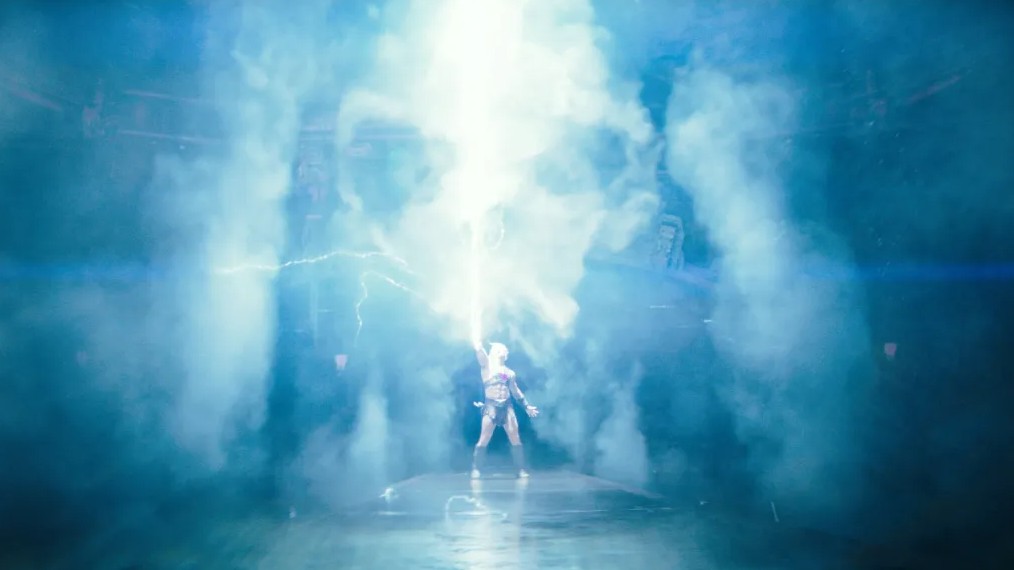
BY THE POWER OF GRAYSKULL, I HAVE THE POWER!
What I liked
THE MOVIE SCORE: Wow, the opening moments really demonstrate the rock opera qualities of what we’re in for with this movie. It struck me immediately at how much it sounded like the Flash Gordon soundtrack from 1980. Little did I realize that this was because Brian May of Queen had lent his soaring guitar talents to the movie score, and it is sonic poetry. The composer for the score is Daniel Pemberton, who had previously created the Into the Spiderverse score, which was excellent. As soon as the movie was over, I knew this was a score I was going to download immediately. It’s one of the best I’ve heard in recent memory. Hearing the old MOTU theme in “A Job for He-Man” done with modern orchestration legitimately warms my heart.
The Director: I was not aware that Travis Knight was the director of the movie until I watched the credits. He was the one who directed Bumblebee, the only installment of the Bayverse that I actually liked. In the opening minutes of that movie, he gave us a frankly stunning look at the Battle for Cybertron. (Honestly, I wish we had a whole movie of just that.) So, it does not surprise me at all that Travis Knight was able to translate the world of Masters of the Universe to the screen. And that brings me to my next point.
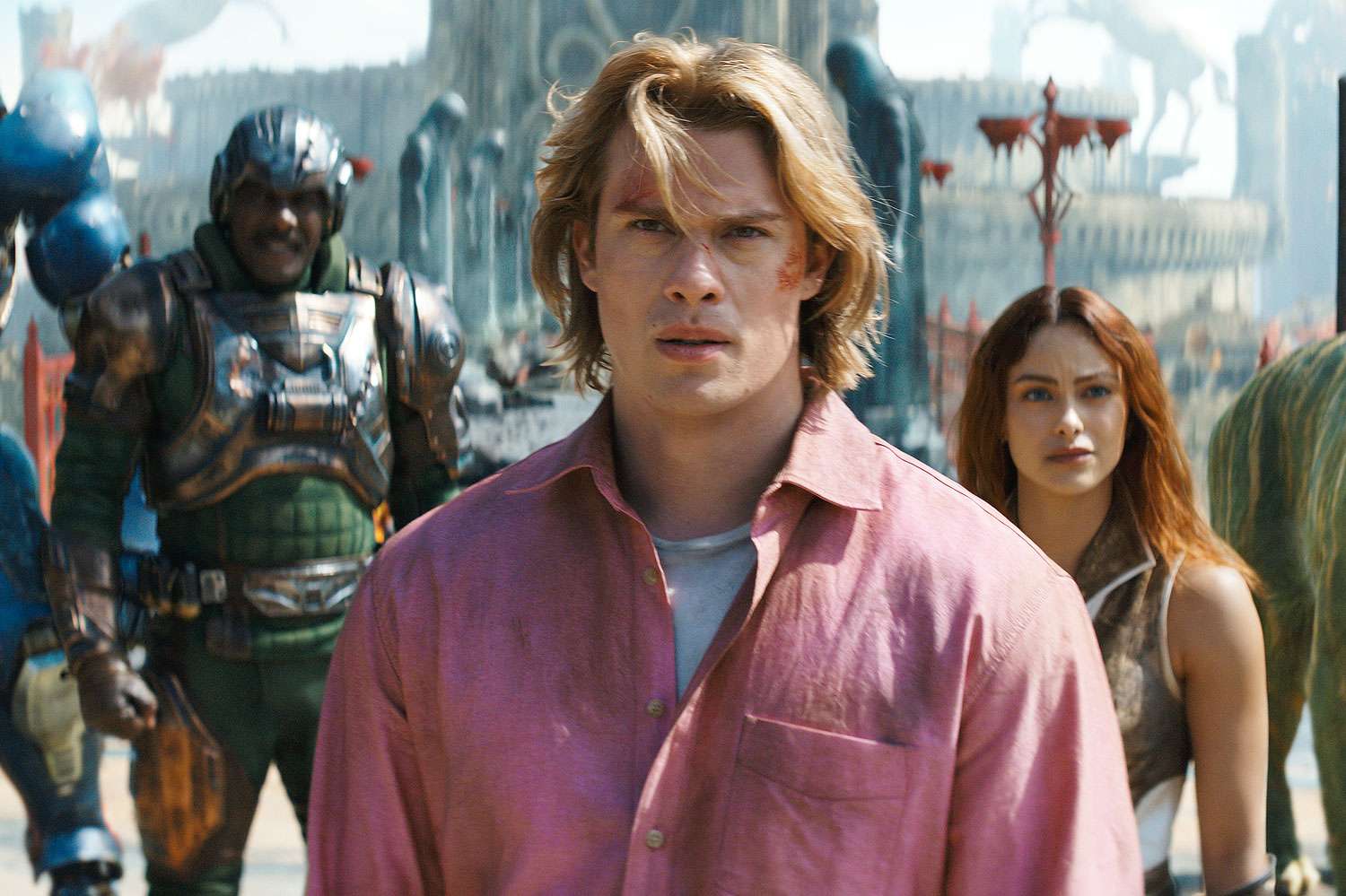
The Atmosphere: As I said above, great pains were taken to make things look like the cartoon brought to life. The color palette is vibrant and beautiful. There are some definite psychedelic colors going on in the vein of Thor: Ragnarok, but that’s a good thing. That movie had more than its share of throwbacks to Flash Gordon as well. The world of MOTU was build on the artwork of Frank Frazetta, with nods to Alex Raymond and Jack Kirby, and it was brilliantly brought to life here.
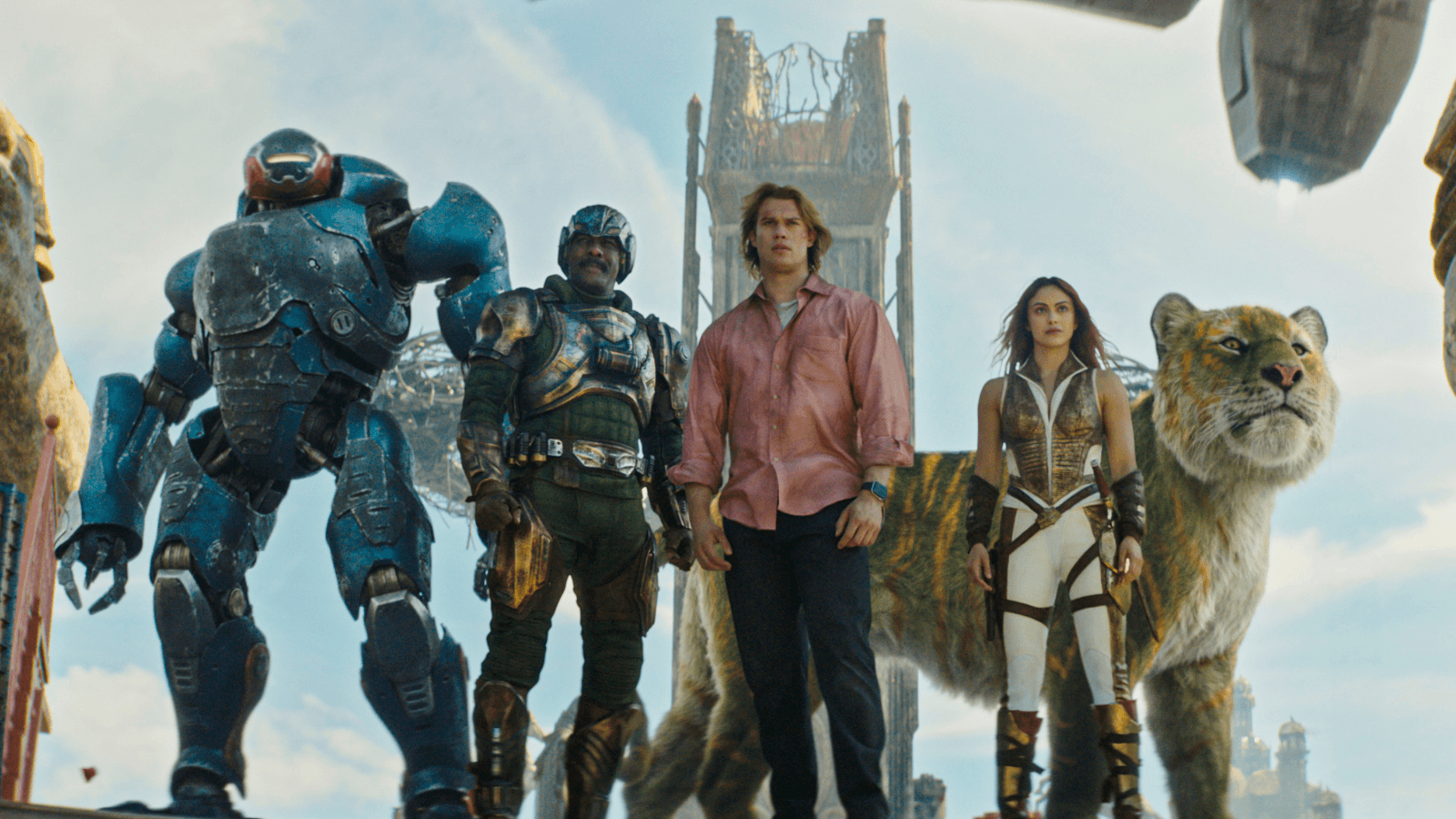
The Character Designs: For the most part, when a character shows up on screen, I knew immediately who they were. The characters just looked right for the most part. There were a handful I didn’t recognize at first, but eventually I was able to figure out who they were. If I had one complaint, it was that some characters were done with practical effects (and done pretty well), while others were clearly CGI or CGI assisted. While the CGI is generally good, Beast Man looks entirely CGI, where Goat Man looks real due to the use of actual prosthetics. Also, shoutout to the return of Pig Boy and Karg from the 1987 movie.
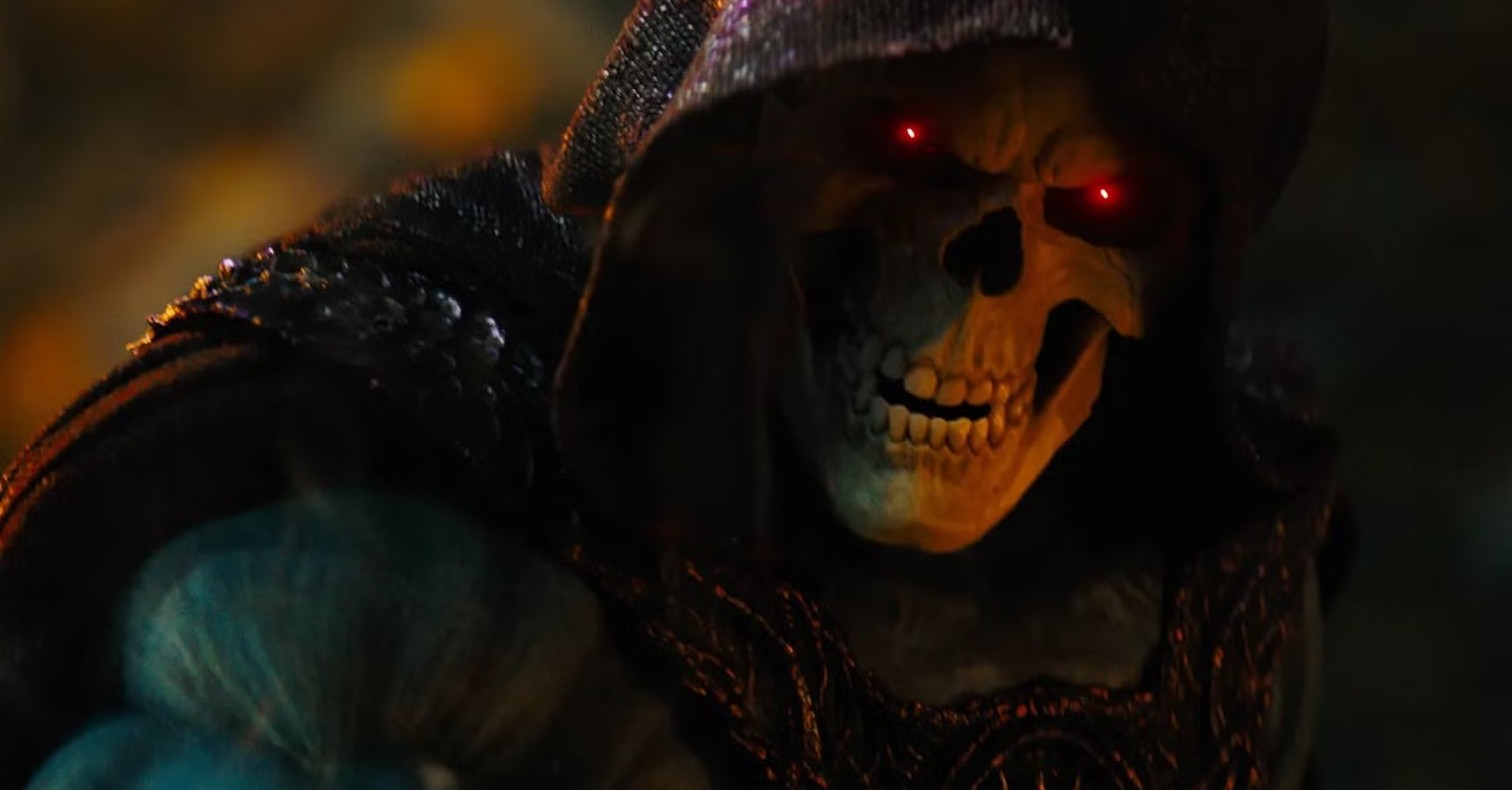
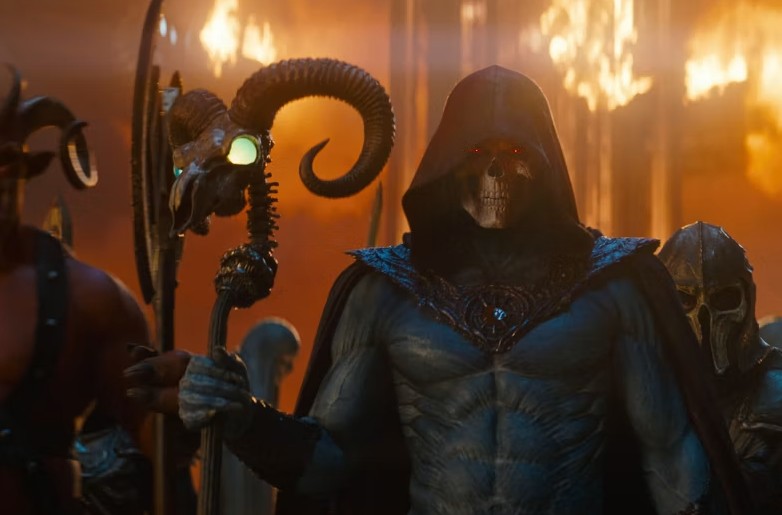
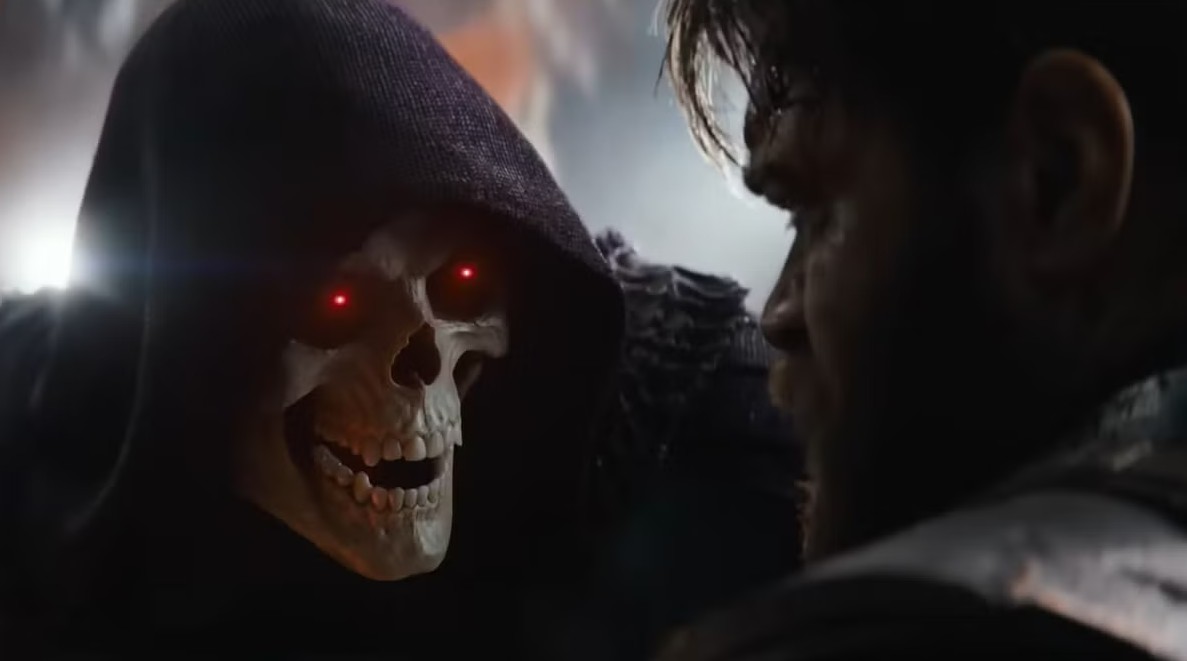
Skeletor: Let me just say it: I don’t like Jared Leto as an actor. Normally his involvement in a project means I’m not interested. (I still haven’t forgiven him for the worst screen-version of the Joker we’ve ever seen.) He completely disappears into his role as Skeletor, and it’s a really good performance. The CGI to give Skeletor’s skeletal face emotion helped with this quite a bit. There were some lines that seemed to get lost, but my second viewing of the movie (shoutout to the Rangra Theater in Alpine, Texas) helped with that. While Skeletor is probably the biggest departure from the cartoon, particularly when it comes to his vocal stylings, it still works. He looks awesome, he’s terrifying, and seems like a genuine threat to He-Man and his allies.
All the Little Nods: There are so many nods to the toys and the cartoon that they really are too many to count. One of my favorites, however, was when Roboto reveals her more toy-accurate remodel, saying that it’s ‘a little revealing.’ In that moment, all the characters have their hands on their hips and tilt their heads back in a big belly laugh, just like in the cartoon. Brilliant.
Shadow Casting: When I first saw Camila Mendes in the role as Teela, I thought she was cool, but a bit far removed from the fair-skinned, bright red-headed version of Teela from the cartoon. Here’s the thing, though. Teela is secretly the Sorceress’s daughter. And who does Camila Mendes look like, especially when out of her Teela persona? Answer: Morena Baccarin, who plays the Sorceress! Nice one there, casting director.
The Fight Scenes: When it comes to throwing down, He-Man delivers. The fight choreography is pretty sharp. Some of the major action set pieces can overstay their welcome at times, but when the action scenes arrive, they don’t disappoint. My favorites are probably He-Man soloing all of Skeletor’s henchmen and the fight sequence where Ram Man and Fisto fight in the courtyard of Eternos.
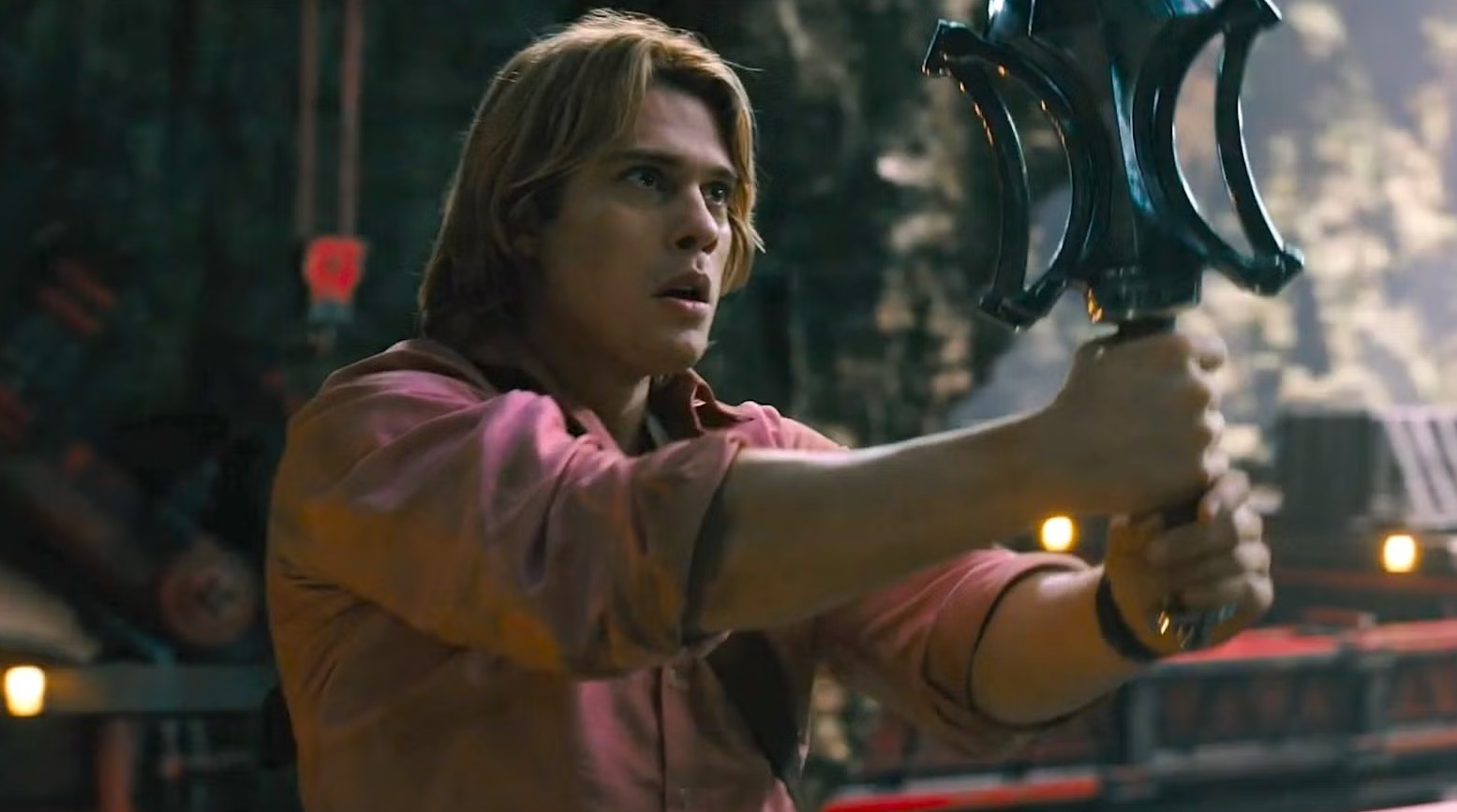
The Heart: This movie has heart, and I think a good message, even if the latter gets a little muddled at times. The whole struggle comes down to who gets the wield the Power of Grayskull. Ultimately, it’s Adam—a good person who has empathy for those around him— who becomes the vessel for the Power of Grayskull. In our real world, we’re constantly seeing power applied with a lack, or complete absence, of empathy. Seeing a story where good triumphs over evil through the just application of force, but reserved for when diplomacy fails, is something we could stand to have a lot more of in today’s cinema.
What I DIDN’T like
The Runtime: The movie clocks in at two hours and thirteen minutes (though AMC puts it at two hours and twenty minutes). As a fan of The Lord of the Rings films, I don’t mind a long movie…provided that the content we’re seeing is good. This movie honestly could have used a tighter edit. There are some scenes that go on and on, and I think a more streamlined cut of the film would have done wonders for it. Keep the heart and soul, but trim the fat. I think the movie succeeds despite this, but I think it should have been around ninety minutes, give or take.
Telling, Not Showing: I think the movie missed a step with the sequences on Earth. We’re told by Adam’s boss that people like him, that he’s thoughtful, and understanding, but we don’t see it. Adam says that he’s really good at his job, but again, we don’t see that in action. Instead of him about to lose his job for obsessing over finding the sword, I would have much rather had a scene where, as a member of Human Resources, someone is having a real problem at work and Adam helps them through it with some well-placed words of wisdom.
Or show him resolve a dispute between conflicting parties by establishing trust and helping them find common ground. I think that would have made the scene where the Sorceress tells him why she chose him to be the recipient of the Power that much more impactful. Most of the time it feels like stories have a lot of setup with no payoff. This movie seems to have payoff without actually setting up that key part of Adam’s character, and that’s unfortunate.
Undercutting Dramatic Scenes with Humor: Here we go again. This has been my complaint on so many movies the last couple of years. There are only a few writers/directors who can really pull that off, and even they will play that card a little too often. (James Gunn in last year’s Superman, anyone?) This has really been a problem since Thor: Ragnarok, and this movie falls for it as well. There are several serious moments that would have been so much stronger if they had just been able to breathe. But no, we have to throw a joke in there. Most of them don’t land, and just manage to sabotage the whole works. Please, by all that is good, movie directors…please stop doing this!
The Sword Dilemma: Adam jumps through a portal to Earth and loses the sword en route. Later, when he finds the sword again, it immediately sends a signal to Eternia. Within hours, Teela and Beast Man are on Earth and able to track him down. Isn’t it a lucky break that Adam lost the sword that early? If he had held onto it, wouldn’t Skeletor’s forces have been able to track him immediately?
In that case, he would have been on his own and still a kid, and certainly no match for Beast Man. Losing the sword worked out pretty well, then. It gave the resistance a few years to regroup and relocate, and it gave Adam time to grow up to be able to face his enemies as an adult. Now, having said all that, it is possible the signal to Eternia might have only been triggered when Adam tried to activate the sword’s powers for the first time. The only issue is that Adam didn’t say the right words in the comic shop. So, it’s not clear what triggered the signal. We might have to file this under “so the movie can happen.”
Folding Space Out In the Open: When Teela brings Adam back to Eternia, she translocates right over the ruins of Eternos. I know this is so that Adam can see the destruction of the city that was once his home with his own eyes. Teela even mentions that being out in the open is dangerous. Sure enough, Tri-Klops is waiting for them, and tracks them back to their hidden base. Was there some reason that Teela needed to fold space to that specific area? Could she have not appeared back at the open cavern where the resistance is hiding out? Again, I think this is a “so the movie can happen” issue.
The Lack of Early Warning Systems: Twice in the movie, the heroes are caught completely unaware by the arrival of enemy fighter craft. They sound the alarm only after there are ships overhead firing away. For a world where technology exists, do they not have long-range sensors or radar? Do they need to just rely on visual confirmation that an attack is imminent?
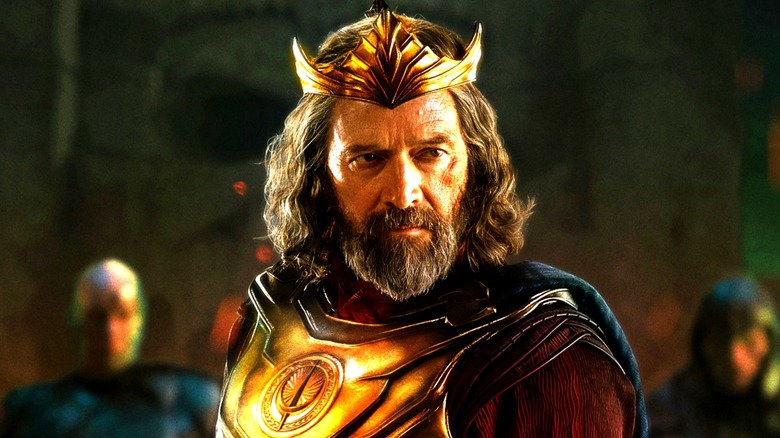
King Randor: I normally love James Purefoy as an actor, but making King Randor a huge jerk was not a creative choice that I loved. I know they wanted Duncan/Man-At-Arms to be the one to give Adam the inspirational speech, but I would have loved to see an inkling of the empathy in Adam reflected in Randor, especially since Purefoy is amazing at giving that kind of inspirational performance ever since A Knight’s Tale.
I understand that Randor in this movie was trying to make Adam strong in a world that needs strength, but I don’t think that worked. There was one blink-and-you-miss-it scene in Snake Mountain when Randor sees Adam fighting as He-Man, and Randor is near tears at seeing his son become the man he had always hoped Adam would be. Now that little moment I actually liked.
Skeletor Admitting to Being a Villain: In their final confrontation, He-Man tries to talk Skeletor down. The attempt fails, and Skeletor admits that he’s evil and a villain. I’ve talked about this in previous blog posts, but the best villains don’t necessarily believe or realize that they are the villains. That’s what makes them so scary. If you were to look at some other ‘80s cartoon villains, I’m pretty sure they would think they are the heroes of their own story. Cobra Commander and Mumm-Ra for sure. I don’t believe Megatron would consider himself a villain. A leader and conqueror, certainly, but not a villain.
Now, if there was an ‘80s villain who absolutely knew what he was, you could make a case for Skeletor being him. Plus, the movie variously refers to him as a fiend, a devil, and a demon. So, maybe he revels in his own evilness.
If we were going to draw a contrast between Skeletor and He-Man, however, I would have much preferred that it be along moral lines. He-Man believes in using the Power as morally as possible and only as a last resort; Skeletor believes that the Power is an end unto itself and thinks morality is for the soft and the weak. I think that would have been a stronger take than what we were served in this scene.
Unanswered Questions
For me, the biggest question here is: now what? Do we get more of this MOTU continuity, or is it going to be yet another failed attempt at capturing the magic of a 40-year-old franchise. I hope it’s the former, because I think this take on the material, and this cast and crew, really came through, all things considered.
While it’s a relatively minor thing, why did He-Man and his allies suddenly start choking and throwing up just after they broke out of prison? Was this just to undercut the cool walking in slow motion scene, or was there a Stinkor cameo that was cut? I’m not sure what that was all about.
I suppose the She-Ra cameo in the stinger is another question mark. Will the studio green light a She-Ra movie to make good on that brief glimpse into Etheria? Will she already be She-Ra or will she need to discover her powers the way Adam did? Will Adam and Adora ever get to team up the way they did in the cartoon?
I suppose only time will tell.
Conclusions
When I walked out of my first viewing, I knew I liked this movie, but didn’t love it as much as I had hoped I would. I’m not sure why, but my second viewing made me love it even more. There were little touches that I noticed here and there, and just some of the performances landed better for me. A lot of the jokes still didn’t work, but I didn’t find them nearly as distracting or annoying as on the first time. Like I said, I hope to see it a third time and see if I can get another boost toward the positive.
Masters of the Universe is really a movie about how Adam becomes He-Man. He’s the prodigal son returning home and finding the strength within himself to fight for his people. While I wish that some of the elements underpinning his journey had been a bit stronger, the message is one I can get behind. It really comes down to Spider-Man’s old axiom, “With great power comes great responsibility.”
And if you are, however unintentionally, channeling Stan Lee on a project, you know you’ve tapped into something. It is my sincere wish that we get to see these actors in these roles again. This is the closest thing we’re ever likely to get to a return to the golden age of He-Man, and it did my heart good to watch it all up there on the big screen.
And that’s the way this fanboy sees it.
In today’s blog post, we saw an adult fanboy attempting to use his decades-old knowledge of our stories to make sense of a new telling of events in the modern day.
Nostalgia can be a powerful thing, reminding us of those things in the past we love that are close to our hearts, and that can be fun. Just be careful not to get too wrapped up in your own memories of long ago. You don’t want to enjoy the past at the expense of the present.
Howdy, folks! I announced this earlier this week on my author newsletter (you can sign up here): Sector M’s first major book release, Axis Point, is now available on Amazon in a paperback, hardback, and Kindle version!
Front cover.
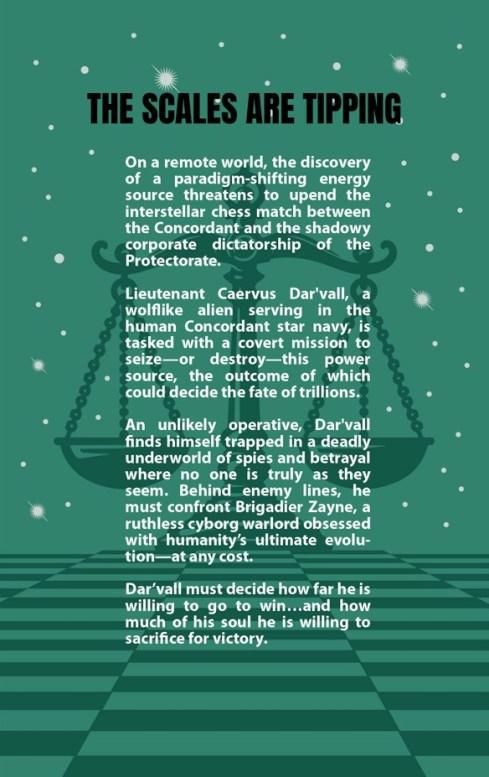
This book is the first installment of the Knight Wolf Saga, my military science-fiction series. It stars a character that came to me when I was 19, one of the most complete ‘downloads’ that my muse has ever sent my way. I knew everything about him instantly. To this day, I consider Caervus Dar’vall a gift.
In this blog post, I will take you through the need-to-know information about this book. Let’s get to it, shall we?
An Alien Protagonist? Really?
Really. Caervus Dar’vall (pronounced carevuss and the rhyme of barball) is the central character of this book and the series. He’s a wolflike alien, a Lykosian, that is close enough to human to be emotionally accessible but different enough to give the reader a different perspective.
Back Cover.
This also allows Dar’vall to act as an observer to humanity from the outside looking in. He occupies a sort of ‘balcony seat’ in that sense that allows me to write anthropological science fiction stories that shine a spotlight on humanity in all its flaws and triumphs.
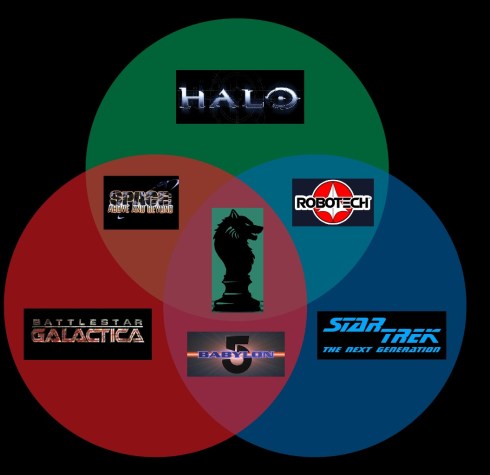
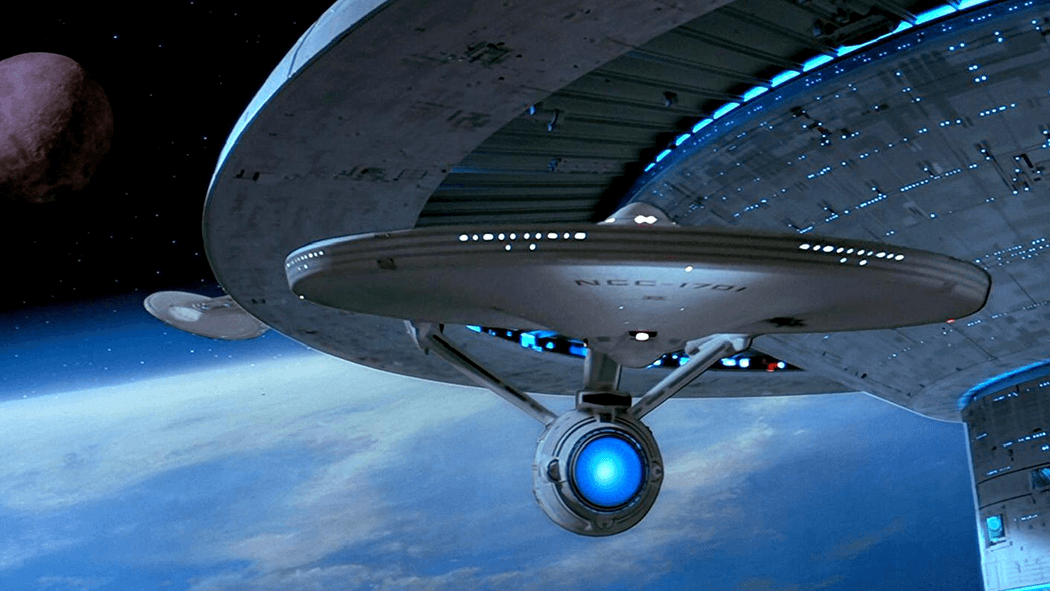
Star Trek, (New) Battlestar Galatica, and Halo
I’ve been asked before what the vibe of this book is in terms of other sci-fi stories, which naturally covers my inspirations and influences. Doing so reminds me of the “comps” you use in a query letter, or the high concept used to pitch a television show.
If I had to describe this book in those terms, I would say that the base code of the series is Star Trek: The Next Generation mixed with the darker visual aesthetics of original series Star Trek movies and (new) Battlestar Galatica. Mix in some Halo due to Marines in power armor and ancient technology, then set it all to a Jerry Goldsmith/James Horner movie score, and you’re in the general neighborhood for Axis Point.
Something like that, yeah.
Of course, like many sci-fi writers, I’m also influenced by Heinlein, Herbert, Asimov, Bester, and several others both in and out of the military sci-fi subgenre. The list goes on and on.
How did Axis Point Come About?
I first tried to write a Dar’vall story in college. A noble effort, with moments of promise, but it just wasn’t working. I was still developing my writing voice, and I didn’t have the life experiences or philosophical understanding to really tackle a project of this scope.
When I left the corporate scene almost a year ago, I knew that Axis Point needed to be the first book project I delivered. I had previously said that I would “turn the page,” toward the fantasy genre, but that was when I was going the traditional publishing route for all my books. Now I want to maintain creative control over my books, and this series in particular. Thus, I’m going the indie route.
This is when I made the decision.
Dar’vall is near and dear to my heart, and I’m over the moon to be able to finally share his story with all of you. I hope you will join Dar’vall on his journey, which in many ways is also my journey.
I’ve linked to the Amazon page a few times here, but here it is again. Click HERE to pick up your copy of Axis Point.
Hey, everyone. This is a blog post I had hoped I would never have to write, and it’s surreal, bordering on unreality, that I’ve sat down to put these words together at all. I lost my best friend, Travis, less than a week ago at the time of this writing. Just writing that sentence feels like I’ve dipped my heart in liquid nitrogen and then shattered it against the floor.
His loss was shocking for the fact that it was so unexpected. He had been having some health issues the last little while, it’s true, but no one that knew him could have guessed that he was facing a life-endangering condition. But now he’s gone, and those who knew him are left in the wake of his passing — confused, heartbroken, and stricken.
‘Nuff said.
I’ve written eulogies to people I’ve lost before on this blog, notably about my grandfather, my godmother, and my godfather. This is yet another in that series, but one that packs an emotional wallop the likes of which I’ve never been dealt before.
This post is an attempt to make sense of the world around me now. I won’t lie — this is going to be a rough one, but I hope you’ll stick with me on it. Travis is an essential part of my origin story, as you’ll see.
Who Was He?
I was an only child growing up. Thankfully, I had plenty of cousins on both sides of the family to fill that role. Travis was a cousin on my Dad’s side. He was six years my senior, and I looked up to him my entire childhood, and that never really stopped. He was a gentle person with the mind of an intellectual, the heart of a gamer, and the soul of a poet.
I admired all of those qualities about him, but others around us didn’t. We both grew up in the rural spaces of East Texas, and neither of us ever quite fit the country mold or mentality. We were eternally the puzzle pieces that didn’t quite fit the space we were granted. We loved comics and philosophy, history and science fiction/epic fantasy, literature and gaming, both of the tabletop variety and video games. The Venn diagram of our interests was very nearly a circle.
Those interests did not make us very popular with our peers at the time, however, but it didn’t matter because we were around each other enough that we knew we had a fellow geek and nerd in the other. We would sit in the backroom of our great-grandmother’s house, a place known as the Boys’ Room, and talk for hours about everything that was on our minds.
This isn’t the actual sign, but a similar one was nailed to the door of the Boys’ Room.
The irony is that most people who knew Travis would likely describe him as quiet, but let me tell you that some of the longest and most engaging conversations that I’ve ever had were with him. He had a rapier wit and no small amount of snark that he injected in these conversations that often left me laughing until my sides hurt. So, yeah, he was easily one of my favorite people on this green Earth. When I say that he’s the closest thing to a brother that I have, I want you to understand my meaning.
But even the word brother doesn’t quite cover it. I’ve known plenty of people who have actual blood siblings who were not as close as we were. We were not only a family by blood but also by choice. I was lucky enough to maintain that bond right up until the end.
Processing his loss is not going to come soon, nor will it come easily. He occupied a unique and irreplaceable role in my life. His death is a major landmark. There will always be a ‘before’ and an ‘after’ time.
The truth is that the tapestry of our lives was interwoven, and having him ripped away, stitch and seam, leaves me as ragged around the edges as the metaphor implies.
A Fanboy Education
I’ve had a lifelong love of superheroes. My first impressions of DC were shaped by Super Friends, just as my first foray into Marvel was through Spider-Man and His Amazing Friends. I watched those shows before I could read, and even though he was older than I was, Travis always watched those with me when we were together.
I can hear the theme song in my head.
While the concept of superheroes was not something he introduced me to, per se, he did spark my interest in comic books. He was the first comic collector I ever met, the first to bag and board his comics, and the one who introduced me to the deep ocean of lore that made up the DC and Marvel universes. Some of the very first comics I ever owned came from Travis. My access to comics as a kid was pretty limited, and often Travis would be the one to bring issues that I had missed when we would meet up in the Boys’ Room.
I was fortunate enough to see nearly all of the MCU movies with him. I believe the last one we saw together was Deadpool and Wolverine before some of his health issues started to take their toll, making him adverse to going to the movie theater. Streaming helped with that somewhat, and we still got to watch a number of good flicks. The last one we watched together was The Old Guard, starring Charlize Theron, just a few weeks ago.
While the MCU has been a bit hit-or-miss the last few years, both of us were really looking forward to seeing Avengers: Doomsday. Seeing it this December is going to be really weird without him.
All the Lasts
When someone I care about dies, I start to think about the ‘lasts’ with that person. When was the last time that I saw them, talked to them, went to dinner with them, those sorts of things. I’ve mentioned a few of them already, but here are some of the lasts with Travis:
Last text: A short message telling me to check with his roommate on some things related to Travis going into the hospital.
Last email: a listing of different doctors appointments he had in the works.
Last phone call: I had accidentally dialed him. He called me back to make sure everything was okay.
Last dinner: A trip to Longhorn Steak House after the last session of his Forgotten Realms campaign.
The list goes on, and on, and on…
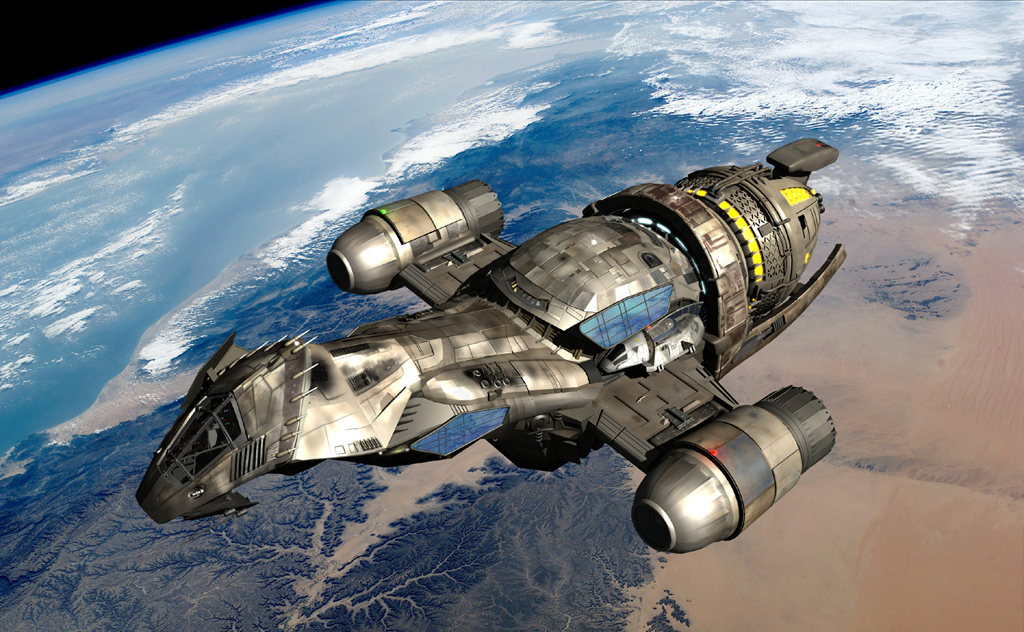
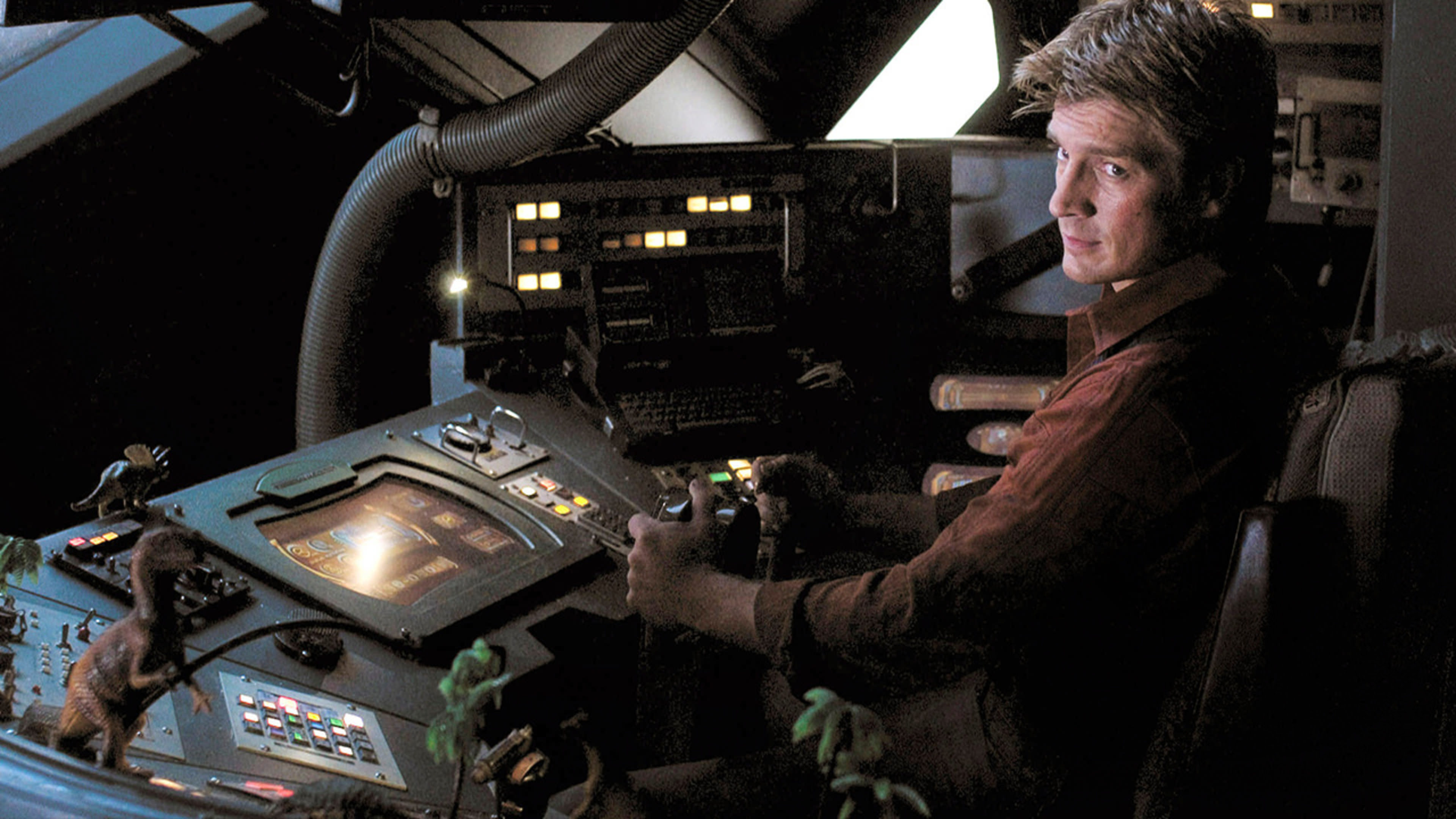
The last in-depth conversation we had was about Firefly. The news that there might be an animated Firefly series in the works, with the original actors reprising their roles, made us both excited for a potential comeback. So, I had gone back to revisit the series, even introducing my young son to it in the process.
Travis and I talked about what the characters and setting meant to us while we waited in the doctor’s office. I told him that we had finished “Objects in Space,” the last episode of the regular series, and that we would watch Serenity soon. We weren’t sure how my son would react to the untimely deaths of Shepherd Book and Wash.
We finished up at the doctor’s office and I drove him home. I ate lunch at his house, though his stomach was not feeling well, so he didn’t join me. The last thing he said to me was that he really appreciated all my help.
That’s the problem with lasts; most of the time you don’t realize it was the last time you’ll do something. So, the last geeky conversation we had, out of the many thousands we’ve had over the years, was about a show that was gone too soon, and forever missed by those who loved it. Fitting, no?
Travis went into the hospital the very next day, and into the ICU that night. He never fully regained lucidity in the days before he died. One of the nights that I came home from sitting vigil at the hospital, we watched Serenity. When the movie came out all those years ago, the two of us had attended a sneak-peak of it, and loved it, of course.
Love keeps her in the air when she ought to fall down… tells you she’s hurting before she keens. Makes her a home.
Watching it now, I’m struck by Zoe and Mal’s last interaction in the movie. After the death of her husband, and the near dismembering of Serenity, Mal asks about the ship, but is really asking about how Zoe is grieving.
Think she’ll hold together?
To that, Zoe replies:
She’s torn up plenty, but she’ll fly true.
All the Firsts
As bittersweet as it is to remember my last interactions with Travis, I now face a universe of ‘firsts’ that happen without him present. His first birthday after he’s left us. My first birthday without him. The first holiday season without him here. That’s just the immediate stuff. The future holds all sorts of milestones, like graduations, weddings, and, yes, even funerals, where I will wish like hell that he was still here to be there for them. My first major book launch is in a little over a month, and now I won’t be able to share it with him.
Those thoughts are nearly unbearable. At times, they weigh down on me like I’m Atlas from myth, but a version of him that doesn’t have super strength, being crushed beneath the unimaginable weight.
I feel like I’m the Variant now, in a timeline gone horribly wrong.
It’s going to be a long while, and maybe never, before I see or do something cool and don’t immediately think to let Travis know about it.
While it might be a very writer-y thing to throw into the mix here, one of the things that’s really damaging my calm is now referring to Travis in the past tense. I thought we had a good twenty or thirty years left to us. We were supposed to both go to a retirement home where we could spend our twilight years gaming without having to worry about any of the rest of it.
This wasn’t how our story was supposed to end.
The Games We Played
Speaking of stories, we made a fair few ourselves. Tabletop role-playing games, or TTRPGs, are a wonderful engine for those creating characters, stories, worldbuilding, and the like. I use those skills all the time in my books, and Travis was there as I developed them. The two of us had many grand adventures together, from the streets of Waterdeep and sands of Netheril, to the Siege of Kalaman, and the last stand at the High Clerist’s Tower, as well as so many other battles, adventures, and shining moments. He was an inventive and strategic player, whose characters often found ways to punch way above their weight.
He told me once that the first character he ever rolled up was a fighter in the Rolemaster system named Aelfred. This is when he was in college. If you’ve never played Rolemaster, it is far and away the most complicated tabletop RPG I’ve ever encountered. It does have one of the coolest skill systems that I’ve since adapted to other games. Suffice to say, if Travis could cut his teeth on that system, he was fearless at running other games.
The last character he played was a cleric named Gazpacho for a D&D 5e campaign. I was not involved in that game, unfortunately, but I was in plenty of others over the years, both as a fellow player and as a GM/DM.
Here’s a litany of the characters that were in games that I played in or ran myself:
Francis Greenleaf and Malik the Reaver (Forgotten Realms), Korranderaythe “Kor” von Cristalvasser (Dragonlance), Laeryn Chanis, Gwaelon, the Rune Magus, and Phillipe “Flit” Ballantine (Valeriand), Alfon the Blade (RPG to Go), Jasper (Greyhawk), the Mimic (Reverse Dungeon), Faustindintal Krinkledoom the Gnome Beserker (One Shot), Tiny the Pygmy Storm Giant (One Shot), Rick Derris (Traveller), Sour Ron (7th Sea), Chuck Wagon (Werewolf the Apocalypse), Adam Adamant and Sebastian Vandergriffin (Glorantha), Gruhn and Hawk (Iron Kingdoms), Quarantine (AEOS-17), Councilor Trip (Fallout), President McKenna (Far Beyond the Stars), Derek Calderon (Star Wars), and Nevarre Nightshade (Shadow of the Dragon Queen).
Travis was also a prolific GM/DM. Here’s a similar list of campaigns that he ran where I was a participant:
Shadow World (Rolemaster), Memphis By Midnight (World of Darkness), Age of Netheril (Forgotten Realms), Angels and Devils (Forgotten Realms), Silverymoon/The North (Forgotten Realms), Game of Thrones – Past Lens (Rolemaster), Malkaziel’s Cataract (Forgotten Realms/Tenede)
In all this, I have to include this story. One of my first attempts to run a game was when I was in junior high. I created a super-simple RPG system that used only six-sided dice. It was really meant for us to play while on road trips where most of it was handled through just talking it out.
A couple of my cousins had made up characters and played for a while. They had levelled a bit and found some great magic items. At this point, I hadn’t figured out that if you introduce a new character into the party that you should start them out relatively equal to the other party members. When Travis came down from college during the summer, he made up a character named Alfon the Blade, a thief/rogue character who, rather unfortunately, only had one hit point. Travis didn’t mind, however. He was adept at playing oddball characters.
After getting kicked out of the town square for plinking on an out-of-tune harp that only had one string, I introduced him to our cousin Michael’s character, an extremely dangerous Dwarven assassin named Viper. Viper had made a reputation for himself by clearing out the local forest of several gangs of bandits singlehandedly. Understand that Michael was maybe 10-years-old at the time. Travis was 19 or 20.
So, when Viper met Alfon for the first time, Viper gave his future companion the immortal greeting of: “Why don’t you come with me to kill thieves, because thieves are easy. And if you don’t, I’ll kill you.”
I really wish I had a picture of Travis’s face in that moment. Considering that Alfon was one of those aforementioned thieves, who only had one hit point, Travis quickly agreed to join forces with Viper.
Travis told me later that Viper really knew how to make a sales pitch, the proverbial offer you couldn’t refuse.
Priceless.
The Good of the One
I cannot count the number of hours that I’ve spent talking with Travis about various intricacies and nuances of fantasy and sci-fi stories. Game of Thrones, Babylon 5, Star Wars, lots of Lord of the Rings, Dragonlance, The Avengers, Watchmen, Transformers, Dune, you name it. A love of Star Trek, however, is something that we both had in our blood even from an early age.
Spock’s axiom that “the good of the many outweighs the good of the few, or the one” is a philosophy that Travis put into practice daily. He continually put the needs of everyone else around him before his own, almost to a fault. He did not seek recognition or self-aggrandizement, but preferred to fly under the radar and be left alone.
When he went to the hospital for the last time, we saw Kirk’s reversal of that philosophy that “the good of the one outweighs the good of the many” on display. A number of folks dropped what they were doing to come and show their support for him and the family. Even more called, sent texts, or showed support through various social media. This continued even after Travis left us, and I don’t imagine it will let up anytime soon, and I’m thankful for it.
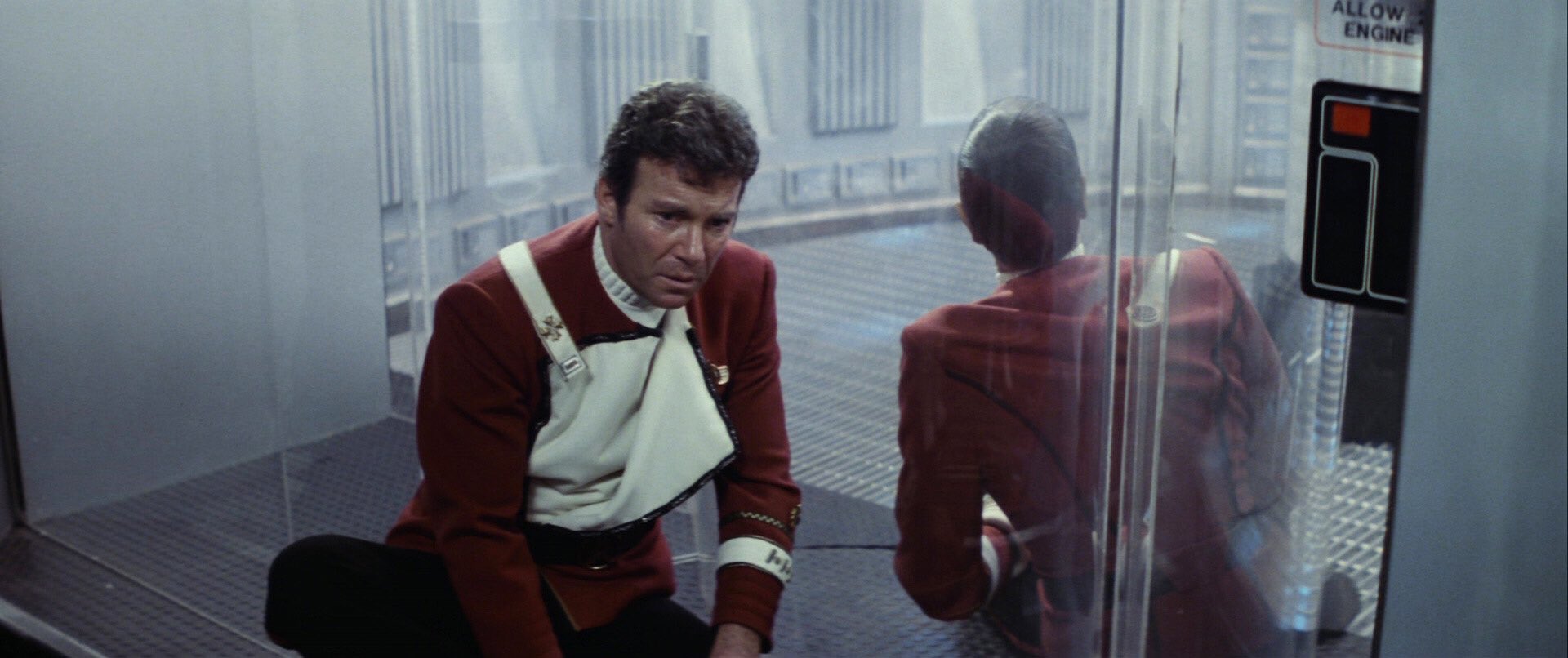
I can’t imagine trying to mourn a loss this unthinkable without the community around me. I know I will be leaning on them in the days, months, and years ahead. But to put that loss into perspective, now I know something of what Kirk would have felt when Spock died at the end of TheWrath of Khan, helpless to do anything but watch as the other one slipped away, and dumbstruck at not knowing how to process that his friend was gone.
When Leonard Nimoy passed back in 2015, a YouTuber named Melodysheep put together what I think is one of the most moving tributes to the character of Spock and by extension his relationship with Kirk. It’s also just a really good song that I will embed here. It’s worth taking a look/listen.
I definitely don’t want to paint Travis as being purely logical and without emotion, because he definitely wasn’t like that. But I was always the impulsive one, the one who rushed in where angels feared to tread. He was the cautious one, always advising me to look before I would leap, and to not make important decisions when emotions were running hot.
I’m glad I took some of those lessons to heart, but I’m not done learning from Travis yet.
On Farewells
A character flaw of mine, one which I’m very well aware of, is that I absolutely hate change. Once I get something where I like it, I want it to maintain indefinitely, but of course it never does. We live in a world that is constantly in flux. Almost always those are changes that we can do nothing about.
Losing someone I care about is the ultimate kind of change that I didn’t ask for or want. Again, I can do nothing about it now. I’m not sure what the shape of my life will look like now that he’s gone, and I’m not looking forward to finding out.
Words don’t usually fail me, but they do in this case. As raw as this account has been, it can never really do the man justice. I shall not look upon his like again.
But here I am in in the aftermath. All I can do is try to move forward, though it is tearing the heart right out of me, and try to live a life worthy of his memory and legacy. So, that’s what I’m going to do. I will honor him and the many debts that will now remain eternally in arrears.
Be at peace, Son of Gondor.
In closing, I’d like to share a bit of poetry with you. As I said, Travis had the soul of a poet. One of his favorites was The Noble Nature, which is a poem about the brevity of life and beauty. I’ll leave you with the last two lines of it, which were the last lines of the last email he ever sent me.
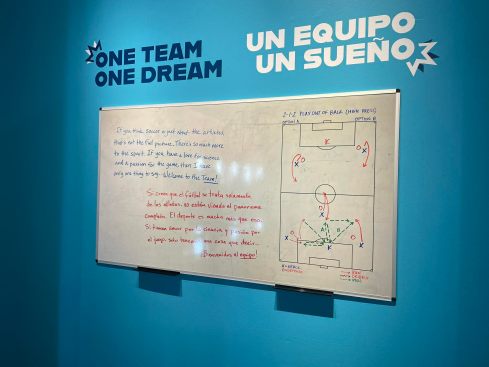
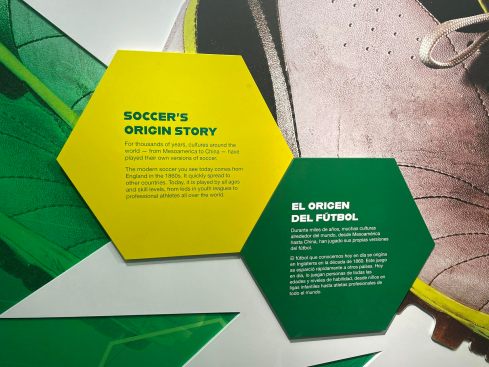
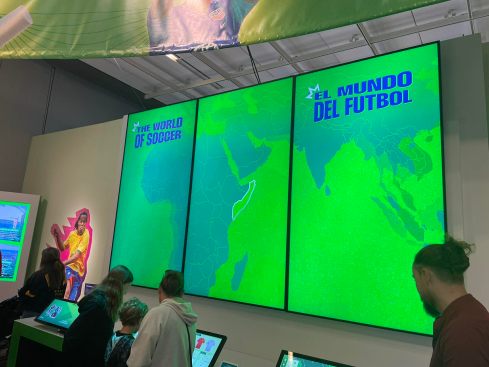
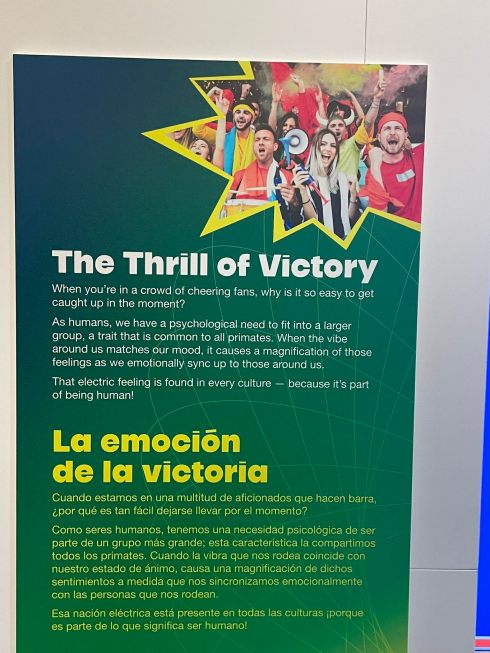
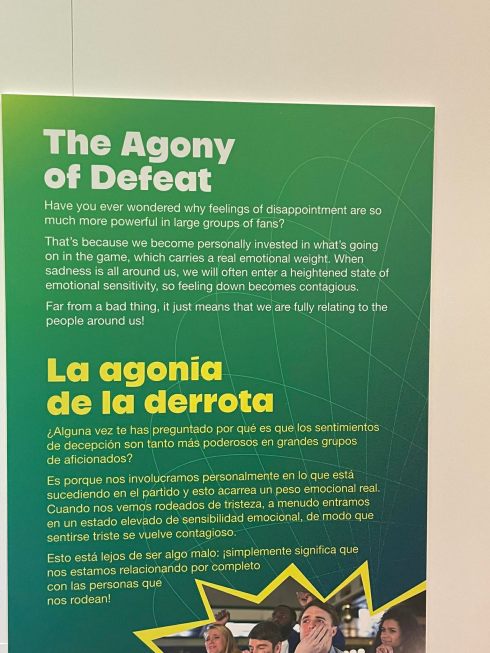
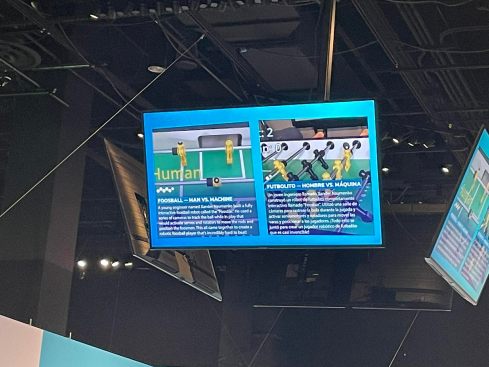
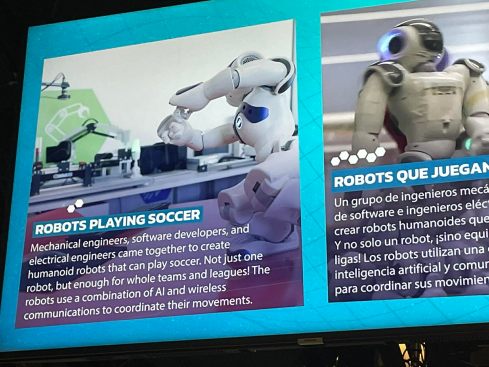
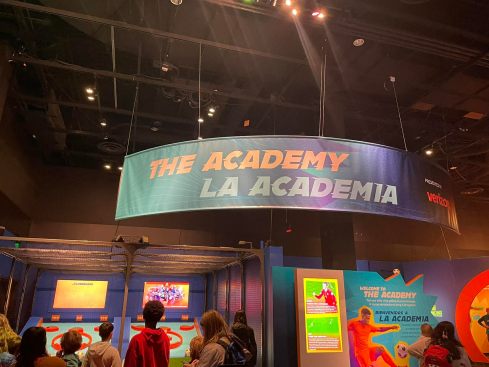
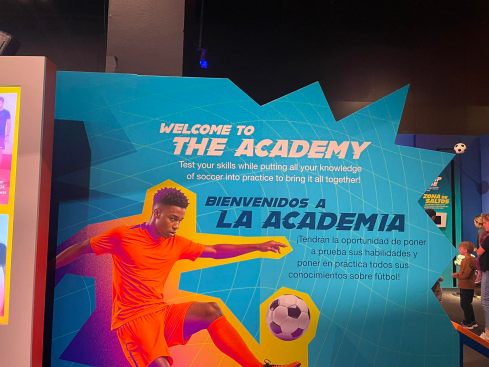
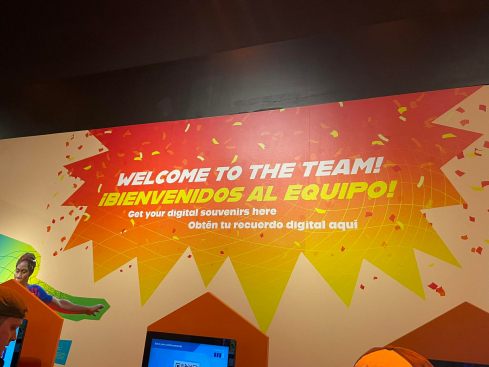
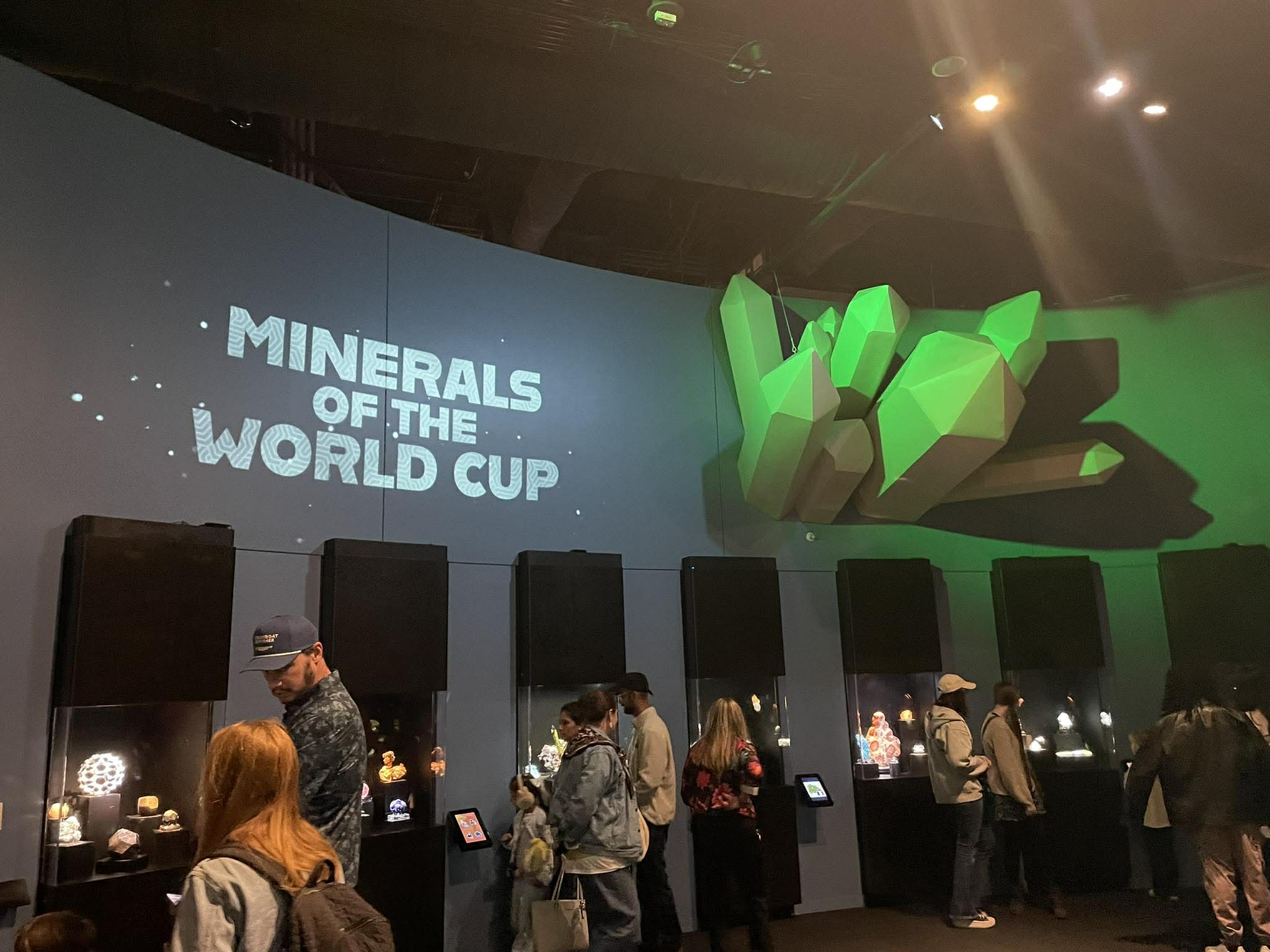
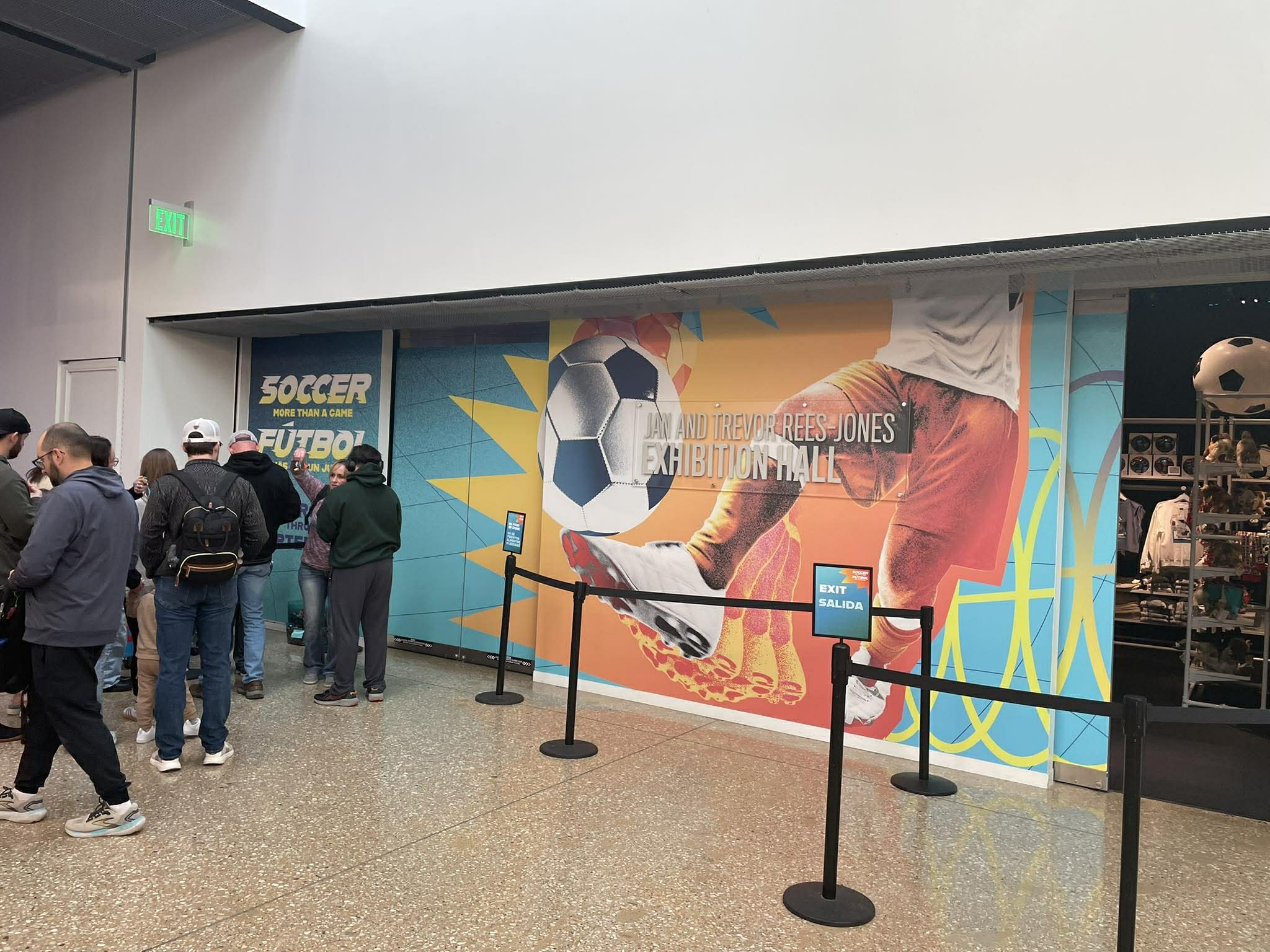
Howdy, folks! Earlier this week, something happened that’s only come around in my writing career a precious few times: I got to see a brand-new exhibit I worked on being enjoyed by the public. Specifically, this was at the Perot Museum of Nature and Science, and the new exhibit is Soccer: More Than a Game.
This is, without a doubt, the most complex and in-depth exhibit I’ve ever worked on for the Perot. I started on it several months back. Normally, I write all the copy for something like this at once, but Soccer: More Than a Game was large enough that it had to be split into three parts, each corresponding to one of the sections I’ll outline below.
Before I get started on this, however, let me give a Texas-sized shout-out to the team at the Perot that I worked with to bring this exhibit from imagination to reality. Color me stunned at just how well the concept art and ideas translated to real life.
I also want to say that photos don’t do this exhibit justice. The interactivity, the wonderful bursts of color, and all the minute touches that go through this whole experience are all incredible. If you are in the DFW area, I would highly recommend giving the Perot Museum a visit for this and many other cool exhibits.
Impact of the Game
Once you have your special RFID wristband, you’ll first get your profile together in the locker room. The majority of characters you see listed here above the lockers are ones that I named and even came up with some lore for them. If you get a chance, each locker in this area has a lot of little touches, like a movie set. It’s wonderful.
Once you head down the multicolored tunnel, you’ll find yourself in the Impact of the Game section. From there, you design a stadium out of LEGO bricks, build a mascot or a jersey, and look at a world map that allows you to pick a country and see their soccer jerseys, just to name a few.
There are freestanding displays here and there that scroll various facts about soccer, the careers that are involved, and some of the reasons that soccer is the world’s most popular sport.
C.L.E.A.T.S
In the next section, you’ll find the Coaching Lab for Excellence in Athletics, Technology and Science, or C.L.E.A.T.S. Here, you’ll find several stations that cover quizzes for different soccer balls, past and present, as well as some questions about various types of the eponymous cleats.
There are virtual movement interactive exhibits, photo opportunities, and many more informational displays. One exhibit that I found particularly compelling was the Make the Call station, where you can take the role of a referee and use various camera angles and playback options of a soccer field to call penalties correctly.
The Academy
Beyond C.L.E.A.T.S, you’ll get to The Academy, and this area made my little writer’s heart glow like an ember. There were long lines to several of the bigger interactive exhibits. I left and came back a little while later, and the lines were even longer than before.
This section is where you get a number of interactive games, including a medical care/repair station, an oversized skee-ball court, a robokeeper, the floor is lava, and other activities that are all super fun. The kids are going to love it.
Bonus Round: Minerals of the World Cup
As a tie-in, I also helped to modify the previous topaz exhibit in the gem and mineral hall on the third floor. In this one, you’ll see some of the dazzling mineral diversity of a number of countries competing in the World Cup. This also includes the host countries of Canada, Mexico, and the United States.
On a side note, I am always surprised when I see the vibrance and intensity of the colors on display in these gem and mineral exhibits. It really is a testament to just how beautiful, varied, and sublime our planet is when we stop to look. Stopping to smell the roses is great and all, but stopping to admire the fluorite can be even better.
In closing, Soccer: More Than a Game and Minerals of the World Cup were super fun to work on and see come to life. Once again, my thanks to the Perot team for including me in the fun. Here’s to many more projects like this one in the future!
But seriously, folks, if you’re in the DFW area, definitely check this out. You’ll be glad you did.
When the Fallout TV series came out in 2024, I published my thoughts on it on this blog, including why I think that it was a fantastic adaptation of a game property. The sets, the acting, the story, all of it added up to one of my favorite shows currently on TV.
I rewatched it in the lead up to the release of Season 2, and it really held up. Sure, there were some weird things, like fusion cores being super rare and powering whole vaults, that were a bit weird, but overall it was better than I could have realistically hoped for.
I’ve now watched Season 2 in its entirety. Did I like it? You bet I did! Are there still some puzzling aspects of it (which I’ll get to in a bit)? Also yes. Regardless, I definitely tuned in to it eagerly every week, along with my family, to see what drama was brewing in the wasteland that week. Did I mention that we are a Fallout family? Yeah, this was a major event in our household.
Before I go on, here is your obligatory SPOILER warning. If you haven’t watched the second season, I highly recommend that you go and do so before reading this blog. We good? Okay, let’s talk about the strengths of this season first.
The Sets: I made mention before of just how incredible the sets looked in Season 1, particularly the interior of the vaults. This time, much of the events take place in New Vegas, and again, the sets were breathtaking. Walking into Mr. House’s audience room at the top of the Lucky 38 was spot on. The nearness of the Ultra-Luxe and Gomorrah, all felt right. We even got to see the Strip before the bombs dropped, which was really cool.
The Acting: I can’t say enough things about the acting talent in this show, particularly Walton Goggins and Ella Purnell, who both shine like diamonds here. Kyle MacLachlan gets a lot more screen time this season, and he turns in a chilling performance, being both a loving father figure and ruthless villain at the same time. We even got some really great moments with Aaron Moten as Maximus, particularly when he suits up in the NCR power armor while we hear the Fallout main theme play. There are so many great moments that I can’t quite recount them all here.
Super Mutants: When I first heard his voice, I knew it was Ron Perlman, the famous narrator of the earlier Fallout games. The super mutants that have retained their intelligence, like Fawkes and Erickson, have always been of interest to me. They’ve been exposed to the forced evolutionary virus, but they haven’t just turned into raging barbarians who collect gore bags and decorate in twisted metal. It sounds like they will be a major force against the Enclave next season, and I’m all for it.
NCR Power Armor: This gets its own listing. I have a love of power armor, in general, and Iron Man is one of my favorite superheroes. So, seeing the iconic NCR Ranger helmet adapted to power armor was pretty spectacular, particularly seeing all of its built-in weapons and abilities. It’s too bad it got trashed to the point where Maximus might simply abandon it. I would love it if he were to join the NCR and for this armor to become his signature power armor.
On the other side of the coin, there were some things that didn’t quite resonate with me. Again, I liked it overall, but these were the things that often didn’t work for me.
Trouble on the Homefront: The story arc that takes place in the vaults was one of the weakest threads this season. I do applaud the writers for bringing back the broken water chip. One of my critiques of Season 1 was that this was mentioned then never followed up on again. We get some more movement on that, but it’s just kind of bleh. I am glad we got to spend more time with Stephanie Harper, as there’s definitely more going on with her than is apparent. Overall, though, there just wasn’t enough screen time or compelling beats for this to land. And what was going on with her marrying Chet and not even telling him? Steph has just kind of co-opted him, but we’re not entirely sure why.
Norm and Bud’s Buds: A close second for last, Norm’s arc to spring himself from Vault 31 didn’t seem to go anywhere, and that’s a true shame. Last season, Norm investigating what was going on in the vaults was something I found compelling. Norm himself being physically weak but extremely smart and perceptive was something I enjoyed, and his dynamic with Chet was fantastic. This season, he’s separated from Chet, and that’s not great. The Bud’s Buds group was ultimately a nothing burger as they all get wiped out by radroaches, except for Norm’s friend and potential love interest. Convenient, that. Norm is too good of a character, and Moisés Arias too good of a talent, for arcs with no real substance. Let’s hope Norm gets his due next season.
Caesar’s Legion: This may have been more of a set design issue, but did it not look like someone could have snuck up that berm in the dead of the night to retrieve Caesar’s body? If it had been more separated, in full view of the other side so snipers are a constant risk, and more dead legionnaires who had tried and failed, I think I would have bought the scenario a bit more. But more than that, if no one knew what heir the original Caesar (Edward Sallow) had chosen, how did the two competing Caesar’s justify their taking up the mantle in the first place? And who put Sallow’s body out there and put barbed wire around it? That whole setup had me scratching my head. Having said that, seeing Macaulay Culkin as the new Caesar was pretty cool, and the fact that they want a “Caesar’s Palace” on the Vegas strip was a nice touch.
The Brotherhood of Steel: While it was interesting to see the different chapters of the Brotherhood assemble, and witness firsthand the differences between them, that part of the story ended early enough that I was surprised when we got the stinger at the end. I thought that was about all we were going to get of the Brotherhood for a while. Also, it’s a bit weird that Quintus had chosen Maximus as his champion, then openly insulted him in public, which clearly eroded Maximus’ loyalty. It’s also really weird that if the cold fusion diode were really the key to making unlimited fusion cores (which they established were rare) that it would be left entirely unguarded. It seems like multiple fire teams, each led by a trusted Star Paladin, all in power armor, would have been there to make sure one of the other chapters didn’t go in and seize it for themselves.
Also, the showrunners and Bethesda have had something of an allergy to establishing canon endings for Fallout: New Vegas and Fallout 4. The arrival of Xander Harkness from the Commonwealth chapter, however, would seem to imply that either the Minutemen or Brotherhood ending of Fallout 4 is canon, as the Institute and the Railroad endings see the Prydwen destroyed, and the Brotherhood almost entirely dismantled. Xander showing up was not as important for lore as, say, if Arthur Maxson had shown up on screen, but it does mean that the Brotherhood is still operating in sufficient force in the Commonwealth to still be a power.
Walking Back the Big Reveal: Last season gave us the jaw-dropping reveal that Vault-Tec might have been the ones responsible for launching the nukes that started the apocalyptic nuclear war. This was something completely new to the lore, which had previously left it ambiguous on whether the USA or China had launched first. This season, they moved away from that. Mr. House even says that it was ultimately “unclear.” We also see a seen where Siggi Wilzig from the Enclave instructs Barb that she should say that line in the meeting. All of the tension they established in that scene in Season 1 was largely undone in Season 2 with the rather vague reveal being “the surface was the experiment.” So, we’ll see where that goes, if they don’t walk that reveal back by next season.
The Tease of the Ghoul’s Family: I’m including this one for the fact that it was telegraphed in advance. For all the other cryopods we see, such as with Bud’s Buds, we can clearly see the figures inside them. Both Barb and Janey’s pods were opaque when we saw them, which told me that they were empty. So, no resolution there, but we do get a clue to lead the Ghoul/Coop on the next leg of his quest. Let’s hope there’s some resolution to this next season.
My Biggest Concerns: Really, I’m a little afraid Season 3 is going to be stretched too thin, especially if we’re only getting eight episodes per season. One of the main issues this season seemed to be that there wasn’t enough screentime to cover it all. More story arcs were opened than were resolved. If we take a look at what might be brewing for Season 3, we have:
The Brotherhood civil war/Liberty Prime
Caesar’s Legion vs. the NCR over control of the strip (along with Mr. House)
The Ghoul going solo to Colorado to find his family
The Enclave vs. the Super Mutants
The Pre-War arc of Cooper Howard and his family
The Vault-Tec/Enclave hidden control chips
Vault 32’s uprising against Stephanie Harper
Vault 33’s instability and water/food scarcity
Norman and whatever he winds up doing
That’s a lot of ground to cover to say nothing of any new arcs they establish that we haven’t heard of yet. If we had 12-episode seasons, that would be one thing, but eight episodes feels like they will be hard pressed to move the plot forward in a satisfying way. I hope Season 3 will start giving us some resolution, so they can really focus down on the major characters and what’s important.
I’m also a bit concerned that the Ghoul is going off on his own. I think some of the best moments in the show are when Lucy and the Ghoul are on screen together. It doesn’t look like we will get much of that for a while since there’s about to be a lot of distance between them.
Final Thoughts
Even with my concerns, I am still onboard with this show. Fallout is one of my favorite game universes ever, and even with some of the flaws and missed opportunities, this team and these actors, are (in my opinion) able to do it justice.
This is just to let everyone know that the official Sector M Newsletter is online and ready to go! In each monthly installment (usually released on the last Friday of the month), we will talk about:
New Patreon members
Sci-fi/fantasy fiction projects
TTRPG supplements
Board games
Convention appearances
The newsletter will be an ‘at-a-glance’ look at what Sector M is up to across all fronts. I invite you to join us, which you can do at this link: