Category Archives: General Stuff

Words and Terms I Learned From D&D

My last few blogs have been, well, a bit of a downer. So, I thought I would start things off for 2025 with something on the lighter side. As you likely know by now, I am big into TTRPGs, particularly D&D. I’ve been playing these kinds of games since I was about 13, and I really never stopped. It’s one of my favorite hobbies, right up there with reading, video games, and so forth.

Today, I would like to share with you a list of ten words and terms that entered my vocabulary from playing TTRPGs and D&D specifically. Let’s dive right in.

1.) Encumbrance

While more modern versions of D&D use encumbrance to denote how much your character can carry, I originally learned this word in the context of why you couldn’t do backflips or cast spells while in full plate armor. This came along pretty early in my gaming career when a wizard character of mine attempted to put on heavy armor only to find out that he could barely maneuver while in it and couldn’t cast any of his spells. Needless to say, he ditched the heavy armor pretty quickly afterward and got back to shooting magic missile at practically any opponent as an opening gambit.

2.) PC/NPC

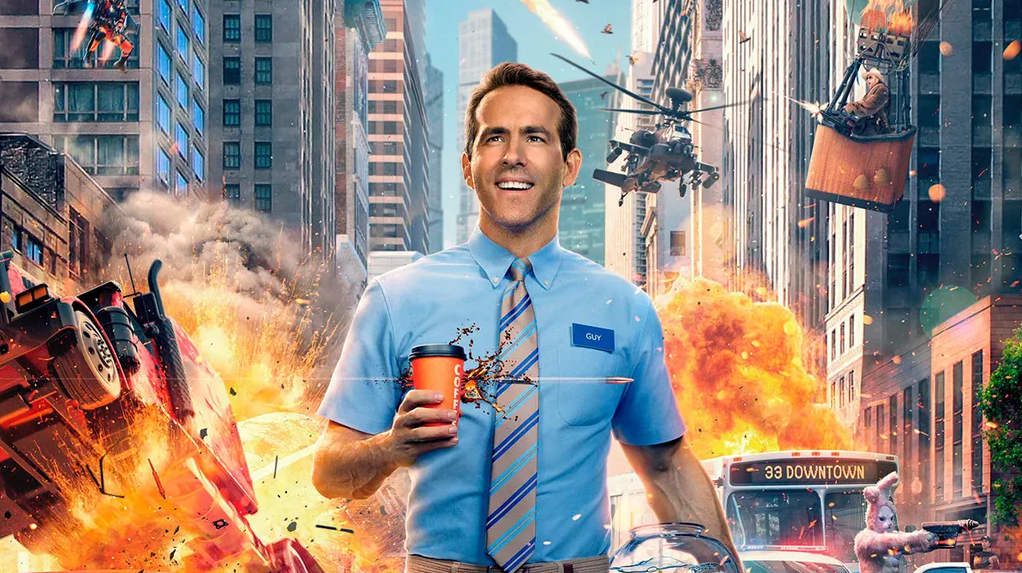
I count these two as one since they are closely related. If you’re not familiar with them, we have PC, or “Player Character” and NPC, or “Non-Player Character.” The PCs are the characters that people play in a TTRPG, and NPCs are everyone else. These terms eventually migrated over to video games. The central idea of the movie Free Guy depends on the audience knowing that Guy (played by Ryan Reynolds) is a digital character in an online video game. When I hear the phrase “Main Character Energy,” my mind always goes “Oh, so they’re a PC, got it.”

3.) Gamemaster/Dungeon Master

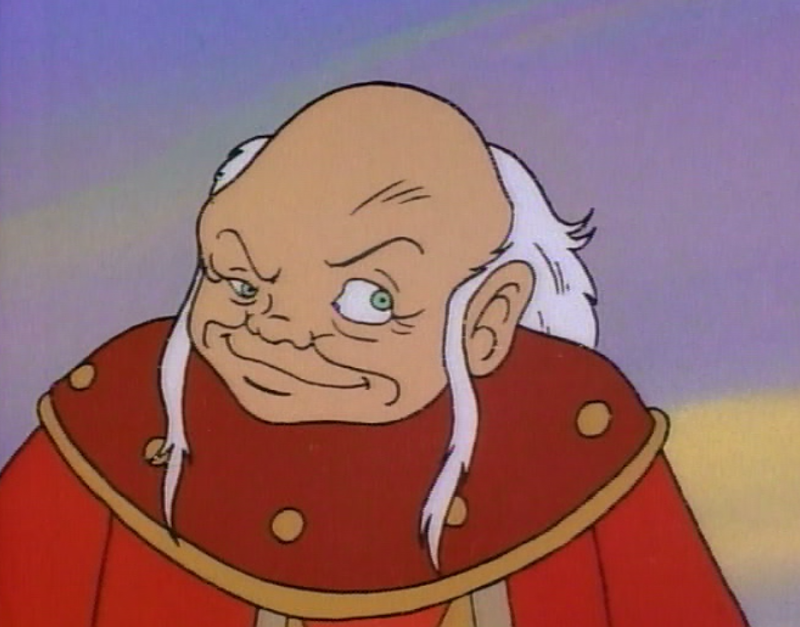
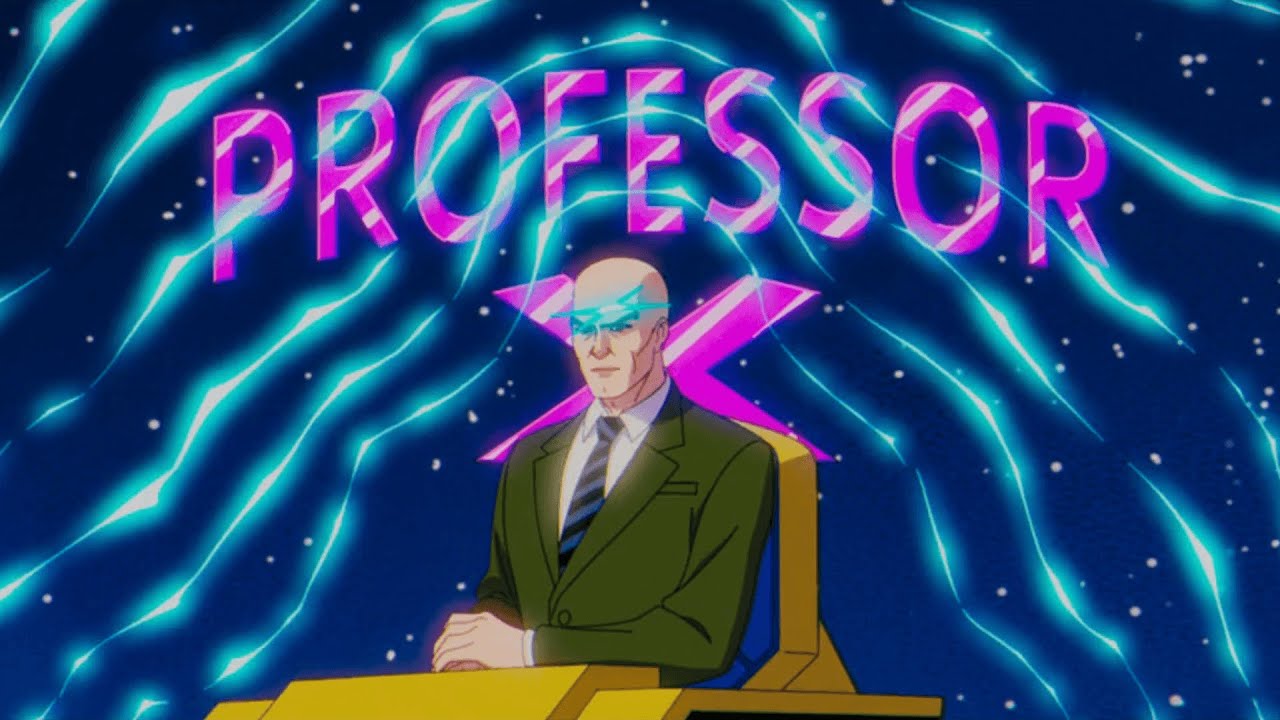
Tabletop roleplaying games have a lot of names for this role at the table: Gamemaster (or GM), Judge, Referee, Storyteller, and Dungeon Master. By the time I played D&D, I was already familiar with the Palladium RPG system and Rolemaster, so I was already in the know with someone being a GM and GM-ing a game. Dungeon Master (or DM) was something I picked up from D&D since it’s a term specific to that game system (though I knew it from the cartoon first instead of the game). Even today, I tend to use the more generic “GM” term, even when referring to D&D. It might also have something to do with it being easier to explain to family members who aren’t familiar with TTRPGS that you are a gamemaster rather than a dungeon master.

4.) Metagame

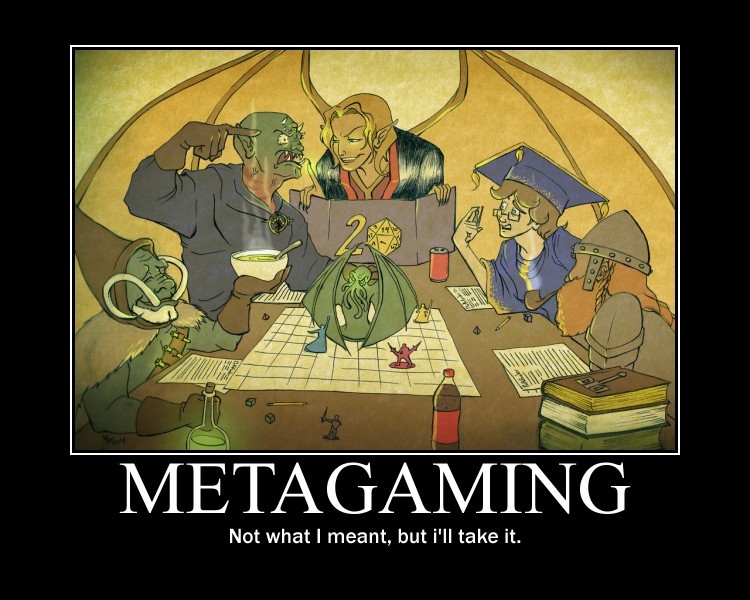
At first, this concept came to me as the difference between “player knowledge” and “character knowledge.” So, if you’re playing Grog, a 2nd-level barbarian, you (the player) may know how fast the speed of light is, but chances are that Grog (the character) will not have a clue about it. So, those who would use their player knowledge in place of their character knowledge (i.e. Grog suddenly understanding advanced physics) were said to be metagaming. That’s something GMs/DMs have to police at times, though thankfully the players I game with are very discerning on this point.  

5.) Wards/Runes/Sigils

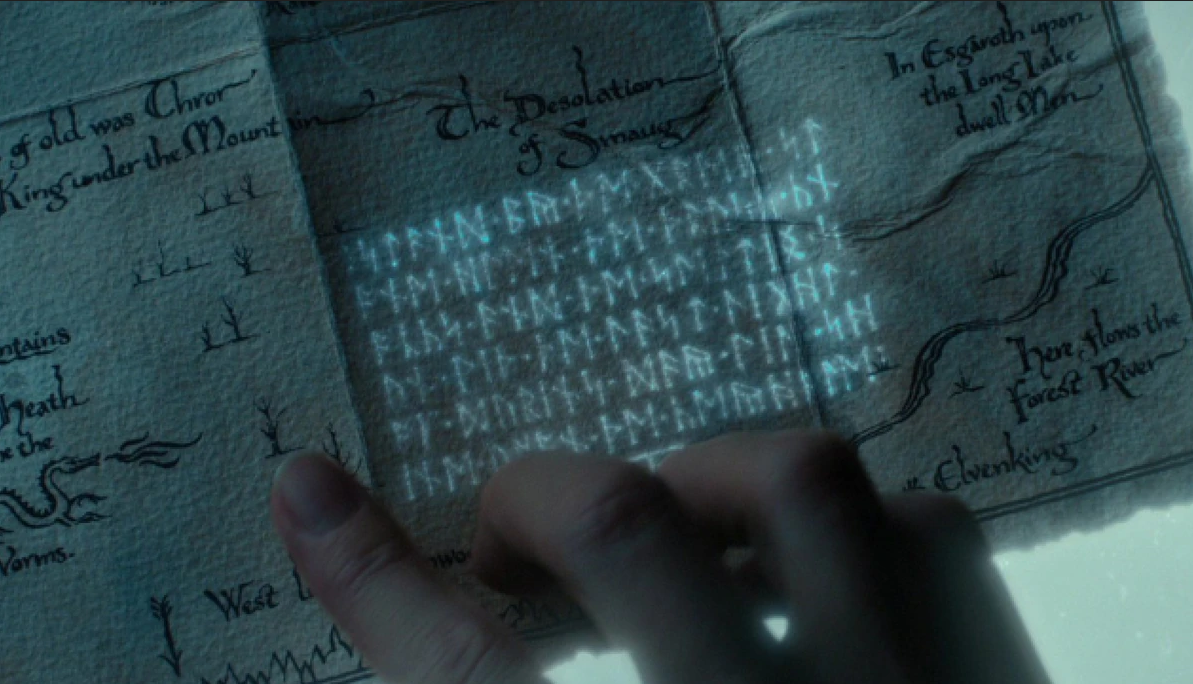
Once again, I’m grouping these together since they are similar in nature. I knew of runes before playing D&D from learning about the real-world runic alphabet. Through gaming, I learned of them as something inherently magical. So, a wizard or magic-user might scribe or carve a symbol into something and then imbue that symbol with some kind of magical spell or effect. Sigils often worked the same way, though I always got the impression that sigils were more Elven, while runes were more of a Dwarven thing (your fantasy mileage may vary). Wards, while not necessarily a symbol, were magical protections that could be placed on an object or area to prevent intrusion, theft, or general skullduggery. However, both runes and sigils could act as wards. Magic!

6.) Dweomer

Often pronounced “dwimmer,” in game terms this is often used to describe the inherent aura a magical item or place gives off. While this word is not used as much anymore, a more common expression is something’s “enchantment.” An enchanted sword, enchanted forest, you get it — a dweomer is some kind of ongoing or semi-permanent magical effect or property. I was also pleased to find that Dwarves in the Elder Scrolls video game series (who are actually Elves) are called the “Dwemer,” which is fitting considering their knowledge of magic was light-years ahead of anyone else in that world.

7.) Somatic

Spell descriptions in D&D generally have three kinds of components: vocal, so the magic words uttered by the spellcaster; material, or the little bits of stuff the caster must have on their person (the proverbial eye of newt and toe of frog), and lastly the somatic component. This last one represents the wavy bits that magic-users do with their hands, the intricate hand gestures and motions they must go through to bring the spell forth. Up until I read the Player’s Handbook for the first time back in the day, I had never run across this term before.

8.) Caltrops

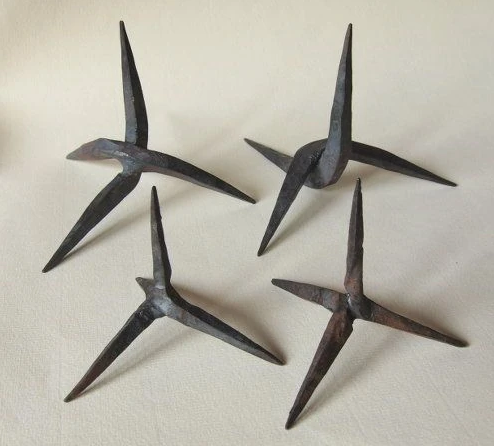
Honestly, the first time I heard this term used I thought the person said “cough drops.” Now I know that these are little bits of sharp metal that you can throw on the ground. The design of caltrops is such that no matter which way they land, they have a point sticking straight up. They are used to impede an opponent’s movement since the opponent in question would either need to slow down to avoid stepping on them or run through them and risk facing the wrath of what could be described as tactical Lego blocks.

9.) Level Up

It amazes me sometimes how far and wide this term is known and referenced. I saw the other day both The Gap and Old Navy talking about leveling up your experience. Likely, that’s to appeal to gamers, specifically video gamers. Yet the term as I understand it really came from the tabletop space, and that’s certainly where it first came into my own personal gamer lexicon. There’s just something cool about finishing a game session and learning that your character has leveled up. The Final Fantasy victory music almost always springs to mind when this happens.

10.) Psionics

I first encountered this term in the Palladium fantasy RPG setting when I played a “Mind Mage,” a user of psionics or mind magic. Later, when I played the Traveller RPG (which would eventually lead to my first novel), I discovered the Zhodani who were a society of psionicists. So, I suppose that this one didn’t technically come from D&D as the title of this blog would suggest, but D&D did have psionics as well that further cemented the concept in…(wait for it)…my mind.

Honorable Mentions

Playing TTRPGs has a way of rewiring your brain when it comes to certain things. I include this section because there are five words in particular that have permanently changed in my vocabulary to the game version. When the words aren’t used in a gaming context, I have to push past my initial gaming reaction. You know, it’s like when a song that Weird Al Yankovic has parodied comes on, but you find yourself singing the Weird Al lyrics anyway. No? Just me?  

  • Initiative
  • Campaign
  • Critical
  • Encounter
  • Module

Final Thoughts

I’ve always believed that playing TTRPGs exercises many parts of your mind. I’m better at math, managing money, tactical and strategic thinking, acting and improvisation, funny voices, and worldbuilding because I play these games. In addition to that, it’s great for the vocabulary. The words and terms that I showcased here are just the tip of the proverbial iceberg.

If you are a gamer of these games already, you likely know precisely what I’m talking about. If you are interested but have never tried them, I highly recommend that you do so. Adventures and worlds you can scarcely imagine are waiting for you out there.

Thanks for reading!


State of the Sector: 2025

My Fellow Sectorians,

If you read my last post of 2024, you’ll know that my creative victories for last year were fairly sparse, particularly on the literary side. Overall, it was a pretty mixed bag, though there were some real bright spots along the way. Let’s go ahead and discuss it all, the proverbial good, the bad, and the ugly.

The Bad News

I thought I would change it up and deliver the bad news first. So, let’s go ahead and get this out of the way.

A Swing and a Miss: Early in 2024, an interesting opportunity presented itself. One of the Big Four publishers was interested in one of my fantasy manuscripts. It was sent on submission and we waited…and waited. Months passed with no news, but publishing is not a game for the impatient. Finally, the editor in question simply stopped communicating with us. It’s frustrating, as it has taken years to get to this position only for the editor to essentially ghost us. But, there is actually a mark of distinction for an author in having a project ‘die on submission.’ It means that you almost got there, as the next step would have been a book deal. Next time, if I can just achieve one step higher, I should be on better ground. As is the case with publishing, it’s nothing until its something. Back to square one.

IYKYK

A Shifting Situation: In addition to the copious amounts of personal strife this year, I also changed jobs around mid-year, and it has both been one of the most difficult professional transitions of my career and quite unlike anything I’ve ever done. Between that and some other potential employment issues with my family, the stress and lack of mental bandwidth pulled me out of my regular writing schedule. I couldn’t find my way back to one until the middle of November (more on that below). So, as a result, I have very little to show on the fiction side of things. Almost every goal I made last year failed, and I’m not sure when I will be able to circle back around to them again. I made marginal progress on the sci-fi novella I mentioned in the last State of the Sector address, but even that eventually hit a brick wall. If there is good news, it’s that the holiday break has seen a renewed fire in my veins when it comes to my fictional stories. We will see how that fares now that my holiday break is over.

Sector M Store is Closing: I will be closing the Sector M store in February. I won’t delete it entirely in case there is ever a renewed need for it. Unfortunately, it requires a decent amount of maintenance and costs to keep it running, and sales of any Sector M merch have effectively flat-lined. So, I will renew all the designs that are currently available for the time being, but I plan on shutting it down on Saturday, February 1. So, if there are any designs that appeal to you, now would be a good time to seize upon them. You can find the Sector M store here.

Sector M Games’ Future Uncertain: This year, we published two titles on the DMs Guild, The Artificer’s Guide to Magic Items and The Knights of Solamnia Revisited. Both have been well received by the community, and both were featured in the DMs Guild’s weekly newsletter. I did have a manuscript for a third installment for the DMs Guild, but it’s looking like that will need to be shelved for the foreseeable future. With so much uncertainty in my family’s situation, my disposable income (which I use to finance my game projects) just may not be available for some time to come. My philosophy for these supplements has always been to make them as good as possible, and I want to stick to that. So, I would much rather hold off on projects until they can be approached with high standards than try to rush something out. If anything changes on this front, I will make a special update post here on the blog to let everyone know.

Wavering Blog Deadlines: As a writer, I like to meet my deadlines consistently. My track record with 2024’s blog posts was…troubled, particularly as the year wore on. I still delivered all twelve as intended, but I found myself having to adjust publication dates, sometimes by a few weeks to fully deliver them. I will attempt to be more consistent in 2025, though many of the same factors that caused those delays are still in play. For this next year, here are my target dates for new blogs each month. Of course, there could be some wiggle room, but here’s the schedule I’m going with right now:

The Good News

Okay, I know that was a lot in the way of bad news. Trust me, if it was difficult for you to get through, it was equally hard for me to write. It’s not every year that the wheels just come right off of almost everything. In light of all the things that went wrong or just didn’t materialize this year, it makes the bright spots shine all the brighter.

The Blog’s Best Months: Traffic on this blog has definitely picked up in the last couple of years. I’m now getting traffic in a week that might have taken a month or two before that. I think part of it is regular updates, in my case at least once a month. I’ve had this blog since May of 2013, and as far as I can tell, October, November, and December of this year were the three top months it has ever had. I know that many blogs tend to specialize and be mainly about one thing. This blog is a sort of potpourri of museums and history, nerdy/geeky stuff, writing topics, and just the odd things running through my mind. Thank you for coming back and checking it out. If you are a regular here, I strongly encourage you to follow this blog so you don’t miss a post. (There should be a pop-up when you visit that you can click on to do this.)

A tall ship and a star to steer her by.

DMs Guild Releases: As I stated above, we released two titles on the DMs Guild in 2024, one in January and the other in November. The Artificer’s Guide to Magic Items is the more expansive of the two, and it is available as either a downloadable PDF or as a hardcopy format (if you get the hardcopy, you also get the PDF version for free). The other title, The Knights of Solamnia Revisited, is for fans of Dragonlance, and it’s only available as a PDF. I do intend to follow up on both of them with some FAQ and example PDFs that will be available as a free download. That is in the works, though I’m not sure at the time of this writing when they will be ready for release. In any case, if you haven’t picked up a copy of either/both titles, check them out. I’m proud of how they turned out.

An Unexpected Wizard Story: As is often the case, when I’m deep into writing another story, I invariably have intrusive ideas for other stories. As I struggled (and ultimately failed) to maintain the thread of that sci-fi novella, I had an idea for a fantasy novella that followed up on the aftermath of one of my fantasy manuscripts. I finally resolved to start drafting it about the middle of November, and the story just came pouring out at the keyboard. My average number of words per hour more than doubled for each writing session, which tells me that I was truly dialed into it. Even with the holidays, which can be murder on a writing schedule, I’m happy to say that I finished the initial draft at 11:30 p.m. on December 31. So, if I accomplished nothing else on the fiction side in 2024, I was able to begin and end this novella, which clocked in at just under 27,000 words. Of course, it’s a hot mess right now, but one of my projects for January will be getting it into a readable state for my beta readers.

The Road Ahead

Normally, this would be the section where I would outline my goals and projects for the new year, but I am at something of a loss for the moment. I’ve finished the wizard novella, and I’m now at loose ends, at least at the time of this writing. Until I know more about how this year will unfold, and the possible ramifications it will have on my family, it’s difficult to make any long-term plans at this moment in time.

I have that partially completed sci-fi novella I could try to finish, or I could revisit the cyberpunk novel I have about two-thirds complete (both have a special place in my heart, even if I had to put them down). Or, I could try something completely new. I haven’t decided yet, though short-to-medium fiction has its appeal since there’s less time involved per project, usually between a couple of weeks and a couple of months. I wish I had a definitive answer, but the road ahead right now is too foggy for me to see.

Rest assured I will land on something. I scarcely want to have another year creatively like 2024 if I can help it. If 2024 has taught me one thing, it’s that we’re here for a shorter time than we think. I feel that I have barely scratched the surface of the stories I want to tell. If I’m going to make an honest go of it before my time is up, I need to stay focused.

So, it is my hope that if I can turn my situation around, I’ll be able to open the State of the Sector 2026 Address with the words: What a difference a year makes.

Until then, I wish you all a new year filled with the realization of dreams and solid metaphorical (as well as literal) ground beneath your feet.

See you around the Sector!

Si vales, valeo.

-MC


Some Thoughts By Firelight

I mentally began the process of writing this blog in my living room when it was lit by just a fire in the fireplace and the lights of our Christmas tree. The combination of those two things turns what is an ordinary space that I see every day into a magical place, full of warmth and love and memory.

You see, there’s a poem in The Lord of the Rings that really resonates with me at this time of the year, especially as I get older. It’s the song that Bilbo sings to Frodo on the eve of the Fellowship leaving Rivendell: I Sit Beside the Fire and Think. Clamavi de Profundis (who I can’t say enough good things about) sang a version of this song as a farewell to Christopher Tolkien when he passed away a few years back. It’s well worth a listen, especially if you’d like to take the musical pulse of where I am I’m currently.

I’ve always thought of the holiday season as a time for self-reflection in addition to making merry. The world is dark and cold (or cold-er when it comes to Texas), the regular rules of work and life are temporarily suspended as we celebrate in defiance of winter. The New Year has not yet come. We don’t know what it has in store for us yet. We hope, we plan, and some make resolutions, but we don’t know how it will turn out. We sometimes wonder what our world will look like this time next year, though life is far too unpredictable for us to know for sure.

So, for my last blog post of 2024, I wanted to express some thoughts that have been rattling around in my head for a while now. I must warn you, however, if you were looking for a feel-good holiday post, this isn’t it. But, if you would like a glimpse into where I am right now emotionally and my state of mind, this is absolutely the post for you.

Still with me? Excellent — let’s get started.

The Year of Mourning

See, I warned you. This first one is a corker. While there were many bright spots to this year, including reconnecting in person with some old friends, making new connections, and getting to higher ground in numerous senses of the word, 2024 will be known to me as a year of loss. In 2024, I leave behind two pets, a cousin, my mentor, many of my illusions, and much of my faith in humanity.

Grief and pain have shadowed my steps for much of the year. I felt as though I had scarcely begun to deal with one crushing emotional blow when another would land. As I’ve said before, I obviously don’t have a monopoly on grief or pain. I know that this has been an incredibly difficult year for many people I know, and when you look at the wider world, it’s been one tragedy after another. So, I’m not trying to claim some special status for what I’m going through; I’m only trying to tell my little slice of the story.

At times like this, I had always looked forward to the New Year in the hope that it would be better. Unfortunately, that is not the case this time. While 2024 has been the Year of Mourning, 2025 is already the Year of Uncertainty.

But again, we make merry in defiance of the cold and dark. This year, I’m making merry in defiance of that uncertainty. It might turn out to be more in the style of an Irish wake, but if that’s the case, so be it.

Fellow-Passengers to the Grave

I recently had a discussion with some co-workers on our favorite Christmas movies. I may be in the minority, but I generally don’t have a single favorite anything. I have favorites, plural, but my tastes might change from day to day on my favorite song, TV show, movie, etc. Still, if I had to pick a lone favorite, it would almost certainly be A Muppet Christmas Carol.

While Dickens’ timeless tale has been retold countless times in various ways, we have an actor of the caliber of Michael Caine playing Ebeneezer Scrooge, and he plays the role absolutely straight. He speaks and reacts to all the Muppets around him as though they were fellow actors in the Royal Shakespearean Company, and it absolutely works. Watching it this year, as I do with pretty much all the classics, I was particularly moved by it.

Part of it is that A Christmas Carol did more in creating the holiday we know as Christmas than any other. Dickens practically redefined the holiday into what it is today through his prose. It’s one of the reasons why the Victorian era looms large when it comes to Christmas traditions, from Christmas trees (first introduced to England by Prince Albert) to carolers and even versions of what would become Santa Claus.

The other part of it is Gonzo’s delivery, in the guise of Dickens himself, of the famous line about “seeing other people as fellow-passengers to the grave.” Grief has a way of making you think of your own mortality. Sickness does as well, and how did yours truly start off his holiday break? By coming down with a particularly nasty case of strep throat, of course, which is only finally starting to subside. Strep can be fatal if left untreated, but thankfully it rarely is now with modern medicine. Plus, I got on it pretty early when it became clear that it wasn’t just seasonal allergies messing with me. I’ve been pretty lucky in that I don’t get seriously ill all that often.

If anything, this bout of illness has forced me to slow down and focus on my health more than I usually do. Thankfully, I have a decent break from work ahead of me to complete my recovery, but I missed a number of things in the meantime that I regret. Even still, I just crossed paths with a bacterial strain that might have ended my journey had I been born in another time, or even if the right medications were not readily available. That has a way of putting a lot of things into perspective.

What’s my takeaway from it? I’m grateful. Grateful for the fact that help and aid were available when I needed them, that I have the time and space to convalesce, but most importantly, I’m grateful for the people I have in my life. My family, my friends, my co-workers, my extended network — all of them. And if you’re reading this blog, dear reader, that now includes you. I’m grateful to be a passenger with you on this journey, even if we know that it will inevitably end.

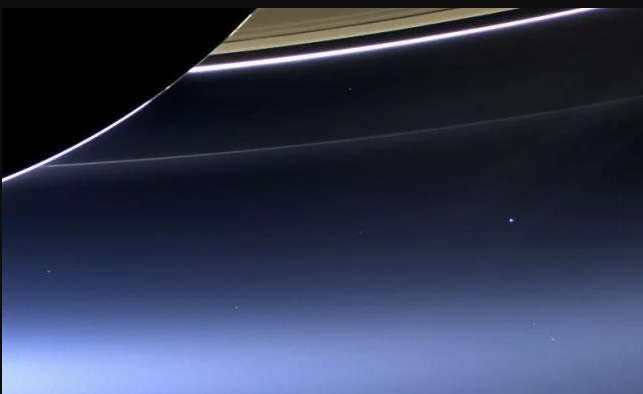
The Pale Blue Dot     

This month marks 28 years since America lost one of its greatest minds: Carl Sagan. I’m firmly convinced that if more of us could see the world in the way that he did, we would all be better off. Yet, a mind and a perspective like his are sadly rare. Though the man himself is gone, he left behind an incredible body of work, including his famous “Pale Blue Dot” speech.

If you’ve never heard it, I’ll link it here. It is, in my opinion, one of the most poignant speeches ever given. It puts things in perspective in a way that I’ve never encountered before or since. One of the lines that really speaks to me is this one: “Our planet is a lonely speck in the great enveloping cosmic dark. In our obscurity, in all this vastness, there is no hint that help will come from elsewhere to save us from ourselves.”

As I said earlier, I’ve lost much of my faith in humanity this year, and I’m not sure when, or even if, I will get that back. I hope I do, as I feel that I am a humanist at my core. The pronouncement that we, as a species, are in charge of saving ourselves, however, doesn’t sound all that comforting to me at the moment.

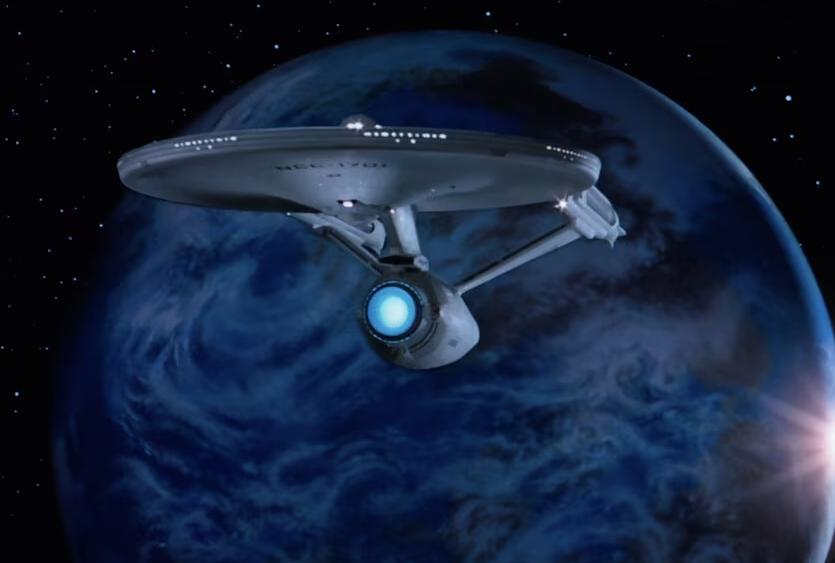
Deep in my geeky heart of hearts, I want humanity to achieve the kind of high-minded ideals that the Federation stands for in Star Trek. But I also realize that even in that continuity, humanity had to go through some pretty dark days before it finally got its act together and made the world a better place. Maybe that’s where we are now.

Maybe.

As he closes the speech, Sagan says, “To me, it underscores our responsibility to deal more kindly with one another, and to preserve and cherish the pale blue dot, the only home we’ve ever known.”

Strangely, this sentiment also echoes the long-held and oft-quoted Christmas sentiment of “peace on Earth and good will towards men.” Lately, it seems we’ve had a lack of both of those things. To my fellow Earthlings, let’s do something about that, okay?

Gandalf’s Wisdom

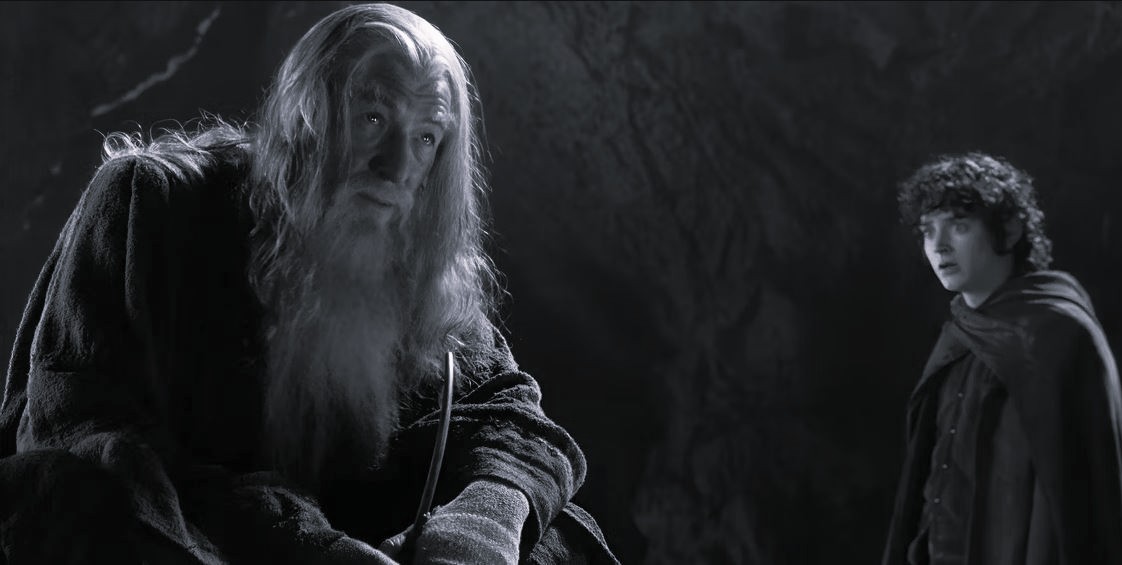
This year, I introduced my young son to the Peter Jackson Lord of the Rings films. While he struggled with sitting through 3+ hour movies, he did enjoy them. He felt the emotional highs and lows just as I did. While the entire cast is famously, almost absurdly, talented, I really have to hand it to Sir Ian McKellan in his role as Gandalf the Grey/White. He really delivers on one of my favorite fictional characters of all time.

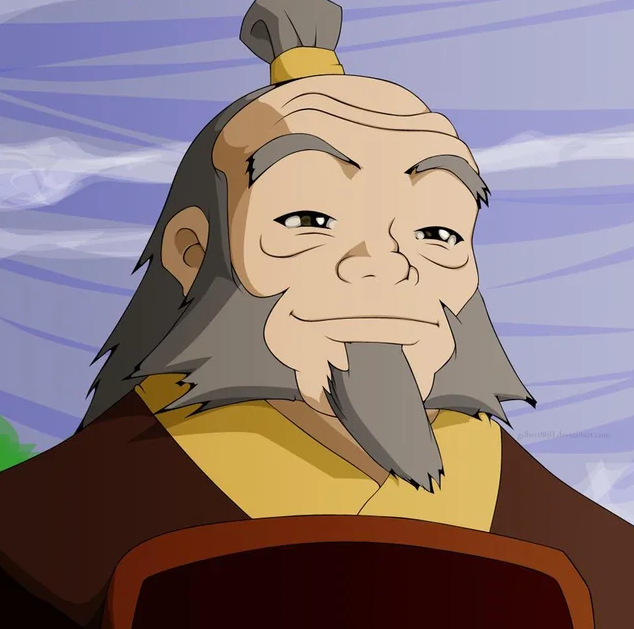
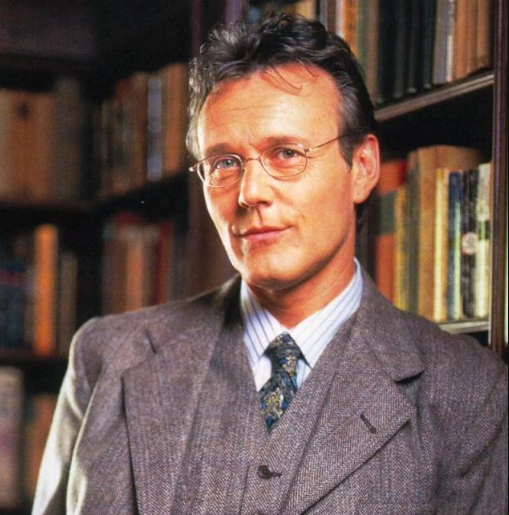
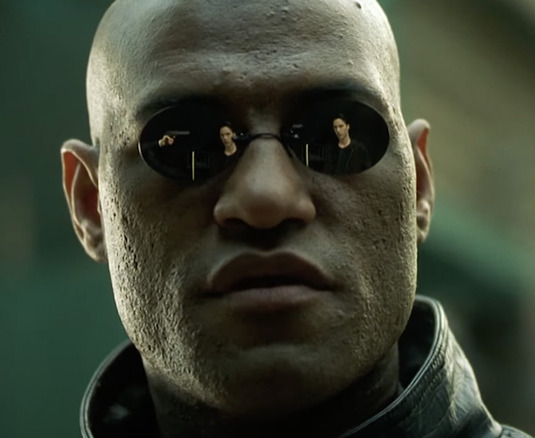
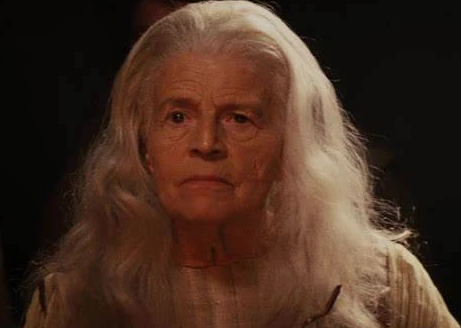
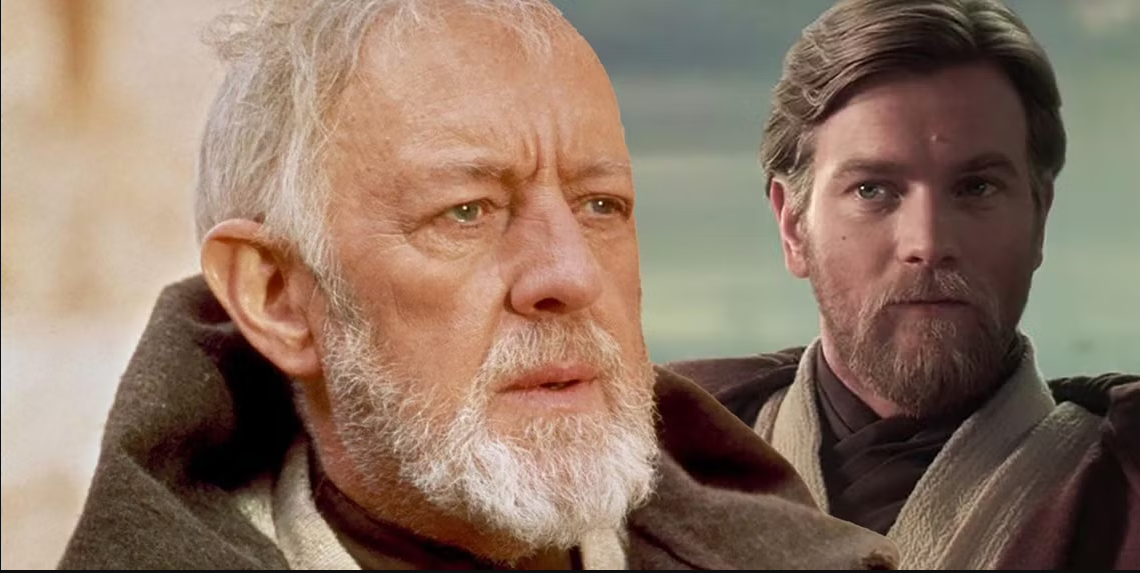
Gandalf is one of the great mentor characters, up there with the best of the best, the likes of Merlin, Alpha Trion, Morpheus, and Obi-Wan Kenobi. As an immortal maiar, an angelic being, Gandalf has been around since before Middle-Earth existed. So, Gandalf is extremely old and wise. He’s also quick to give the protagonists under his care an inspiring quote just when they need it most.

Trust me when I say, that we all could use such a quote right about now to lift our spirits or show us the folly of our ways. But as Gandalf stubbornly stays in the realm of fiction, and most definitely not in the real world, we have to content ourselves with the various portrayals of him in the books and in adaptations of those books. I’m drawn to three quotes in particular. For LOTR fans, these may seem like low-hanging fruit, but they are three that live rent-free in my brain right now:

  • Frodo: I wish the ring had never come to me. I wish none of this had happened. Gandalf: So do all who live to see such times, but that is not for them to decide. All we have to decide is what to do with the time that is given to us.

This one is pretty self-explanatory, and one of the most famous. The moment in the movie when Frodo stands on the banks of the Anduin, contemplating his plight, and he hears this quote again gets me every time.

  • Gandalf: Pity? It was pity that stayed Bilbo’s hand. Many that live deserve death, and some that die deserve life. Can you give it to them, Frodo? Do not be too eager to deal out death and judgment. Even the very wise cannot see all ends.

I think what calls to me about this quote stems from some of the deep-lore surrounding Gandalf himself. He was once a servant of Nienna, the Valar (one of the gods of Middle-Earth for those not familiar with the term) who understood sadness and grief in the most profound way. She mourned the destruction and sorrow that existed in the world, often before it had even happened. Because of this connection to grief, she was also a being who appreciated compassion and pity beyond all others. Gandalf is often cited as the wisest of the maiar. I suppose that is why I have always associated wisdom with compassion and empathy.

  • Gandalf: Saruman believes that only great power can hold evil in check, but that is not what I have found. I’ve found it is the small things — the everyday deeds of ordinary folk — that keeps the darkness at bay, simple acts of kindness and love. Why Bilbo Baggins? Perhaps it’s because I’m afraid, and he gives me courage.

To some degree, I feel this speaks to my relationship with my son. He’s a deep thinker, and feels all the doubts and apprehensions that this implies. But, ultimately, he is an optimist, and sometimes surprises me with his insight that seems far beyond his short years. Even though I can at times feel hopeless, he gives me the courage to keep going.

Final Thoughts

It’s been a rough year for me all right, personally, professionally, and creatively. I am not looking forward to writing the State of the Sector Address for this year, simply because I had so many misses and so little to show for the past twelve months.

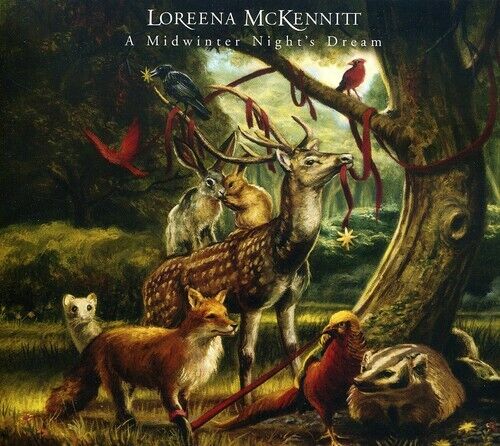
Despite the somber tone of this blog post, I don’t want to end it on a down note, truly. So, how do I strike a delicate balance between a meaningful Christmas message and the not-so-holly-jolly state of mind that I’m in now? Simple, I’ll refer you to Loreena McKennitt’s A Midwinter Night’s Dream album. Her versions of some well-known Christmas classics are introspective, even a little melancholic, without being depressing or nihilistic. And that’s pretty much me right now.

In particular, I would recommend The Holly and the Ivy, God Rest Ye Merry Gentlemen, Emmanuel, and Snow, though there is not a bad track on the whole album. Even if Christmas is not your thing, or even part of your belief system, they are beautiful expressions of music that I highly recommend.

And that’s where I will leave things for 2024. It’s a year that I’m glad to leave behind, but one you can be damned sure I won’t ever forget. It has left its mark on me. But as my father is so fond of saying, “Experience is what you get when you didn’t get what you really wanted.”

Despite my reticence to approach the State of the Sector Address this year, I will be moving forward with it, regardless. I know my delivery dates for blog posts have gotten a bit unpredictable of late, but my plan is to post it on the Friday of the first full week of January, so January 10. Watch for it then.

In the meantime, I wish all of you out there, along with your families and friends, a holiday season filled with light, joy, and hope.

Thanks for reading, and take care out there.


Fanboy Review #18 — Transformers One

[Note: I do not consider myself a movie critic. What follows is just one fanboy’s opinion based off of a single double viewing of the film. Oh, and there are SPOILERS ahead for this movie, so take heed.]

If you’ve followed this blog, you may have noticed that the Transformers franchise comes up quite a bit in my writing. It was certainly my favorite toy line growing up, and Optimus Prime may, in fact, be favorite fictional character of all time. I have no real love for the live-action Bayverse Transformers movies outside of Steve Jablonsky’s hauntingly beautiful musical scores and some fantastic voice acting. But, for the most part, I don’t care for them. Bumblebee is the sole exception. I had hoped that it would lead the way, but Rise of the Beasts showed me that the cinematic franchise on the whole had learned nothing from Travis Knight’s retro-themed movie outing.

So, it didn’t surprise me when I started hearing about Transformers One. Transformers as I knew it came from animation, and the franchise has been kept alive through the years through many different animated series. So, a CGI-animated take on the story adapted to the big screen felt inevitable, especially as Hasbro struggles to stay afloat.

First Impressions

I must admit that when I saw the first trailer for Transformers One, I was…skeptical. We were once again going back to the root causes of the war for Cybertron, and the growing divide between Autobot and Decepticon, which has been done over and over again. I was not particularly enthused about yet another reboot in what seems like a rapid-fire series of Transformers reboots by Hasbro in recent years.

The general vibe that the trailer gave off seemed like we would be in for a goofy, slap-stick adventure romp on Cybertron. Also, the fact that Peter Cullen and Frank Welker would not be reprising their iconic roles as Optimus Prime and Megatron was a big thumbs-down for me.

But, I could see that my young son was interested in going to see it, so I steeled myself and went into the theatres expecting a low-effort attempt at getting a younger generation to embrace a decades-old toy franchise.

As I sat there in my reclining seat, however, I quickly began to realize how wrong I was about, well, everything regarding this movie. The tone was very different than I had guessed, and for the better. More than that, this movie far surpassed my expectations and played into the meta-lore of the Transformers universe far more than I would have guessed.

What I liked

The MUSICAL SCORE: I know a movie score is good when I can’t wait to get home from the theatre and download it. I found, to my delight, that Brian Tyler had composed the score. That explained the sublime sense of mystery and awe that permeates the musical landscape of this movie. Tyler is one of my favorite of the “modern” crop of movie composers. He did the score for Iron Man 3, which is excellent. He also did the score for the Syfy mini-series version of Dune, which really elevated the drama. Oh, and he also did the theme for Transformers Prime, perhaps the best Transformers has ever sounded on the small screen.

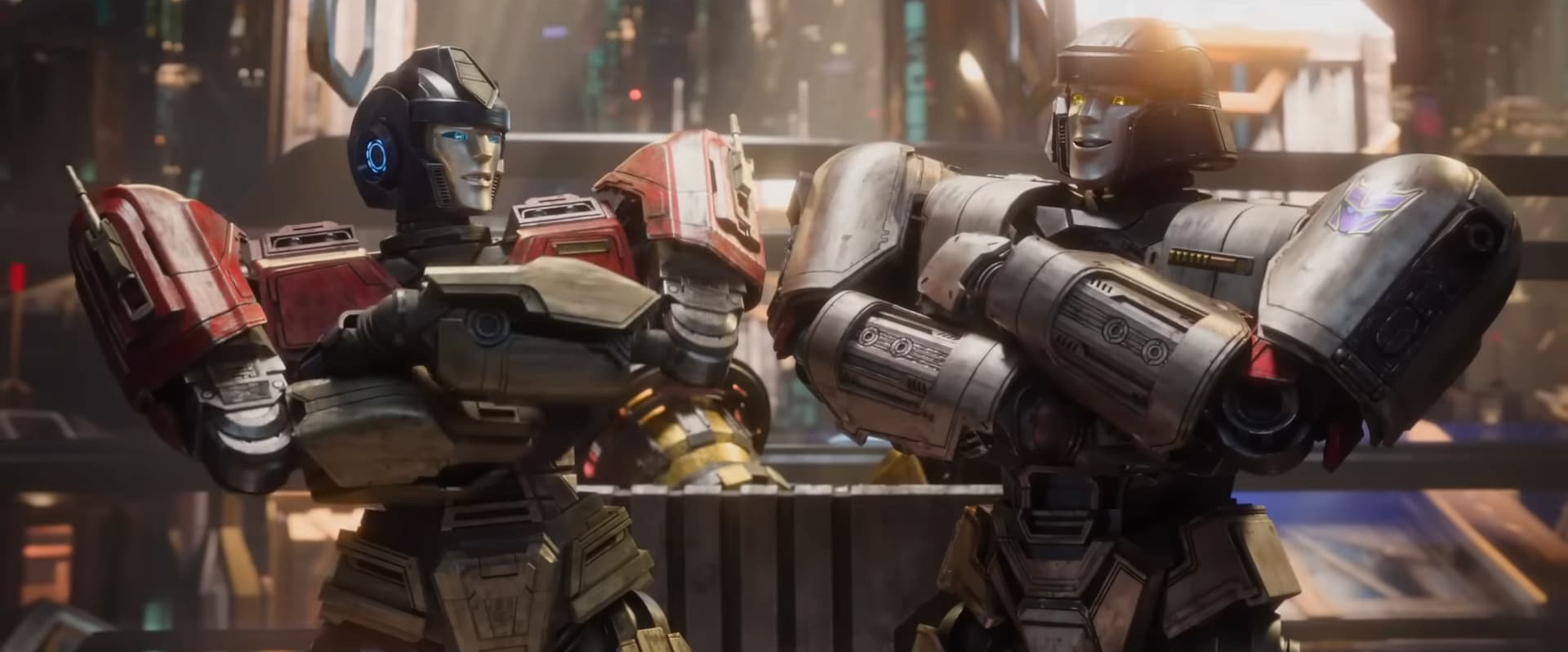
Orion Pax and D-16: It was great to see the two of them as friends, even with the foreknowledge that they would eventually become the greatest of enemies. They did a good job of establishing their base personalities that contain the seeds of the conflict to come. Orion Pax doesn’t mind breaking rules that he sees are unjust or in the service of uncovering the truth. He sees the potential in his fellow miners and wants to become more than what they current are. D-16, on the other hand, prefers to follow the rules to the letter, to stick to established protocols. When it is ultimately revealed that the rules he’s been so strictly adhering to are a lie, he is crushed, resulting in him becoming angry and vengeful.

In days of long ago…

The animation and models: CGI-based storytelling has come a long way, and the Transformers franchise has upped its game from the days of the original Beast Wars. I was surprised at just how beautiful and natural some of the animation was in this movie, even when it’s applied to anthropomorphic robots that turn into vehicles. I was also impressed with just how emotive and expressive the four primary characters were on screen.

Megatron’s eyes: I picked up on this little gem on my first viewing of the movie. A good indicator of the story’s escalation is found in the color of Megatron’s eyes. They start out a bright yellow, but as things are revealed and the road he is on darkens, his eyes begin to turn more of an orange color. I predicted that they would turn red at a critical moment, and sure enough, I was right. It was a subtle touch that really gives you that dividing line between D-16 as we knew him and his new persona as Megatron — who then goes on to name his faction after the great deception that he had a hand in destroying.

Two leadership styles: Once Orion and D-16 come back from the wilds, but before they take their iconic names, you can see how they both lead their respective groups effectively. Orion Pax is an inspirational figure, who leads from the front, and is excellent at making those around him believe they are capable of greater things than they ever thought possible. By contrast, D-16 is all about showing strength through acts of force, which appeals to the dangerous, more military sensibilities of the High Guard. When D-16 is captured by Sentinel Prime, the ex-miner would rather die on his feet than grovel on his knees. Even when he gets knocked down, he stands back up with even more defiance.

A satisfying story: In a feature-length movie, character arcs have to move fast, faster than they would in a series format. Still, Transformers One clocks in at a respectable 104 minutes, which isn’t bad for an animated show. I think that the story moves along pretty quickly but pauses in places for some great character development and worldbuilding. By the end of it, it feels like the characters have been on an era-defining adventure that nicely sets up the ongoing conflict in the Cybertronian war to come. After having seen this material retreaded upon again and again, this take felt fresh and just sort of ‘right’ for the continuity that they had set up.

What I DIDN’T Like

Lack of original voice actors: I think that Brian Tyree Henry and Chris Hemsworth did admirable jobs as the voice actors for Megatron and Optimus Prime, respectively. I don’t want to disparage their performance as I think it was excellent. The issue is that Peter Cullen and Frank Welker sort of “own” their Transformers personas in a way we don’t see very often. Their voices give Megs and Op a kind of genuine spark (full pun intended) to the characters that’s really irreplaceable. I think it was a missed opportunity to include them in this project. Can you imagine Orion coming back from the planet’s core with the Matrix, now with Peter Cullen’s iconic voice style? Or, when Megatron proclaims “I’m done saving you,” having Frank Welker’s voice take over for the remainder?

Human characteristics on robots: At one point, we see Orion’s lips flapping in the wind as the train speeds up. Later on when they are avoiding the Quintessons in the ruins, we seem Orion look like he’s breathing hard. This is such a minor thing, but these very human traits looked completely out of place on a character model who is a robot. It took me out of the moment when it happened.

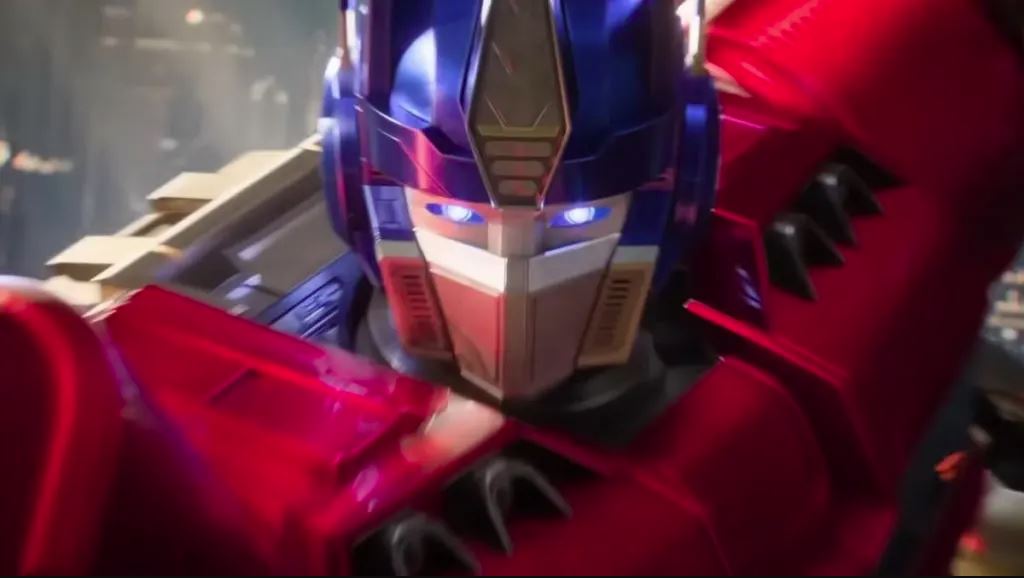
Despite where this image falls in the blog, I loved this scene.

The death of Alpha Trion: Alpha Trion is the archetypical mentor character in Transformers, effectively Merlin to Optimus Prime’s King Arthur. While Alpha Trion got to take out some random goons with the cheeky retort of “Not too old for you,” he basically was just there to deliver some exposition and be executed at the hands of Sentinel. If we get a sequel they could always bring him back somehow, but the total amount of time he got to spend with Orion Pax here is measured in a matter of moments. I had hoped to see a father-son relationship develop between them.

The lingering odor of the Bayverse: There are a few points where I could tell that the story still had some of the greasy little fingerprints of Michael Bay left over from the live action movies. Sentinel Prime being an outright villain and tyrant (rather than just a bully and an a-hole in Transformers: Animated) feels like it took some cues from Dark of the Moon. Bumblebee being named B-127 calls back to a Bayverse Bee before he got his Earth name. Also that there are (or were) multiple Primes at once rather than it being a succession of one at a time through stewardship of the Matrix of Leadership. It seems we cannot quite escape the Bayverse here, though to be fair, there were plenty more G1 nods.

Conclusions

The G1 continuity will always be my favorite telling of the Transformers story. In my heart of hearts, the origins of Orion Pax’s transformation into Optimus Prime can be found in episode #59 of the Sunbow cartoon titled “War Dawn.” Unfortunately, aside from the video game Transfomers: Devastation and a select few comic books, we aren’t getting any more narrative continuations of that version of Transformers. 

That said, I realize that Transformers fans my son’s age want something new, something more updated to appeal to them. Some of Hasbro’s attempts to provide this in recent years, such as War for Cybertron, Robots in Disguise, and Earthspark have seemed half-hearted and disposable. Transformers One, however, felt like an honest attempt to bring Transformers forward to a more modern viewership. There’s a real heart to this movie that many other recent versions of Transformers have just sort of lacked. I was surprised just how much I enjoyed the experience — on both occasions.

And, you know, if the continuity of this movie becomes the basis for the Transformers milieu of my son’s generation, I’m more than okay with it. It remains to be seen if we get more from this branch of the Transformers universe, however. As enjoyable as I found this movie, and with it receiving some decent reviews from critics, it unfortunately didn’t do as well as expected. I do hope this isn’t the last we see of the Transformers One crew. I wish them many more heroic adventures to come. So, from me to the cast and crew of this movie, let me simply say: ‘Til all are one!

And that’s the way this fanboy sees it.


Topaz: A Spectrum in Stone

If you’ve followed this blog for any length of time, you likely know that museums are one of my passions. I regularly travel to museums across the U.S. with my family. Well, a new exhibit just opened a few weeks ago at The Perot Museum of Science and Nature in Downtown Dallas, Texas, called Topaz: A Spectrum in Stone. The reason I’m writing about it today is two-fold: First, it’s really cool, and the Perot has a stunning Gem & Mineral Hall; and two, I was a writer on this exhibit. (I even gave the exhibit its name.)

This is not the first exhibit I’ve worked on for the Perot (and I hope it will not be the last), but it is the first one I’m writing about on this blog. In fact, Topaz: A Spectrum in Stone replaced a mineralogy exhibit that I had previously worked on a few years back. As the name implies, it’s all about topaz.

I knew only a few passing details about these stones before I started, but learning about new things is part of why working for a museum is such a wonderful experience. For instance, I now know that red-orange topaz are the rarest of the rare in the world. Why, you ask? It’s because of the presence of chromium during the stone’s formation.

Along those lines, topaz are naturally colorless. If they have a color at all, it can be due to the presence of radiation or heat. In fact, you can artificially make a topaz blue by exposing it to further radiation and heat. Conversely, sunlight and UV radiation in general can actually leech the color back out of it.

Indeed.

The topaz displayed in this exhibit are some of the most well-known specimens in the world. Here a few of the stars of the show:

The Imperial Flame

Remember all that stuff about chromium above? Well, this topaz is one of the best examples of a fiery red-orange color. It was mined in Brazil and cut to have a stylized flame pattern along its surface. The Imperial Flame topaz is one of the best examples of this rarest-of-the-rare topaz in the world.

The Eye of Jaguar

Another one from Brazil, this topaz is largely clear, but has a yellow-green tint to it. It has an eye-shaped cut, but here’s the kicker: This topaz is over 9,600 carats! (Yes, Vegeta, over 9,000.) It’s so gigantic that at first glance it looks like a fancy paperweight, but this stone is the real deal. Keep in mind that this gem is this large even after it’s been cut. Just imagine how big it must’ve been coming out of the ground.
The Texas Bluebonnet

My close-up shot of the actual stone came out blurry. Consequently, this is not the Texas Bluebonnet, but this shows you the approximate color and cut of the actual stone.

Another fun fact: Texas is the only state with its own official gem cut — the Lone Star cut, which forms a five-pointed star in the middle of the gem. Also, blue topaz is the Texas state gemstone. So, if there was one topaz that embodies both the pale blue color of Texas topaz (found exclusively in Mason County), and the Lone Star cut, it’s this 234-carat topaz.

This is just to name a few. The exhibit also includes several bicolor topaz from the Volyn deposit in Ukraine, some other imperial topaz that are more of an amber yellow, and several large, uncut topaz that are stunning in their colors and/or size. One of them even looks like it’s a piece of ice from right off the side of an iceberg. Trust me when I say that photos don’t do them justice. Like, at all.

I’ve been to a fair few natural history museums in my time, but the Gem & Mineral Hall at the Perot remains my favorite, and not just because I’ve worked on exhibits there. The specimens they have there, such as the famed Eyes of Africa, the largest intact stibnite crystal ever found, and a person-sized purple geode, all come together to really show us the breathtaking beauty that our planet has to offer.  

In closing, if you are in the Downtown Dallas area, I highly recommend giving the Perot a visit. There’s so much to see and explore, so make a day of it. From dinosaur fossils to space exploration, and many points in-between, The Perot Museum of Science and Nature is an experience quite unlike any other.

Thanks for reading!

Of Santa Claus, Aragorn, and Inevitable Partings

Folks, I have to say upfront that is a blog post I had hoped I wouldn’t have to write for many more years to come. Back in 2020, I wrote a post about my godmother when she passed away that talked about what a genuinely cool person she was and how she facilitated my interest in Transformers. A few weeks ago, her beloved husband, my godfather Jim, joined her in the great beyond. My earlier blog served as a sort of eulogy for her, which helped me come to terms with her loss; this one is in remembrance of him, which I hope will serve in a similar capacity.

“Here at last, on the shores of the sea, comes the end of our fellowship.”

Like with my godmother, it’s tough to really express how much an influence he was on my life. Growing up, it was like having a third grandfather. Functionally, that’s what he was, though we weren’t blood related. My godparents took me into their lives at such an early age that I don’t remember it. They have simply always been there.

So, yeah, I’m in that phase of grief where I’m trying to understand a world that doesn’t have Jim in it. He remains one of the smartest and wisest people I’ve ever known. He served as my lifelong mentor, my moral compass, and so much more. Like my godmother, he was a pretty interesting person. He was a builder and an engineer, a natural leader, a teacher, an orator, and SCUBA instructor. In fact, when I learned how to dive, he was the one who taught me — just one of the many life skills he imparted to me over the years.

Also like my godmother, he helped fuel my interest in Transformers. He was responsible for many of the bigger sets that I received over the years, including Omega Supreme, Jetfire, Megatron, Metroplex, and (most notably) Sixshot, which he got me for my birthday.

I don’t have the box anymore, but this is what it looked like.

His job often took him to Dallas, where he would scour the various Toys R’ Us stores in search of toys for me. He didn’t stop at Transformers, either. Other toy lines like M.A.S.K., Starriors, and Voltron were among the ones he found for me. I’m lucky enough to have kept many of those gifts from him, which are even now on shelves in my office as I write these words.

Of Santa Claus and Child-Like Wonder

On the subject of gifts, this was the man that I literally thought was Santa Claus when I was a young child. He used to tell me in passing that he was secretly Santa, and I thought he was joking. Jim had lost part of his right index finger in an accident years before I was born. This detail will be important momentarily.

Well, when I was about three or four, my godmother took me to see Santa just a few weeks before Christmas. When it was finally my turn to approach, Santa greeted me by name. That seemed pretty on brand for Santa, keeping in mind that I didn’t think this was just a guy in a suit, I thought this was the Santa Claus I was going to see. He seemed to know all about me, which also seemed to track.

It was only when I looked down at his hand that realized I that Santa was also missing that part of his index finger. It all clicked in my mind. I had my “Wait, you ARE Santa!” moment. From that point until one of my cousins (I won’t say which one) spoiled the whole Santa-isn’t-real deal for me a few years later, I was convinced I actually knew Santa personally.

Even though his persona as Santa eventually faded into the background, my esteem for him forever remained at that level.

Of Aragorn and the Halls of Mandos

A few months ago, I wrote a post about fantasy Dwarves and why I think they are so cool. In it, I mentioned the group Clamavi de Profundis, who have perfected the art of the Dwarven Song. They have adapted many of Professor Tolkien’s poems into songs. This also includes Aragorn’s Coronation song that we hear at the end of Peter Jackson’s Return of the King.

…tenn’ Ambar-metta.

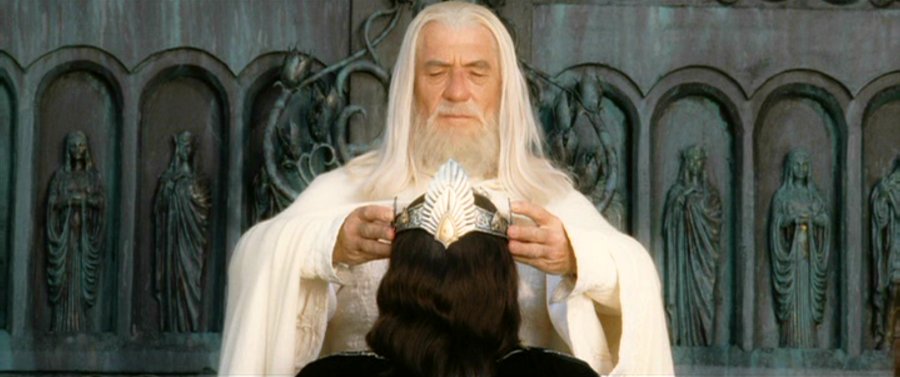
They start with the poem itself, but after the first recitation, a young woman’s voice sings the “All That Is Gold” poem in Tolkien Elvish that’s both beautiful and haunting, sounding like something right out of a Howard Shore score. Then, we get a reprise of the coronation poem, only this time other voices raise up to join the main voice. If you watch the video, it is implied that these are Aragorn’s forebears, his ancestors becoming a chorus to own Aragorn’s recitation, as though they were lending the newly crowned King Elessar some of their strength from beyond the veil of death. 

I listened to this song after I found out that Jim was gone, and it really affected me. It took a few days to recognize this catharsis when it came, but I think I have an understanding of it now. To some degree, what was true of Aragorn in that song is true is true of Jim and me now. I won’t get into the existence or non-existence of an afterlife here, but regardless of the metaphysics involved, part of Jim’s legacy includes all the life lessons that he taught me, the wisdom that he imparted. In a very real sense, I am the man I am today because of him. Those lessons echo now in the present.

Like I said, he was a teacher. Since he is no longer here to guide me on my life’s journey, I must continue to put into practice the principles and philosophy that he gave me. What remains now is to see if I can uphold them with as much vigor and character as Jim did. It’s a tough act to follow, let me tell you.

While I would have loved to have him around for much longer, the truth is that no amount of time would have been enough. I would always have wanted more. And though it is hard to accept, I must content myself with the time we did have together. If that last bit reminds you a bit of Gandalf’s “So do all who live to see such times” speech in Fellowship of the Ring, it’s not a mistake. Right now I’m living the part about deciding what to do with the time that is given to you.

Of Inevitable Partings

While I did not care very much for Indiana Jones and the Kingdom of the Crystal Skull, there was one scene that really spoke to me. Indy sits down at his desk while packing for his next adventure. He stares at a one photo of his father, Henry Jones Senior, and and another of his long-time friend, Marcus Brody. His friend, Charles Standforth (played by the wonderful Jim Broadbent), says, “We seem to have reached the age where life stops giving us things and starts taking them away.”

Now I’ve reached the age where the titans of my youth have started to fade away. We are all subject to the inescapable march of time. It is our fate to eventually say good-bye to everyone around us, or they to us. The inevitability of these partings does little to prepare us when they happen, though. I knew that Jim would, someday, be gone, but I’m struggling with just how much his loss affects me now that the day in question has finally arrived.

Now it’s not some dim and distant theoretical future. Look, I certainly don’t have a monopoly on grief. We all have to go through this at some point in our lives. But I’ll be damned if it isn’t an emotional gut-punch each and every time. It sucks, and the only way forward with grief is through.

But I suppose that is the price we pay for loving others, isn’t it? If we didn’t care, there would be no pain at times like this. As much as the grief I feel now weighs upon me, as much as it feels like there’s a hole in my heart, if I must now endure these dark days to have enjoyed so many years previously with Jim in my life, then so be it.

Final Thoughts

“White shores, and beyond, a far green country under a swift sunrise.”

Whether for good or for ill, 2024 will go down as a year of transition for me on many levels. Some of this change has been welcome, though not without its own challenges. Other parts of it, like this loss and others, have been devastating. They’ve definitely left their mark on me.

Circling back to Gandalf for a moment, at the parting of the Grey Havens, he tells the assembled hobbits, “I will not say: do not weep; for not all tears are an evil.” I have to keep reminding myself of that fact.

This just serves to underscore that we should be present for each other in the time we do have together. In the hustle and bustle of daily life we can often lose sight of that fact. I know that happens to me, but the truth is life is temporary, impermanent, a limited-time engagement, so enjoy it.

If you love someone in your life, tell that them — often. Keep on telling them that. If it’s been a while since you’ve connected with someone you care about, reach out to them. If there’s a grudge you can let go of, do it. I guess what I’m trying to say is this: Life is short, so love with all your heart.

True, one of these days, we’ll have to say that final good-bye, but that time has not yet come. So, let’s make the most of it until then, okay?

Thanks for reading.


Fanboy Movie Review #17 — Deadpool & Wolverine

[Note: I do not consider myself a movie critic. What follows is just one fanboy’s opinion based off of a single double viewing of the film. Oh, and there are SPOILERS ahead for this movie, so take heed.]

You know, it’s been a while since I’ve given a movie the full fanboy-review treatment. It’s certainly the first time in a long while that the movie in question was a Marvel project (not since Doctor Strange and the Multiverse of Madness).

Once my interest in the MCU started to wane, I said that I wouldn’t write about movies that I didn’t like. So, for the very fact that this blog post exists should give you an idea of what I thought about it. Spoilers: I loved it. In fact, I was surprised at just how much I enjoyed it. I am pleased that Deadpool & Wolverine has, at the time of this writing, passed the billion-dollar mark. It deserves every cent it earns.

 Now, let’s get down to business.

First Impressions

I like the character of Deadpool, particularly when Ryan Reynolds is behind the mask, but he’s not my favorite superhero. I thought Deadpool and Deadpool 2 were funny movies. Again, they weren’t my favorites, but the kind of humor you get from a Deadpool movie is a particularly hard itch to scratch. You can’t really find it elsewhere. So, when Deadpool & Wolverine was announced, I knew I was destined to see it at least once.

As it happened, I was able to go with my friend, Brian, who has been a guest blogger on the Sector M blog before. While his favorite superhero is, without a doubt, Spider-Man, since I’ve known him, he’s had a special place in his heart for Deadpool and Wolverine. (I’m sure the fact Brian’s from Canada has nothing to do with it.) I felt fortunate to ride shotgun with such a fine Wolverine and Deadpool connoisseur.

Truth be told, I was not expecting much from this film other than it would be fun and funny. I had no idea the treat I was in for with this movie.

What I liked

The Needle Drops: The musical cues in this movie are choice. Songs that I would have never in a million years thought would play a key role in a Deadpool movie fit so perfectly. From the *NSYNC “Bye Bye Bye” dance during the intro sequence, to the dramatic remix of Madonna’s “Like A Prayer,” every track just lands. *chef’s kiss*

Hugh Jackman: After Logan, I wasn’t sure we would ever get to see Hugh Jackman as Wolverine again. In this movie, we see all sorts of Wolverine variants, from the short, hairy armed, comic-accurate version, to Old Man Logan to the “Fever Dream” Wolverine on an X-shaped cross, and many others. But the variant he plays for the majority of the film, clad in the traditional yellow-and-blues, is incredibly played. I was surprised at how much dramatic weight the character brings to the story. In particular, his scenes with Laura (X-23) around the campfire, along with his scenes with Cassandra Nova, transcend far beyond anything I would have expected in a humble Deadpool movie. More than anything else, I think Hugh Jackman elevated the movie up to the next level.

ALL. THE. CAMEOS: I was afraid that the sheer number of reported cameos would just wind up being empty fan service, but there was more to them than I initially gave them credit for. Some of them weren’t as impactful as others (Sorry, Pyro and Sabertooth), but seeing Henry Cavill as a variant of Wolverine was inspired. OMG, Johnny Storm and the one-and-only BLADE! I was impressed at how some of the guest appearances played important parts in the story.

Cassandra Nova: For a villain who has never been referenced in the movies before (that I am aware of), and one who does not have a whole lot of screen time, Emma Corrin is absolutely electrifying in every scene she’s in. She displays such a range, from casual, almost off-hand cruelty to genocidal maniac. Her scenes with Wolverine, particularly when she says that she can silence all his voices, are almost tender. It gives her a depth I was not expecting.

She was very nearly the most successful Marvel villain of all time, too. Thanos only snapped away half the life in a single universe; she came close to pruning all of them. We should all be so lucky if we encounter other Cassandra variants played by Emma in the future.   

The Merc Himself: Once again, this movie has way more heart than I could have ever imagined. While there is the usual non-stop banter and fourth-wall breaks, this time, we get a Deadpool who has something to lose. His back is to the wall. He’s fighting for the lives of everyone he loves and the very existence of his universe. His impassioned plea to Wolverine in the Honda Odyssey (just before they wreck it), is something that hits home for me. For all his bluster, all his meta-contextual knowledge, Deadpool knows he’s in over his head, and he’s scared.

While Ryan Reynolds is known predominantly for his comical side, I think his skill as a dramatic actor is often overshadowed. Ryan really is a once-in-a-generation casting for this character, right up there with RDJ as Iron Man and Tom Hiddleston as Loki. Just perfect.

The Last Stand: I have a real thing for last stands (apart from X-Men: The Last Stand, that is). As a literary device, last stands appeal to me because the chips are down. The heroes making their stand are likely doomed, but they are resolute. To me, a last stand is the ultimate test of character, their own personal Kobiyashi Maru. Here we see the eponymous duo make their last-ditch, maximum effort to save all the universes, and it did not disappoint. And when we finally get to see Wolvie fighting in his signature mask, I honestly got a chill. If we never again get a moment like that in later movies, with future versions of Wolverine yet un-cast, I am content.

What I DIDN’T like

Paradox’s Plan: The Time Ripper is an interesting plot device/McGuffin, but I’m not sure why it exists. We’ve seen TVA agents prune entire timelines with a hand-held device that works instantly. No complicated matter/anti-matter intakes or days-long build up. So, I’m not sure why Paradox doesn’t use one of those if he really wants to put Deadpool’s universe out of its misery. He gives an off-hand line of dialogue about how they don’t prune anymore, but a Time Ripper effectively does the same thing, right? I’m guessing that the answer to this question is a hearty ‘so the movie can happen.’

No Loki or Mobius: For a movie that leans so heavily into the TVA, and one that is very cameo centric, it really surprises me that we didn’t see Loki or Agent Mobius at all in this film. It’s a tad disappointing.

No? Really?

Logan’s Past Deeds: Logan’s motivations throughout the movie are to see about trying to undo the events where his life went off the rails. While I’d say that saving every timeline that exists is a good way to start on that journey, they sort of hand-wave trying to correct his timeline at the end. Even if the events in his universe shaped him into the unlikely hero he is at the end of the movie, I’m pretty sure he would still be keen on undoing the murder of all his friends and all the subsequent murders he committed as a result.

The End Credits Stinger: While I was initially shocked at how Deadpool’s comments got Johnny Storm excoriated by Cassandra Nova, by the time the credits rolled, I had sort of forgotten about that. While I suppose it was vindicating for Deadpool, the Stinger is valuable real estate. Give a teaser for something that’s coming up. Closing the loop on that one scene was funny, but unnecessary. Just think if it was that moment that Loki showed up, looks Deadpool right in the eyes, and offers him a job at the TVA, mirroring Nick Fury at the end of the first Iron Man.

Conclusions

As Deadpool himself states, we’re catching the MCU at something of a low point. That’s one of the reasons that I haven’t written a blog post about anything Marvel related in more than two years. It’s not that I haven’t gone to see Marvel movies, it’s just that I’ve found most of those offerings as “nothing to write home about.”

So, I think that this movie is precisely what the MCU needs at this moment. It’s an R-rated shot in the arm that might make fans actually excited about upcoming Marvel projects again, something that’s felt lacking post-Endgame. Don’t get me wrong, I don’t think the MCU is out of the woods yet, and I’m mixed on the recent news about Doctor Doom, but Deadpool & Wolverine shows us that there’s still some life left in the Marvel universe, a place that is very near and dear to my heart.

Of course, it’s possible that this may be the last time we see Ryan Reynolds suit up in the red and black, but part of me would like to make an educated wish that we haven’t seen the last of Deadpool in the MCU. (After all, what was all that about Thor crying?) But, if this was truly the end of the line for these characters, Deadpool & Wolverine nailed the landing.

And that’s the way this fanboy sees it.


The Knights of Solamnia Revisited

Dragonlance.

That one word is so incredibly evocative to me. I have written previously on how I found the Dragonlance Saga, and what it means to me both as a reader and author of fantasy. I cannot understate how much of an influence it has had on my life since its first discovery.

OG DL logo

But, perhaps I’m burying the lede here. The fact is that I’ve always wanted to be a contributor to the Dragonlance mythos. Unfortunately, there are fewer and fewer ways to do that nowadays. When I read Shadow of the Dragon Queen, something really struck me: the treatment of the Knights of Solamnia, by far one of my favorite aspects of Dragonlance.

I fully expected the Knighthood to be represented as a fighter subclass. It turns out, joining the Knighthood, as well as your status within it, really came down to a feat choice. Besides the fact that feats in 5e are (in theory) optional, I expected membership within the Knighthood to require more — and be more — than just a mere feat choice.

I was also puzzled by the Shadow of the Dragon Queen’s progression within the Knighthood. You could make up a character who could become a Knight of the Rose by 4th level without ever having been a part of the Orders of the Crown or Sword, all because of their feat choice. Or, you could achieve the orders out of their established order.

This didn’t strike me as lore friendly. If a Knight of Solamnia wants to become a Rose Knight, they should always start off as the lowest order, the Order of the Crown. After they’ve been there for a certain amount of time, and sufficiently proven themselves, they would then have to petition to join the Order of the Sword and be successfully inducted into its ranks by the other Sword Knights in charge. 

Only after they were a Knight of the Sword could the knight in question repeat that same process to eventually enter into the Order of the Rose. Rose Knights wield incredible political and military power, and that status should only come after they have proven themselves worthy throughout their career. I don’t think that makes sense at 4th level.

So, I decided to do something about it, and the DMs Guild was the answer. As I said above, I’ve always wanted to contribute to Dragonlance, and so that’s exactly what I did. I created a digital game supplement, The Knights of Solamnia Revisited, the second title released under the Sector M Games banner. In it, I explore what it means to be a Knight of Solamnia, how to role-play as one, and what your progression would look like.

At the center of this progression is a tiered, interconnected fighter subclass that would allow players of a Knight of Solamnia to make their journey from Crown Knight to Rose Knight as their level progresses. Of course, a knight could also make a full career as a Crown Knight or Sword Knight, and there are definite advantages to doing so.

Using these rules, the earliest you could gain the benefit of being a Sword Knight is at 7th level, with Rose Knight benefits kicking in at 10th level. Considering that most campaigns only run to between 10th and 12th level, it means that attaining entry into the Order of the Rose would come towards the end of the campaign, which makes much more practical sense. If you are able to game beyond those levels, this supplement goes all way the up to 20th level for all three career paths. You could absolutely have a party with a 20th-level Crown, Sword, and Rose Knight in it, and each one would function differently from each other and be powerful in their own right.

The Knights of Solamnia Revisited does present a more-powerful-than-average subclass, however, but if ever it was needed, it’s against the backdrop of the War of the Lance. Because the Solamnic Knights are the world’s premier military organization, they also get access to feats that other fighters don’t. This will allow them to really do the heavy lifting as a martial character in a Dragonlance campaign, especially in one where the odds of encountering a dragon at lower levels is virtually guaranteed.

The world of Krynn naturally lends itself to epic storytelling, so the Knights of Solamnia get some extra punch with a bank of general feats that any Solamnic Knight can take, as well as Order-specific feats that allow you to customize your knight to fine-tune your build and character ethos.

While DMs are encouraged to tamp down on these extra feats if they feel it would unbalance the party, consider these two things:

  • Martial characters need a boost to stay on even footing with magic-users
  • Party sizes have trended smaller than in the earlier days of the game

On the first part, with the exception of paladins, most martial characters struggle to compete with spellcasters in terms of overall effectiveness. This divide is only exacerbated as levels get higher. While character builds and player ingenuity can narrow that gap significantly, martial characters (again with the exception of paladin) rarely get their due. The need for fighters to be able to really bring it is particularly needed in Dragonlance where the challenges the characters will face have a smaller margin of error.

On the second point, the original Heroes of the Lance consisted of ten main characters: Raistlin, Caramon, Tika, Tanis, Sturm, Laurana, Tas, Flint, Riverwind, and Goldmoon. I don’t know about you, but most games I’ve played in the last few years have been lucky to have five people at the table, if that. With fewer players, it means that each character in the party will need to pull their own weight if they are to survive in the rugged world of Krynn. This supplement was meant to address those points, and more.

And just to make a good thing better, Miguel Coronado III has returned as the artist for this project, giving his own artistic take on the Solamnic Knighthood. He’s the one who did the incredible artwork for The Artificer’s Guide to Magic Items, and the pieces he created here are a veritable feast for the senses. The images here, aside from those noted, are all by him.

At the moment, I don’t have a firm release date, but we are close. The layout is in great shape due to the inestimable talents of Natalia Holmes, who is also an alum from The Artificer’s Guide. All that remains is a few minor tweaks and another professional once-over to make sure all is good to go before release. [Update: The Knights of Solamnia Revisited is available now on DMs Guild here.]

So, if you’ve enjoyed The Artificer’s Guide, are a fan of Dragonlance, or both, check out The Knights of Solamnia Revisited, now on the DMs Guild!

Thanks for reading!


A Robotech Retrospective

Some of my earliest memories of watching anime are those with my dad. We would watch Speed Racer and Star Blazers in the small little apartment where we lived. Star Blazers, the rebranded and redubbed Spacebattleship Yamato, was perhaps my first brush with military science fiction, but I was too little at the time to really take it all in (that would come later). A few years later, Robotech came into my life thanks to the local channel running it in the mornings.

Transforming robots were all the rage then, and so Harmony Gold had imported three unrelated anime series from Japan and linked them together, starting with the Super Dimension Fortress Macross, then Super Dimension Cavalry Southern Cross, and finally rounding out the storyline with Genesis Climber MOSPEADA.   

While anime purists might balk at my love for this admittedly cobbled together franchise, as a kid in a rural part of Texas, I didn’t make that distinction. I just knew that when the credits rolled, I had just enough time to walk to school and not be late. Transformers might have been my afternoon show of choice, but Robotech started my day. Often I would be thinking about the episode that morning instead of paying attention in math or music class.

The show has left a lasting mark on me, so  today I thought I would go through the various ways it affected me back then as well as today.

The Story:

I was immediately struck by the similarities between Robotech and Star Blazers. Both featured a supership with an ultimate, spinal-mount weapon, squadrons of specialty fighters, and a protagonist with wild brown hair. Both series featured the forces of Earth fighting against humanoid blue-skinned aliens who fought in green techno-organic ships. Even the military uniforms had a similar look to them.

Of course, that’s largely where the similarities ended. Star Blazers was about saving Earth by retrieving a cure from a distant galaxy against all odds; Robotech, at least the Macross portion of the story, was about being separated from home and not being welcome once they returned.

Farewell, Big Brother

I found the narrative of the story compelling. It didn’t pull its punches the way that many contemporary American cartoons like Transformers and G.I. Joe did at the time. In a story about war, people died, and not just background characters. Roy Fokker definitely had main character energy, but he died by losing too much blood. Ben Dixon, one of Rick Hunter’s wingmen, died the very next episode. Most of the Earth gets scoured in a mass bombardment by the Zentraedi armada. With one exception, all of the bridge crew of the SDF-1 are killed in the final episode of the Macross saga. There are some really grim moments that underscored just how serious the situation and the stakes were to the characters. 

It felt like there were real consequences in that universe, real risks to life and limb, which I think was the first time I had a cartoon give me that when I was old enough to understand it. Any time I’m writing something about armed conflict, whether in sci-fi or fantasy setting, I immediately think back to how I can capture how I felt when I experienced that for the first time.

The Music:

I’ve always thought that any animated show needs three things to really stand out: A great story, great characters brought to life with a stellar voice cast, and a memorable score. Robotech definitely had all of that, but it really excelled at the last of those three. The musical score and the songs in Robotech were incredible, thanks to composers Arlon Ober and Ulpio Minucci. Many of them have places in the playlists I use to write today. If it’s been a while since you’ve heard them, or aren’t familiar with them at all, let me give you just a taste of what I mean:

  • Robotech Anthem: The main title music that also plays over various parts of the story. Magical.
  • Reflections: A very slow, somber version of Reba West’s “We Will Win.” It’s hauntingly beautiful.
  • Battlestations: This has a place of honor on my playlist entitled “Scramble Fighters.”
  • Zentraedi Theme: Another one of the “things have gone from bad to worse” tracks.
  • Desolation: This one gets played in the aftermath of tragedy. So, a lot.
  • Rick Hunter’s Theme: I really love this one. This is “the hero is on a roll” track.

There are so many corkers on the Robotech soundtrack, but I have to give one special props. I played this one just after I wrote the final line of my first novel, The Backwards Mask. It’s now become a tradition I’ve maintained that, when I complete a manuscript, I play this song: Mission Accomplished.    

The Novels:

Beyond just the episodes of the animated series, I was able to experience the story of Robotech through a series of short novels by Jack McKinney (a pen name of authors James Luceno and Brian Daley) released by Del Rey books. Often, these books were a scene-for-scene novelization of the episodes.

They could have been a straight adaptation of the show, but they went well beyond that. There were chapter insets that gave a little more explanation of the in-universe lore. They also attempted to fill in some of the cracks and plot holes that the animated series never addressed. They act as almost a deeper behind-the-scenes retelling of the story that gives us the thoughts and motivations of the main characters.

But again, they didn’t stop there. We also got the Sentinel novels, which took the unaired scripts from the Robotech sequel series and gave us stories in novel form that have never been made into episodes. Finally, we had an answer to what Admirals Rick Hunter and Lisa Hayes-Hunter got up to with the SDF-3 at the Robotech Masters’ homeworld. The series culminated with End of the Circle, which brings all three generations of Robotech heroes together for one last giant-sized adventure.

We also got the “Lost Generation” books which filled in the gaps, like the Malcontent Uprising, the Robotech Masters before they encountered the Armies of the Southern Cross, and a prelude to the devastating Invid invasion of Earth.

All told, the novels spoiled us with lots of extras we wouldn’t have found otherwise. I read them all, back-to-back, a few years ago and they hold up. It helps that I’m invested in the characters and setting, but they are a master class in tight writing to accurately describe both what we saw on the screen and all the things we didn’t.

The Game:

As I’ve stated elsewhere, Dungeons & Dragons was not the first TTRPG I played. I first entered that world on the Palladium/RIFTS/TMNT side of things. Well, Palladium games also had the Robotech license at the time. I collected all of the books I could find. While some of the information in them wound up being inaccurate or conflated, at the time it was the best resource I had for a deep dive into the mecha, the storyline, and the characters. The art by Kevin Long still stands in my mind as some of the best game art in any TTRPG supplement ever.

I had watched the series, then read about them, but here was my chance to step inside the universe with an original character. Unfortunately, I never got to play as an ace veritech pilot or destroid jockey. I did attempt to run a game in junior high, but it only went so far. My understanding of the material was still not there. Later on, in college, I wrote up this long campaign bible about how I could start a group of characters off at the launching day of the SDF-1 on Macross island and run them through adventures while the main story played out in the background. Then, once the REF came along, the characters would have a choice to either follow Rick and Lisa on their expedition into outer space or remain with the Southern Cross to defend planet Earth.

At that point, I was cross-referencing and collating everything from the animated series and the novels into one whole. I unfortunately never got to run it, as it would certainly take years of real-world time to give it a proper go. Still, I’m hoping that I’m able to do it one day. It’s definitely one for my bucket list.

The Legacy:

As I sit here in my writing office, I can look to the top of my bookshelves and see a generic beige veritech fighter in Gerwalk/Guardian mode. Behind that is Miriya Sterling’s distinctive red veritech in Battaloid mode. A bit behind that is a much larger veritech tank with an action figure-sized Dana Sterling in her Southern Cross armor sitting on its shoulder. A little farther down the way, I have M.A.C. II “Monster” next to some smaller ExoFrames-era destroids, as well as a bigger Excalibur and Gladiator. My G1 Jetfire is also up there, which is essentially a VF-1S model “Valkyrie” veritech. They are a part of my chorus of muses in amongst the Starrions, Transformers, and two incarnations of Voltron (lion and vehicle).  

Whenever I’m stuck on a problem or suffering from a bout of writer’s block, I can look up there and they are a reminder of the stories that influenced me early on. Beyond that, they are a personal reminder not to give up, no matter how hopeless or against the odds the situation at hand may seem.

I know that nostalgia is something that only gets stronger as one gets older, and it’s no different with me. I find, though, that the lessons that Robotech taught me about storytelling, facing adversity, and life in general aren’t just things that I reminisce about in distant memories of my childhood, but rather ones I find myself using pretty often in the present. And if that’s not a legacy, folks, I don’t know what is.

Thanks for reading!


Of Fantasy Dwarves and Unsung Heroes

Like many readers around my age, my first introduction to fantasy dwarves was in The Hobbit. I first read it when I was eight years old. I remember that it was the first novel that I just couldn’t wait to get home from school to read. The scene where Thorin dies after the Battle of Five Armies also marks the first time I was ever moved to tears over something I read in a fictional story.

My original Avengers.

Since that day, I’ve always loved fantasy dwarves. Thorin and company gave me that first taste of high adventure, and I’ve never forgotten it. While fantasy dwarves are often depicted as half-pint Vikings who speak with Scottish accents, have over-the-top beard braids, and drink incessantly, there’s just something about them that appeals to me, both as a reader and author of fantasy. Since I created this blog to talk about the things I love, I thought I would share with you what appeals to me about them. I’m convinced that they are the unsung heroes of the fantasy genre.

Now before I get into the particulars, I want to make one thing clear: I’m speaking about fantasy dwarves, not people in the real world who have achondroplasia or other conditions that cause dwarfism. The dwarves I’m talking about are not human. While both Thorin Oakenshield and Tyrion Lannister are both labeled as dwarves in the pages of their respective stories, Tyrion is still a human, while Thorin is not.

“This is as far as you go.” (Art by Bob Kehl)

A Bulwark Against the Darkness: Depictions of dwarves in fantasy are pretty varied, but a few things seem to remain true in most tellings. They tend to be shorter than humans (thus the name) and live in wondrous underground kingdoms. They are generally resilient warriors who are masters at stonecrafting and metalworking. Their forges are often the envy of the rest of the world. They usually have longer lifespans than many other races except perhaps the elves.

While the elves tend to be the serene, idyllic beauties of the world, dwarves are rough around the edges, thick-limbed, with tempers that tend to be as fiery as their forges. They may not possess the grace and mystery of the elves, but they are usually forthright, honest, and noble in their hearts. They tend to keep their promises and stand by their word. Their focus is normally not on words and praise, but on actions. They are the do-ers of the world, pragmatic almost to a fault, and stalwart in the face of injustice.

Here lies Balin, son of Fundin, Lord of Moria.

Unfortunately, their existence in the world has come at a great price. Both in The Hobbit and The Lord of the Rings, we don’t see a thriving dwarven culture. In the cases of Erebor and Khazad-dûm, they are kingdoms that have been devastated and overrun by their enemies. A lot of other fantasy stories have followed suit with this. In the Elder Scrolls, the dwarves (which are really a tribe of elves) have left nothing behind but their ruins and mechanical constructs. In D&D, most adventurers find themselves exploring dwarven redoubts and fortresses from ages past that now lie in ruins. The refrain is that the dwarves were great builders even in ancient times, ranging far and wide, but that they had to abandon those edifications due to some tragic set of circumstances.

“Loyalty, honor, and a willing heart. I can ask no more than that.”

To me, this gives the dwarves a tragic and melancholic vibe, since in their centuries of life they may have witnessed the collapse of one or more of these great realms. They can be forgiven for being a bit dour when the dwarves we meet in fantasy are often the survivors of catastrophic events that may have reshaped the world, and not always for the better. They are often the ones who have taken the hit to keep the horrors of the subterranean from boiling up to the surface. To some degree this explains the line in the Song of Durin, speaking of the elder days, “Unwearied then were Durin’s folk.”

Songs of Stone: For a culture renowned for their skill and ferocity in battle, dwarves are better known for their crafts and art. Dwarven weapons and armor aren’t just utilitarian, they are often works of art. They are poets in steel and stone. Their homes are feats of engineering, often far beyond the scope of what other fantasy races can achieve.

Flint Fireforge by the inestimable Larry Elmore

What I think gets overlooked, however, is their skill as musicians. When it comes to harps in fantasy, it feels like those are more of an elven thing, but in both the Song of the Misty Mountain and the Song of Durin, we hear that the dwarves played the harp and sang in rich melodies beneath the mountains. You could imagine that their caverns would make natural acoustic spaces for their instruments and deep voices to be heard. 

There’s a family of singers on Youtube called Clamavi de Profundis. They have perfected the art of the dwarven song. They have put many of Professor Tolkien’s poems to music, but they have also created their own dwarven continuity in which to frame some original songs. They’re amazing, and here are some of my favorites that I highly recommend you give a listen:

A few honorable mentions for them (because they are just so awesome), though not specifically dwarven in theme are: Aragorn’s Coronation Song, The Song of Beren and Lúthien, Lament for the Rohirrim, the Lament for Boromir, and I Sit Beside the Fire and Think.  

Clamavi de Profundis gives us a glimpse into what a dwarven musical tradition might sound like along with the deep feelings they elicit. Dwarves in fantasy might have stony or stern exteriors, but their music and poetry hints at the hidden wells of emotion and hearts of gold that they possess at their core.

Strength in the Face of Adversity: Dwarven stubbornness is legendary. Rarely do we see dwarves give up or run away from a fight when the chips are down, regardless of the numbers arrayed against them or the odds. This makes them unwavering allies to have against whatever adversary our fictional fantasy protagonists face. In fact, normally, if a particular cause has the dwarves on its side, its odds of success have generally gone up dramatically.

It’s that unquenchable spirit that never quits, never gives in, and never gives up without a fight that earns them a special place in my heart. Dwarves are often a people who have stared down their own end without backing down. If anything, the looming shade of destruction seems to elevate their will and tenacity to epic levels.

“I may not look like an activewear model, but *I* carry the Golden Axe.”

I think part of this strength is due to how dwarven communities are portrayed. Most of the time, they are shown as being from an extended series of clans, which perhaps is where they inherited their Scottish accents. A clan is a family unit, but a much more expansive one, including potentially dozens of families. Dwarven enclaves are rarely shown to be made up of a single clan, and marriage between clans is (usually) common, meaning that a community of dwarves is not just a city of disparate individuals, but a collective extended family. When they go into battle to defend their homes, it’s their kinsmen that fight at their sides, which they would never dream of abandoning. They count on each other, both on and off the battlefield, in a way that perhaps a similar human or elven community might not.

In a world where they constantly face great opposition, they’ve learned to stick together, hold to their community, and fight for what they believe in, come what may. 

Final Thoughts: When I first saw Peter Jackson’s The Fellowship of the Ring, there’s the scene in Moria where the Fellowship finds itself having to fight the goblins and their cave troll in the Chamber of Mazarbul. Gimli has just realized that his cousin Balin has died only a few moments before. But that sorrow is quickly turned to rage when he leaps atop Balin’s tomb, an axe in each hand, and proclaims with a growl: “Let them come. There is one dwarf yet in Moria who still draws breath.” The first time I heard that line, I got goose bumps.

I had hoped that this would be Gimli’s moment to shine. Coming face-to-face with those who murdered his family, amongst the faded glory of the greatest dwarven kingdom in Middle-Earth, I figured it was time for Gimli to quickly dispense some much-needed dwarven justice. While Gimli definitely acquits himself well, the most memorable moments in the fight really come from Legolas. Even as incredible as that scene is, I had hoped it would be Gimli who threw down the cave troll or pulled off some incredible coup. But, it was the elf instead.

“That still counts as one.” (Art by Sebastian Giacobino)

Of course, Gimli gets plenty of chances to show his mettle in those movies, especially at Helm’s Deep, but the scene in Moria is where it felt like the dwarven warrior would have been the most inspired to reach heroic heights. But, Gimli’s efforts were largely overshadowed by his companions. And that, dear readers, is how I feel that the fantasy genre often treats dwarves; rarely do they get the spotlight, even when it would make sense, but they remain a solid and strong presence nonetheless.

But even if they rarely receive their due, they remain a compelling fantasy race whose story is constantly being told and retold by authors of each generation. True, they may be short, gruff, and aggressively Scottish at times, but whether you are watching them on screen, reading about them, or playing as one of them around a table or in a video game, they remain the backbone of the fantasy genre. 

Thanks for reading!