Alien species in a sci-fi universe can be among the most memorable and interesting aspects of the entire property and story. Think about how much Vulcans and Klingons add to Star Trek, or how much the Narn, Centauri, and Vorlons give to Babylon 5. You couldn’t have the Alien franchise without xenomorphs, and what would Halo be like without the many species that collectively make up the Covenant? The examples in the body of modern science fiction are too many to count.

As we enter the final few months of the year, I wanted to present another blog post for writers and fans of science fiction in general. This time around, I want to focus on the xenos we see in science fiction and talk through some of the considerations when creating them. These include environment, biology, and society.
Without further ado, let’s dive in.
Environment
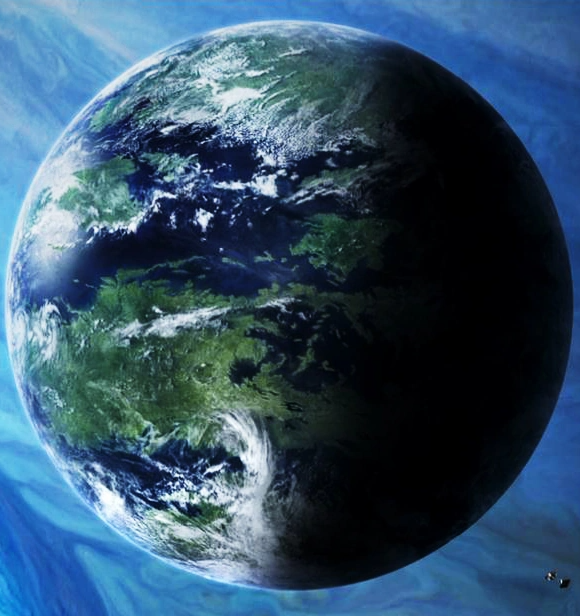
If I’m going to create a new alien species for one of my stories, I first try to imagine the place where they came from, originally. This is most often (but not always) going to be a planet. You might think of the species you’re going to create as a liquid and their evolutionary environment as a cup. That is, the species will have adapted to that environment, and the conditions under which they evolved will have left their mark upon the species.
Give some thought to what it’s like on this planet. What does the general climate look like? What is the planet’s gravity relative to our own? Is this planet in a binary or trinary star system? For that matter, what type of star does their planet orbit? Are we talking a big star, like a hypergiant, that runs hot but won’t last as long, or a red dwarf (the most common type of star) that’s relatively cool but will last a long time?
Of course, time scales are relative when it comes to the life of a star, but it can play into the overall narrative. Our sun is always a good standard of measure for this kind of imaginative work, allowing you to scale it up or down.
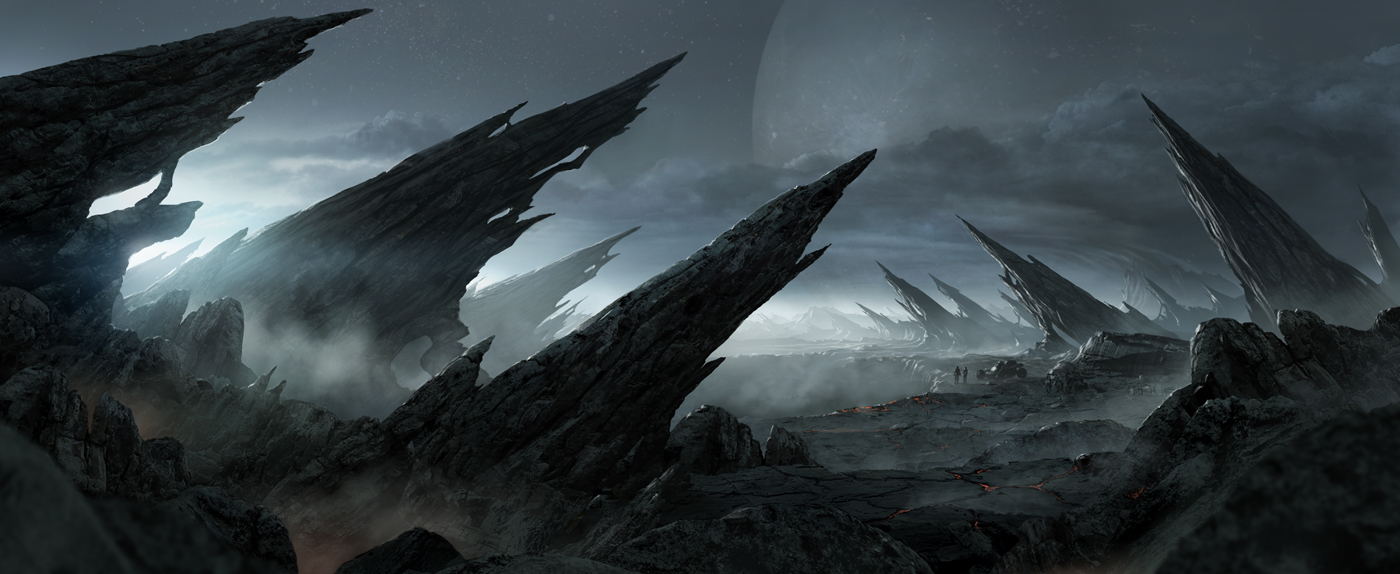
Once you have the star, you might also think about the overall temperature of the environment you’re building. If the alien species has water in their bodies, you’ll likely want to make sure the planet is in the “Goldilocks Zone” of liquid water. Depending on the output of your star, that might mean the planet is closer in or farther out in its orbit.
Speaking of water, what does the hydrosphere of this planet look like? What’s the ratio of land to water? Again, it’s a good idea to use Earth as a standard of measure. Our planet is about 71% covered in water, leaving 29% for land. Does your planet have more of that or less?
Can you go the Star Wars route and give your planet a single, recognizable biome like forest, swamp, ice, or desert? Of course, you can. Just remember that if a planet has one major type of biome, that’s likely to change at the poles and at the equator, if nothing else. Once you have the environment/planet of origin in mind, we can move on to the next part.

Biology
Now that you’ve established your proverbial ‘cup,’ let’s move on to the liquid that fills it. Early on, you should ask yourself an important question: Is this species sentient or not? Chances are the answer is yes. While alien beasts with an animal intelligence are plentiful in science fiction, it’s the ones who are self-aware, intelligent, and build cities and ships that really stand out.
Another thing you need to decide is just how alien you want your aliens to appear. Star Trek is notorious for slapping a variant forehead on a human actor and calling it a day. This is more for practical purposes than anything else. So, do you want your aliens to appear as a bipedal humanoid with two arms, two legs, and a single head, or do you want it to look quite different? Since we do not yet know what an alien species might look like, you have a free hand here.
This is where you might turn to the species of our own planet for inspiration. Earth has an incredible diversity of life in nearly every climate. If you plan on building an aquatic species, you might look at the biodiversity in our oceans. If they are a desert-dwelling species, take a look at the critters that run around the Mohave, Sonoran, and Gobi, among others.
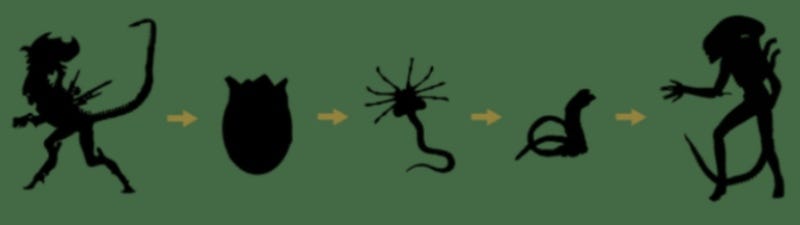
Another thing to ponder is their internal temperature and how they maintain it. Do they have a system akin to mammals on our world that self-regulates their temperature, or do they rely on external factors? This is an important one as this will determine what kind of environment and protective gear they will need as they venture out into space. The interior of their starships will need to mimic the environment you’ve established, or at least the corner of the environment where this species evolved.
In addition, what does the food chain look like on their planet? Is there a predator/prey relationship like we have here on Earth, or is it something else entirely? If you do have a predator/prey cycle going on, where does this species sit in that hierarchy? They don’t have to be apex predators (though they certainly can be). After all, humans were not evolved to be apex predators, but our intelligence and flexibility allowed us to punch way above our weight.
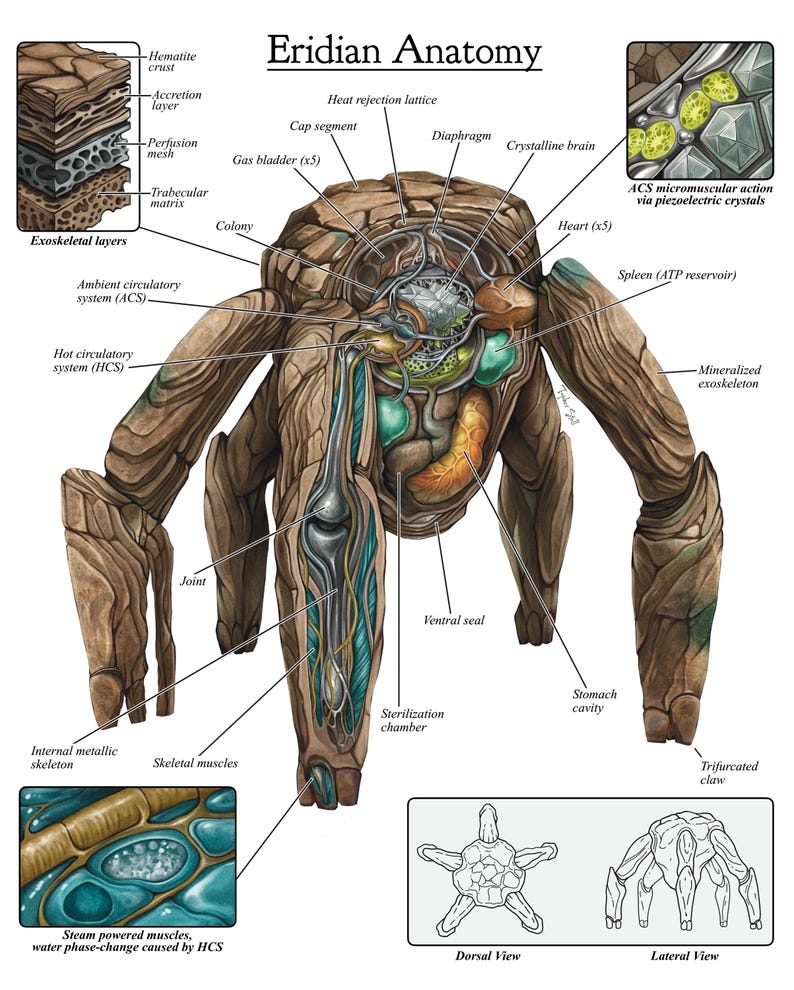
It may be tempting to give this species the same five senses that we as humans have, but think about how the environment you’ve established might have shaped those senses, or even equipped them with senses beyond what humans have. For instance, several species of snake are able to combine their sense of sight with a kind of heat-sense to detect slight variance in temperature, allowing them to hunt in total darkness.
How this species senses the world around them can be vital to understanding how they might come together to build complex things like starships, scientific laboratories, and that most complicated structure of all: society.
Society
Okay, so at this point you have some idea of the planet or originating environment of the species you’re creating. You probably also have a good idea of what they are capable of in terms of their senses, their basic capabilities, and maybe even a few things like their sensitivity to radiation and harsh biomes. Hopefully you can picture what one would look like if it were to walk into the room with you.
Now that we have them in mind, let’s do a quick thought experiment. Imagine, if you will, that humanity had evolved with one slight change. Let’s say that we were somehow able to drink salt water but not freshwater. Imagine how our society might have unfolded differently.
For one, we would probably have many more coastal cities than we do now since that would give us easy access to effectively unlimited drinking water. Because so many would live on the coast, we probably would have invested more in making our structures weatherproofed. By the modern day, our homes and buildings might be able to withstand hurricanes or typhoons with relative ease as that would have been a major problem that humanity would have had to overcome.
Also, there would be places on the planet, like in China and other spots, that are so far removed from salt water that exploring them might not have been feasible until after the industrial revolution. With the proximity to the sea so necessary, we might have developed technologies for living underwater or even created artificial islands.
As you can see, changing just one little thing in our biology radically alters our whole societal trajectory. This is the kind of thinking I would highly suggest you do once you have a decent idea of your species’ biology. How would the physical and environmental needs drive them to build cities and systems that could eventually do things like split the atom and build spacecraft capable of achieving escape velocity from their planet of origin.
When you are building an alien society, it also helps to keep in mind the psychology of the species in question. How prone are they to cooperate or compete for resources? If they developed as an apex predator, does that instill in them a kind of unassailable confidence, perhaps even a feeling of destiny that they are the best at everything? Or, did evolving as a prey animal give them a sense of paranoia, perhaps acute xenophobia (pun completely intended) when they think that everything may be out to get them? Again, knowing the environment and biology can help you determine how they think.
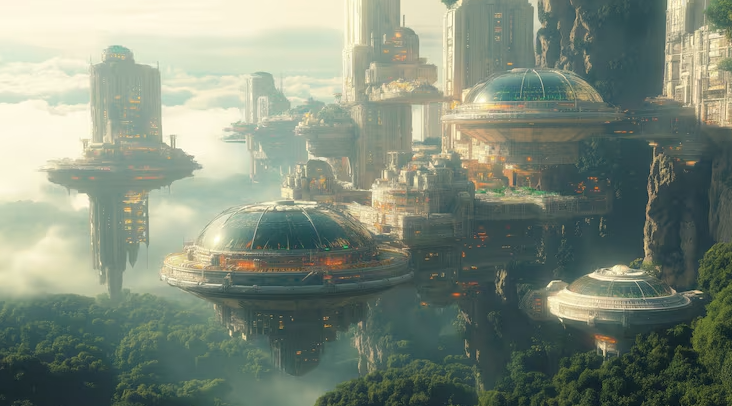
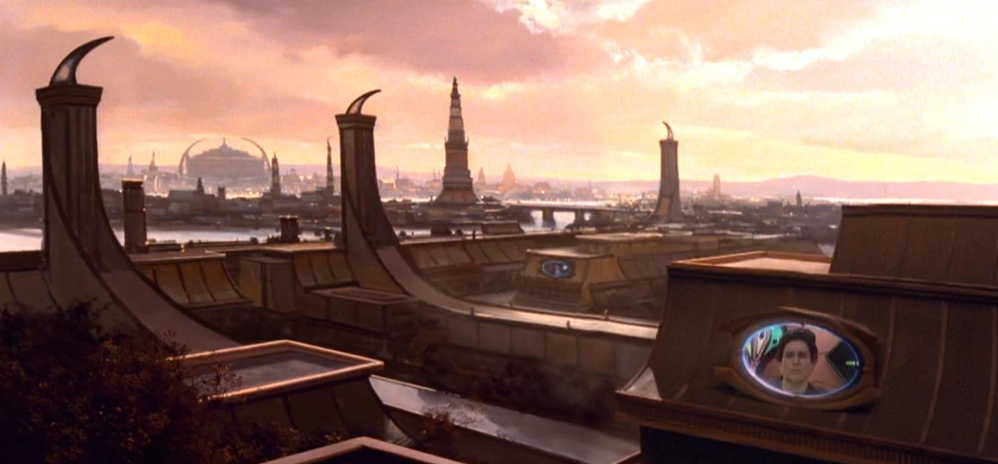
These patterns of thought and behavior will naturally be reflected in the societies they build. Architecture, for instance, might be an instant example of how they see themselves and the user-friendly forms (to them, at least) they choose for their buildings. If you have an avian species that can fly, entrances to their buildings may not be at ground level. If a reptilian species needs a scalding hot work environment to function, the odds of them installing air conditioning are pretty low. In both examples, they might eventually add those systems to accommodate other species that they come in contact with, but they probably wouldn’t have them natively as there would be no need. Remember that function follows form in these cases.
Of course, there’s more to a society than just their buildings, right? Just think of the previously mentioned Vulcans or Centauri. When you think of those two sci-fi aliens, what comes to mind? For me, it’s their behavior and how that behavior carries over into their interactions with other groups. Let’s take a closer look at those two.

The Vulcans are all about logic. They didn’t used to be that way, which led to the Romulans splitting off to form their own society. Now that logic and the suppression of emotions is central to their civilization, they tend to focus on mental pursuits like science. The Vulcan Science Academy is one of the most prestigious scientific institutions in that universe. They tend to view the emotional outbursts of other species as infantile and perhaps not as enlightened, giving them a sort of ‘parent’ kind of status when it comes to other species. This, coupled with their calm, reassuring demeanor, makes them natural mediators and diplomats, as well as an indispensable pillar upon which the United Federation of Planets is built.

The Centauri, on the other hand, are all about letting their passions run wild. They embrace emotions at every turn and have an infectious kind of charisma. Of all the species in the B5 continuity, they almost certainly throw the wildest parties. These passions come at a cost, however, because ambition lurks behind every boast and fit of laughter. Their political system is pretty cut-throat, all told, and their society is far more on the decadent and self-aggrandizing side. At one point, the Centauri were the dominant species, forcing their will and worldview onto other alien races, including the Narn. Eventually, their empire decayed, and the Centauri lost their prime position amongst the Younger Races. This has only fueled their ambition to get back into the top spot through manipulation and subversion, and fostered bad blood between them and many of the other aliens that once saw abuse at their hands.
Two very different species, but both extremely interesting and the icons of their respective properties. If you are creating an alien species for one of your stories, these two species are sterling examples of the result you want to have at the end of this process.

Final Thoughts
It is possible to reverse engineer an alien species, to start with the end product and then go back and figure out the particulars. I imagine that route is pretty common, and I have certainly done that before with some of the species I’ve created in the past.
Even still, I think having some working notion of where and how a species evolved can help you understand how they will function and interact within a given science-fiction continuity. In other words, knowing where they came from can give you incredible insight into where they’re going.
As I said, alien species are one of the most interesting and compelling aspects of science fiction. If you are writing science fiction, or just like reading it, I hope this discussion of my thought process was of value to you. Now, I challenge you to go create your own. Be discerning, be weird, and above all else, be memorable.
If you would like to see how I put some of these principles into action, please take a look at my science-fiction novel, Axis Point. The main character is an alien, and his species was created using this very method.
Thanks for reading!
__________________________________________________
Read the first chapter of my military sci-fi novel, Axis Point, for FREE. Just click here.


September 25th, 2026 at 3:30 pm
[…] September 25 […]