Author Archives: The Sector M

What The−? Minority Report

This is a new segment on the Sector M blog, one where I take a subject matter (usually something to do with sci-fi, movies, comics, etc.) and explore what’s wrong with it. This will usually be something that should have been a slam dunk, but somehow didn’t live up to its own hype or potential. For our first time out, I’ve chosen the 2002 movie, Minority Report.

minority-report-5150c09e8df97

Note: Not “Manos”: The Hands of Fate.

This was a ‘tent pole’ big-budget blockbuster with Tom Cruise playing the lead character and directed by Steven Spielberg. It was (loosely) based off of Philip K. Dick’s short story of the same name. Set in 2054, Cruise’s character, John Anderton, is a cop who specializes in “PreCrime.” In this future, the crime of murder has all but been eliminated by the presence of “PreCogs,” who are psychics who can see into the future.

When a murder is about to happen, Anderton’s squad receives an image of the crime from the PreCogs before it happens. They have only a short time to find out where the crime takes place based on the vision, get to the scene of the crime, and stop it before it happens. Everything is going okay until Anderton receives a vision of himself shooting a man in cold blood. Since you are guilty of crimes before you commit them in this world, Anderton is now on the run from the law and out to try to prove his innocence.

Here’s what’s wrong with it:

The Billiard Balls

So, when a PreCrime is reported, the first thing to show up at the police station is not the recorded psychic vision itself, but one laser-cut wooden sphere inscribed with the victim’s name on it and another with the perpetrator’s name. They make a reference that the unique wood grain of each ball makes it virtually impossible to duplicate or fake.

balldo0

Plot point, plot point!

The problem with it is not that this seems like a pretty weird way of handling things, but it brings up a question in my mind – how do they get that information? From the initial scene, it seems like the psychic vision is the only information that the cops have to go on. They have to look for landmarks and clues within that vision to find out where the crime will happen, yet the PreCogs apparently also transmit the name of the victim-to-be on a separate channel. If the PreCogs can know a victim’s name, and the name of the would-be criminal, why don’t they also know the victim’s address?

The Countdown Timer

This is a cautionary tale of using time-travel elements in sci-fi, and how they can go wrong in a hurry. So, when a PreCrime vision comes in, there is a timer attached to it, counting down to the time of the murder. Like the name on the sphere, it’s never clear how they get this information, but there it is. The problem is that crimes of passion have a much shorter time span than a crime that is premeditated.

minority_report_interface1

Um, say that again?

On the surface that might seem intuitive; someone who decides to kill on the spot gets a smaller window than someone who plans it out. It is, however, utter non-sense. You are looking into the future. Even if it was a seemingly random string of events or emotional states that lead up to the crime, even if it was an on-the-spot decision, the outcome is already part of the time stream. The intentions behind the crime are irrelevant.

The Eye Transplant

Anderton is on the run and realizes that too many places have retinal scanners that could identify him. His solution? Get an eye transplant from a less-than-reputable street doctor. It makes sense − change your eyes so they can’t track you. It also shows off both the seedy underground nature of the world as well as the ease with which such an operation can be accomplished. Yep, we’re in the future, all right.

Once complete, Tom Cruise walks into The Gap and it scans his eyes. The holographic store greeter calls out, “Hello, Mr. Yakamoto! Welcome back to the Gap!” That tells us that the dark eyes that Tom Cruise has from then on were not cloned or grown, but taken from another person who apparently also shops at The Gap.

minority-report-20100419001352664-000

War of the Worlds meets Gulliver’s Travels.

Sure, it solves the basic problem of being tracked, but if it comes from another person, who has an existing profile in the system, won’t that be noticed pretty quickly by the Big Brother security systems in place? Tom Cruise may be many things, but he doesn’t look Japanese. Someone’s bound to notice.

Psychic Camera Angles

Towards the end of the film it is revealed that (Spoiler Alert) Max Von Sydow is the bad guy. Not only that, but he has been killing people in his way for some time now. How can he do this given that the PreCogs’ whole job is to report murders before they happen?

Simple, he takes his victims to the site of a previous would-be murder witnessed by the PreCogs and kills them in the very same way. That way it looks like the psychic vision of the murder is merely an echo of one they’ve had in the past. It’s dismissed out of hand and everyone goes about their business.

77089829_640

The ripples, man…it’s all about the ripples.

Well, it’s a good thing that whatever extra-sensory organ the PreCogs use to see into the future always uses the same camera angles, huh? It would be pretty embarrassing if you went through all that trouble to stage a murder and then the vision showed your face in a close-up rather than see you from fifty feet away.

There is No Minority Report

So, Anderton sets out to prove his innocence. He seeks out Dr. Iris Hineman, one of the original pioneers of the PreCog program, to see if there’s been some mistake. He finds her and she seems like some sort of crazy and weirdly flirtatious Professor Sprout from Harry Potter. She tells him that the strongest of the three PreCogs occasionally sees an alternate outcome of a PreCrime. These are called “Minority Reports.”

The reports are immediately buried, however. Determinism is what drives this PreCog program in the first place. If it became known that there was a possibility of an outcome other what the PreCogs saw in their visions, it would undermine the entire system. Every person convicted under that law system might have been innocent since they were stopped before they could commit the act. So, Anderton pins his hopes on finding the Minority Report to prove he won’t commit the crime, going even so far as to break into the PreCog facility and kidnapping the lead psychic.

600px-MRhold

So…he’s actually guilty, then?

In the end, however, Anderton does actually the kill the guy, in exactly the same circumstances as seen in the original vision. There are extenuating circumstances, of course, but he still pulls the trigger and commits the crime anyway. There was no Minority Report.

Aside from that being the name of the friggin’ movie, doesn’t it strike anyone as odd that Anderton was framed and railroaded to commit this crime? How does one even go about setting someone up to kill a total stranger like that? The cause for him to go on the run, and ultimately kill this stranger, was the vision of him committing the crime in the first place. So, the effect becomes the cause that becomes the effect that becomes the cause. Paradox much?

___________________________________________________

Minority Report wasn’t a total loss, however. There were some cool sci-fi and action elements in this movie. It had many of the marks of Steven Spielberg’s skillful direction in it. Unfortunately, much of the good stuff was overshadowed by the underlying flaws in the story.

It always amazes me when an expensive, effects-driven movie like this comes out. So much money was spent making the magnetic cars and holographic interfaces come to life, but it seems that parts of the overall story were not considered much at all. That’s a shame. The script and story are probably the easiest and cheapest things to change in a movie of this scope. When I see such a magnificent failure, all I can say is…what the−?

__________________________________________________

Do me a favor, okay? Subscribe to my newsletter for more news, updates, and information on Sector M’s current and upcoming projects!


Continuity in Sci-Fi

In this author’s opinion, continuity is the glue that holds a sci-fi universe or series together. When I speak of ‘continuity’ in this sense, I’m not talking about whether an actor looks the same from one shot to another, or that the level of someone’s drink doesn’t fluctuate between scenes. No, I’m talking about a storyline that keeps itself internally consistent.  I’m a super stickler for that kind of thing. Why?

Science fiction already requires some help to suspend the reader or viewer’s disbelief. We’ve got aliens, flying cars, faster-than-light travel and all that good stuff we don’t have running around in real life. When the boundaries of that continuity are smooth and seamless, it makes it a heck of a lot easier to swallow the concept of Klingons, lightsabers and giant robots.

Taisun-largest-crane-1

This is one of the largest cranes in the world.
Sometimes even this isn’t enough to suspend my disbelief.

But when the continuity is sloppy or inconsistent, when the established rules of that universe are lazily ignored, the cracks show through in a hurry. It reminds us that we’re not peering off into some other distant time and place, but rather that we’re looking at a bunch of actors standing around on a set made of plastic and wood. Sci-fi movies, novels, TV shows, and comic books all desperately need a solid continuity just as a given. It’s the foundation on which the story is built. Build a house on a faulty foundation, and well, you get the idea.

So, here are three examples from sci-fi where the continuity frayed with varying degrees of consequences. Here we go…

Terminator 2: Judgment Day

First off, I love this movie. James Cameron is my favorite action director, hands down, and I think this movie is some of his finest work. His stories tend to be pretty well thought out, which is why this continuity slip irks me. In the first Terminator movie, Kyle Reese tells Sarah Connor that time travel is only possible due to ‘a field generated by a living organism.’ This explains why Kyle arrives in 1984 wearing only his birthday suit  with no futuristic equipment like plasma pulse-rifles, etc. The Terminator itself is a machine, but its endoskeleton is covered with actual living tissue, so that explains that, right?

In T2, however, the T-1000 comes through just fine. Even though it appears to be a man (and still arrives naked), its entire body is actually made of a liquid metal (a mimetic polyalloy if you want to get technical). There’s nothing organic about it, at least nothing that’s ever revealed to the audience. So, how exactly did it travel through time?

600px-T2StanWinstonT-1000shotgunhead

If I can shapechange into anything, why was I naked when I arrived?

Granted, we get all of our information about time travel from Kyle, who admits he doesn’t ‘know tech stuff,’ but it still causes a wrinkle. Even if it doesn’t destroy the movie for me (and it doesn’t), it still reminds me that someone wasn’t paying attention to their own canon.

Battlestar Galactica “Hero”

This episode of the reimagined Galactica series is from the notoriously wobbly Season 3. I’m not sure what happened to this show. It went from being some of the best sci-fi I have ever seen on television to a show that was almost painful to watch near the end. Season 3 was really where the continuity of the show wore thin, and this episode pretty much sums it up for me.

If you haven’t seen it, let me explain: So, Admiral Adama (Edward James Olmos) is being awarded a medal for his years of meritorious military service. Adama, however, harbors a secret that’s been tearing him up inside. We get a flashback to when he commanded the Battlestar Valkyrie a year before the 13 Colonies of Cobol were destroyed. It turns out that he may have been the one who inadvertently touched off the war with the Cylons (or so he suspects), which resulted in billions of deaths. So, being awarded a medal for heroism cuts him like a knife. It is full of angst and regret, moving background music, and it’s exquisitely acted by a veteran cast.

4170392_std

Wait, where was I again?

So what’s the problem? Well, it had been established previously that Adama had been in command of the Galactica for several years leading up to the outbreak of war. So how could he have been on the mission with the Valkyrie, when he was already firmly stationed on Galactica? Whoops! Someone needed to keep track of their timeline a little better, huh? It undermined the entire episode, and quite frankly, the show would have been better off as a whole if it had been left out.

Star Trek: Enterprise

My first example was pretty minor.  My second was pretty bad…but the last is one of the worst offenders I can think of – Star Trek: Enterprise.  Not just one episode, nor even one season, but the entire series from start to finish.  It’s one of the most glaring continuity errors in science fiction history. Why is that?

The series takes place in the timeline well before Kirk and Spock, serving as a prequel to the other Star Treks. The Enterprise in this Star Trek series is touted as the first human-manned ship to leave our solar system. In fact, that’s a major part of the show’s pilot episode. For her time, she’s supposed to be the most advanced starship ever built by human hands, and is supposed to have started the legend that later starships named Enterprise would build upon. James T. Kirk, John Harriman, Rachel Garrett and Jean-Luc Picard all stand upon its shoulders, right?

Enterprise_legacy

Nope, not there.

So why is there no mention of it before this series? Wouldn’t a ship occupying that singular place in human history be mentioned before that somewhere? Well, in the conference room aboard Picard’s Enterprise-D, you can see the outlines of past ships bearing that name. There’s a string of ships from the aircraft carrier, to Kirk’s original ship, then the A, the B, and up through D.

So where is the Enterprise-NX in all of that? It’s suspiciously absent from the lineup. That’s because the showrunners made her up on the spot without much consideration for what history had already been established for the show. They could have chosen any other name for the ship and been okay. The Valiant, the Constellation, the Good Ship Lollipop, S.S. Minnow – anything, and it would have worked out just fine. But no, they just had to go and name her Enterprise, didn’t they?

And this show ran for 5 seasons.

405572

Braaaaaaaaggggaaaaaa!

Yeah, that was pretty much what I thought, too.

So, is all of this needless nitpicking by a fan who should really find something else to do with his time? Probably. I’ll admit that I speculate and ponder things like this quite a bit, and when there’s a mistake, I generally find it.

It’s not for the purpose of harping on it, to point fingers at the creators/authors and say, “Ha Ha!” like Nelson from the Simpsons. No, it’s because when I want to immerse myself in sci-fi, I want to believe on some level that what I’m reading or seeing could exist out there somewhere in the past, present or future, and share in that discovery or adventure. A consistent continuity allows me to do that; a faulty one reminds me that I’m just some poor schlub with a Netflix account.

__________________________________________________

Do me a favor, okay? Subscribe to my newsletter for more news, updates, and information on Sector M’s current and upcoming projects!


Backwards Compatible – Part 5: All Stop

After an incredible start, I settled into getting the characters on the move towards their goal. While there were stopovers on their journey, with a short action sequence on the planet Phoebus, I was already planning the book’s first major combat sequence. It was going to involve both the spacer/Navy types aboard the Hornet and the Marines doing what they do best. Everybody needed to have a moment where they did their part.

There were a few things I wanted out of this extended combat scene besides just some Michael Bay-esque ‘splosions. First, I wanted the main character, Coeur D’Esprit, to go up against someone who was as good or better than she was. In the previous books, Coeur’s plans and strategies always seemed to work exactly the way she wanted them to, and it seemed that her enemies were never truly up to the challenge. Since I was at the helm this time, I wanted her to go up against someone competent. To me, the true test of a military commander is when their best-laid plans completely unravel and they have to come up with something else on the fly.

Hannibal_a-team.jpeg

I love it when a plan comes together…and then goes horribly, horribly wrong.

Second, I wanted the aftermath of the battle to tear the team apart. I wanted it to be a Pyrrhic victory which left the characters with more questions than answers and more mental scars than physical ones. There needed to be a little dissension in the ranks, some internal strife, and this sequence was going to pry those cracks in the team wide open.

The result was the assault on the Lambda-3 asteroid base. The Hornet, which is a converted trade ship, must duel it out in space with a mysterious warship while the Marines confront enemy forces inside the asteroid itself.  My chapters tend to be about 20-30 pages, on average. This sequence, found in Chapter 7, was originally 96 pages. Even when I broke it up into two chapters, those two are still the longest of the book.

I managed to hit all the points I wanted to achieve. We had the Ithklur Marines disobeying orders and abandoning comrades in the field. We had Coeur freeze up when it seemed that she had been outfoxed by her opponent. Everyone is stunned when it is revealed who the enemy actually is (if you haven’t read it, I won’t spoil it for you). This becomes a central factor in the disintegration of the most important romantic relationship in the book, Dropkick and Snapshot.

So, mission accomplished.  The characters won, but aren’t exactly happy about it. I briefly left the crew of the Hornet and picked up on another storyline for a chapter. Things had become pretty intense, so it was necessary to have a ‘cooling off’ period.

obstaclesdemotivator

What he said.

When I came back to the main characters, things had gone from bad to worse. Trusts have been broken. People are isolating themselves and dealing with their own mental demons. The good doctor, Orit Takagawa (remember her from the Prologue?) is tending to a Hiver patient. The alien had been horribly treated and tortured by its captors. It likely possesses information that would be vital to the Reformation Coalition, but now it may never regain consciousness.

As she sits in bedside vigil over the Hiver, she is strongly reminded of the loss of her friend, Cicero, a loss that carries with it a crippling emotional impact. During this scene, I wrote this line:

“For several moments she grappled with untangling the knot of emotions that swirled around her head like a galaxy of pain.”

The next line after that is simply the sound effect of : “Bleep, Bleep.” Orit’s instruments are letting her know her patient is waking up.

To-day-they-re-doing-a-birth-monty-python-10868851-713-454

We even have the machine that goes ping!

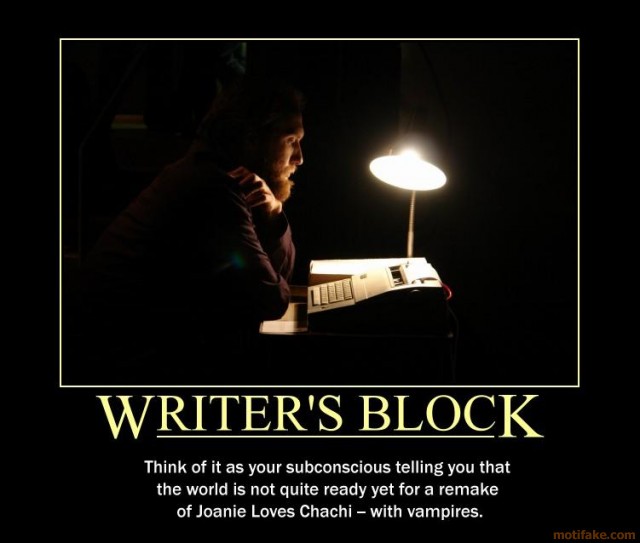
About seven months separated those two lines. As soon as I finished the ‘galaxy of pain’ line, I was hit by perhaps the worst case of writer’s block I’ve ever had. I suddenly looked up and thought to myself, “Now what?” I tried moving forward dozens of times, but something just wasn’t right. Nothing worked to my satisfaction. I would sit there at my desk, hands on the keyboard, and it felt like I was trying to push through a brick wall.

After months of trying and failing to push the story forward, I resolved that the best thing to do was to move forward with the Hiver waking up. There had been a whole other interlude I kept trying to put in there before that happened, but apparently my muse wasn’t having any of it.

Looking back, it seems like I probably should have arrived at that solution a heck of a lot sooner. Live and learn, right? Even today, when I happen to read that scene, I always draw a line in the margins between those two lines to remind me of the vast time gap there, what caused it, and how I overcame it.

Next up, “Enter the Fox.”

[Check out the Backwards Mask on Kindle.]

__________________________________________________

Do me a favor, okay? Subscribe to my newsletter for more news, updates, and information on Sector M’s current and upcoming projects!

Madness? THIS IS…ATHENS!

It’s no secret − I’m a nerd as well as a geek. It’s not all about Optimus Prime and marathons of Doctor Who episodes…no, no! For a guy who spends an inordinate amount of time contemplating worlds other than our own, I do have an interest in real-life stuff. Take history, for example. I’ve been a history buff since I was very young. In fact, I can pretty much trace what initially sparked my interest in the subject down to one incident.

I was born in Athens, a small town out in the piney woods of East Texas. One Sunday morning when I was about four or five, I was sitting in church, listening to the story of the Apostle Paul’s famous sermon on the Areopagus, or the Hill of Ares, in Athens, Greece.

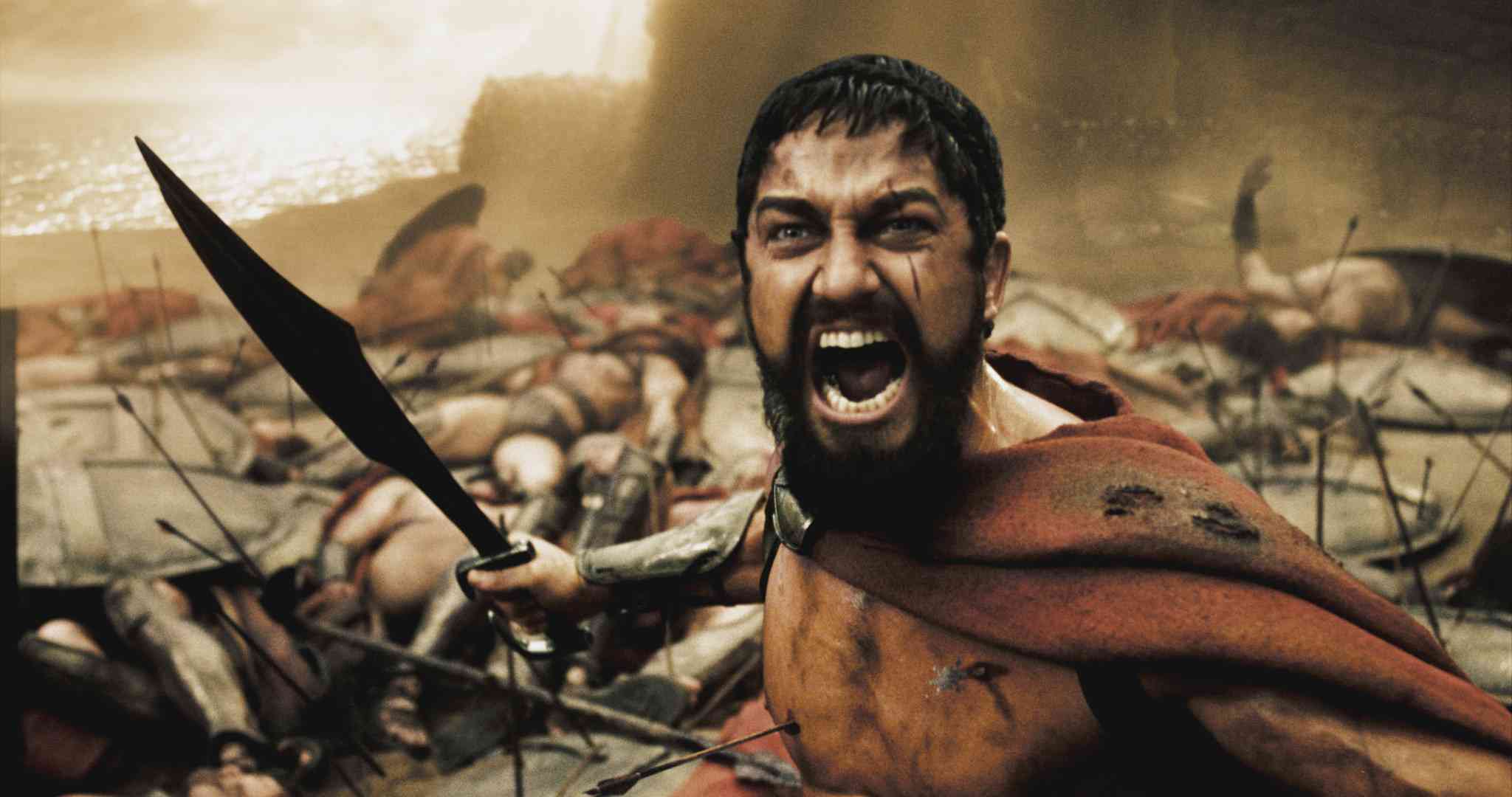
butler-leonidas-300-kopis

Tonight we dine at Mazzio’s!

Not realizing that there were, in fact, many cities with that name, my mind lit up with the possibilities. I was sitting on the lap of my godmother, or “Nanny,” and the conversation went something like this:

Me: So, Paul went to Athens?

Nanny: Yes, that’s right.

Me:  Wow! I didn’t know he came here. Athens is that old?

Nanny: (With a knowing smile) No, honey, he went to Athens, Greece.

Me: You mean there’s more than one?

Nanny:  Yes.

Me:  (Processing this new information) So…why did they name their city after us?

Nanny: (Another knowing smile) They didn’t. We named our city after them.

It was a whole new world for me. There was another Athens that I had never even heard of before, and it was apparently so cool and awesome that we were merely a reflection of it. It planted the seed of curiosity. I wanted to know just what this ‘super’ Athens had done to warrant such a thing. It made me want to know about them.

a_whole_new_world_by_fantasist

Wait, what are you doing? Stop singing!

As soon as I could, I started reading about Greece. Democracy, theatre, philosophy and the Socratic Method, astronomy, sculpture, marathons, the Olympics, the foundations of the Roman alphabet, classical architecture (most notably the Parthenon), strides forward in mathematics and music, the Hippocratic Oath of Doctors, concepts of social justice, civic duty and community, epic poetry, military strategy, and on, and on. The Greeks either gave us those things outright, or made huge leaps in existing fields. Athens played a big part in all of that.

Makes me proud to be an Athenian. Of a sort…

So, big surprise, that era of history is one my favorites.  I just can’t read enough about it. Western civilization owes much to the ancient Greeks. So remember that next time you play Stratego, eat a gyro, or bust out your copy of Clash of the Titans.

3ogy5f

Tragic.

__________________________________________________

Do me a favor, okay? Subscribe to my newsletter for more news, updates, and information on Sector M’s current and upcoming projects!


Backwards Compatible – Part 4: Cave Aculem

So, there I was…with the idea for a novel burning in my brain. Unlike the dozens of other concepts I had come up with and discarded previously, this one satisfied all the conditions of the existing universe, the previous two novels, and was a story that made me excited.  The starship central to the story was the RCS Hornet, which carried the Latin motto: “Cave Aculem.” Beware the sting. Too late, I had already been bitten by the bug. I couldn’t wait to get started.

stock-footage-igniting-a-dynamite-fuse-with-a-match-close-up-p-e1333973037788

Okay, hum the Mission Impossible theme. Ready? Go!

I had a three-day weekend coming up, so I cleared my schedule so I could concentrate on lighting the fuse on this thing. I sat down at my keyboard and let loose. The opening scene with August Delpero and his ex-wife, Dr. Orit Takagawa, flowed from my fingers.

In it, Delpero is the former CEO of a megacorporation, imprisoned for his attempted genocide on the Reformation Coalition’s alien benefactors, the Hivers. Orit has come to visit in the hopes of sorting out her complicated feelings surrounding him. She loved him, truly loved him, but Delpero used her as an unwitting pawn in his scheme, which resulted both in their divorce and the agonizing death of her Hiver friend, Cicero.

I was almost to the point where something unexpected happens when my phone rang. It was a friend of mine who needed help moving out of her apartment. She had until midnight the next day to be out. Even though I was on fire at the keyboard, I stopped in mid-sentence and went to help her move. Being Texas, it was boiling hot, of course, with near 100% humidity. We worked until almost 3:00 in the morning, but finally we got the last load out. Whew…

Bogey2

African or European?

Even though I had lost a day, I didn’t let that deter me. During the routine of carrying boxes down two flights of stairs and up three, my mind was still chomping at the bit to get on with the story. I got up early the next day and picked up right where I had left off. Pretty soon the epilogue was done and I was on to Chapter 1. There I introduced the two main characters and gave them their marching orders. Before they can get to it, however, they receive a frantic message from Orit telling them about that unexpected turn of events at the prison.

This kicked off the first action sequence of the book, so my pace increased. I was constantly blasting the first Pirates of the Caribbean soundtrack, particularly “Will and Elizabeth” and “He’s a Pirate.” To this day when I look at those sections, those are the songs that go through my head.

In all, I wrote more than 20,000 words in two days, which is approaching ‘ludicrous speed’ for a slowpoke like me. It was rough to be sure, but the emotion that I wanted was there. It just all sort of clicked.

So, just like that I had the prologue and the first two chapters on file. A naïve part of me believed that this level of speed and productivity might endure, or that it would be smooth sailing from there on out.

Silly, silly me.

Little did I know that soon after I would hit a creative brick wall.

[Check out The Backwards Mask on Kindle.]

writers-block-but-werewolves-are-another-story-demotivational-poster-1264914662

Iceberg, dead ahead!

__________________________________________________

Do me a favor, okay? Subscribe to my newsletter for more news, updates, and information on Sector M’s current and upcoming projects!

What I Miss About The ’80s

Okay, let me just lay it on the line here — my favorite decade is and was the ’80s. Pink legwarmers and parachute pants may be a bit dated now, but there’s a kind of zeitgeist about that time that really resonates with me. There are so many things we had in the ’80s that seem sadly extinct today, or at least not nearly as rad as back then.

Like what, you ask? Well, as it happens, I’ve put together a short list of things I miss most about those days.  Funny how that works, eh?

1.) Street Toughs

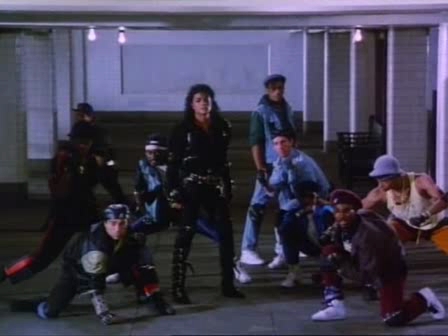
MJBadVideo

You know, back when MTV actually showed music videos.

Bonnie Tyler asks, “Where have all the good men gone, and where all the gods? Where’s the streetwise Hercules to fight the rising odds?”  That’s an excellent question, Bonnie. I sense a distinct lack of street toughs these days, too. It seemed like in the ’80s that the bandana-clad denizens of the streets were the coolest, most loyal people you could ever hope to meet.  Sure, you might have to demonstrate your street cred or ‘heart’ to them with an impromptu dance-off, or blistering guitar solo, but once you were in good with them, you had nothing to fear.  Luckiest were those street toughs who managed to impress the even rarer street goddess, who had short black hair, wore fingerless gloves, and either a suit jacket with padded shoulders and the sleeves rolled up or lots of really bright eye shadow (maybe both).

2.) Uber-Quotable Movies

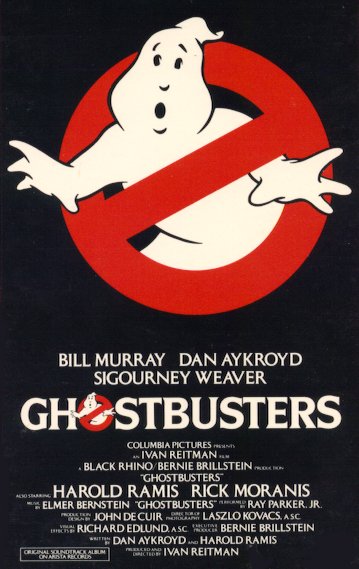
Ghostbusters movie poster

Oh yeah, that’s who I’m gonna call.

The ’80s were replete with dialogue that was either so incredibly memorable or so over-the-top ridiculous that it left an impression long after seeing it in the theatre or watching it on VHS. These are the movies that work their way into your everyday lexicon, the ones you find yourself reciting without even realizing it. While movies before and after this time still have plenty of pithy one-liners, the ’80s seems (to me, at least) to have the greatest concentration of movies with start-to-finish quotability. Here are my favorite examples:

Big Trouble in Little China, Ghostbusters, Top Gun, Bill & Ted’s Excellent Adventure, Ferris Bueller’s Day Off, The Princess Bride, E.T: The Extra Terrestrial., Airplane!, Back to the Future, Aliens, Terminator, Empire Strikes Back, Labyrinth, The Lost Boys, Say Anything, ¡Three Amigos!, Clue, Spaceballs, Star Trek II: The Wrath of Khan, The Goonies, Dirty Dancing, Adventures in Babysitting, Legend, The Breakfast Club, Bladerunner…and on…and on…

3.) Toy/Cartoon Tie-Ins

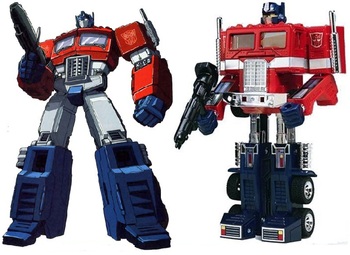
optimi_7791

Heeeey, wait a second…

In this author’s humble opinion, this was the single greatest decade for toys, especially those that had a strategically timed 30-minute commercial playing either before school or just after it. Voltron, Thundercats, Silverhawks, M.A.S.K., Masters of the Universe, Visionaries, G.I. Joe and, of course, my favorite…The Transformers.  These were the cartoons that were the stuff of modern morality plays, teaching us to do what was right, be true to ourselves, and stay in school.  They certainly weren’t a ploy to get us to buy more toys, no siree! I mean, if some of the most beloved characters from my childhood were just part of a massive marketing machine to move colored pieces of plastic off the shelves of the local Kmart, that would just be…sad.

4.) Mall Arcades

fi/atplay3

That’s more like it.

Arcades in the mall these days are total weak sauce. They might have a DDR knock-off, a multi-player racing game, and perhaps that rip-off toy grabber thingie — a far cry from the legendary arcades of yore. As a kid, the local Red Baron Arcade (Later Aladdin’s Castle and Tilt) was the place to go. The air was filled with a cacophony of overlapping, now-familiar video game sounds from Pac-Man, Tron, Galaga, Donkey Kong, Sinistar, Dragon’s Lair and the like. The colorful cabinets and 8-bit graphics were mesmerizing to my young mind. It all came together to create an atmosphere of fun the likes of which I have not seen since. To this day, building an ’80s-style arcade is one of my dreams.  Should I ever gain the means to do so, it will be Flynn’s Arcade all over again. Oh yeah…

5.) British New Wave

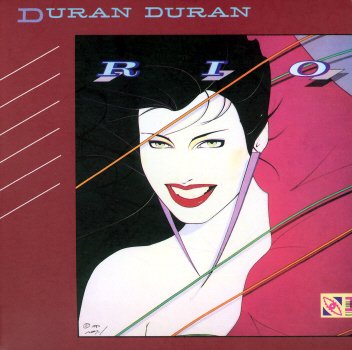
DuranRio

Nagle artwork meets Duran Duran…it doesn’t get more ’80s than that.

This was the time of the ‘Second British Invasion.’ Where The Beatles, The Rolling Stones, The Who, and The Moody Blues had crossed the pond in the ’60s, the ’80s were undeniably the time of Duran Duran, Depeche Mode, The Cure, The Petshop Boys, Tears For Fears, Dead or Alive, Howard Jones, A Flock of Seagulls, The Human League, and so many more. If you could mix a pop beat with some synth keyboard effects, and then have a male singer with an English accent sing over the top of it, you were golden.  Even though it can be hard to differentiate Level 42 from the Thompson Twins at times, there was just something about those bands that seemed to capture the fresh, optimistic spirit of the ’80s. There were a few hold-out bands who took this sound into the early ’90s (Cause and Effect comes to mind), but the fire of this genre largely died out with the decade itself.

Man, I miss the ’80s more than I realized. *Sniff, sniff.*

I really could use a hug right now…or maybe I just need to go play The Legend of Zelda again.

__________________________________________________

Do me a favor, okay? Subscribe to my newsletter for more news, updates, and information on Sector M’s current and upcoming projects!

My Pre-Writing Ritual

Authors are a strange lot. Sure, some may be completely normal-looking on the outside, but there’s something about a person who’s willing to spend hours upon hours plinking away on a keyboard (or writing with pen and paper) that makes them…eccentric. Yes, eccentric. That’s a polite way of putting it.

I’m no exception. In fact, I revel in the knowledge that I’m just a little off. Always have been, always will be. Let me give you an example of the madness to my method. What follows is the ritual I go through before a writing session.

2005531-eddard_stark

Brace Yourself – Weirdness is Coming.

1.) The Encounter Suit

Do you know someone (or are someone) who has a game-day jersey, lucky hat or something similar? You know, it’s that article of clothing that can magically make the difference between victory and defeat for a favorite team? Well, I have a similar deal with what I put on before I settle in at my keyboard.

I’ve been known to wear pajama pants when I’m writing, the really eye-blistering plaid kind that look like golf pants gone horribly wrong. Or, it could be jeans or cargos, just so long as they’re comfortable. The real focal point of the garb, however, is the shirt. Most often it’s a printed T-shirt from a band, movie, TV show or something else that I really enjoy. It could be themed after Superman, House Baratheon, or the Official Stirlingites – just so long as it’s a physical representation of something that inspires me.

At times I even don what I refer to as my lumberjack shirt. It’s a black, beige and brick-red plaid shirt with a corduroy collar (yes, you heard that right) that I wear unbuttoned like a labcoat.  It’s a hideous throw-back to the coffee house culture of the 90s, but it also happens to be one of the most comfortable and durable shirts I’ve ever owned. It is, however, quite warm, so it doesn’t come out as much in the warmer months of Texas.

brawny

Remember, you’re never fully dressed without a smile.

Once I’m properly attired, I look sufficiently bizarre to ensure that I spend my time writing and don’t pop out to the grocery store. Although, even in that state, I’m sure I could get away with a trip to Walmart.

2.) Downstairs Pre-flight Checklist

Once I’m ‘in garb,’ it’s time to get all my stuff together for the trip up to my office upstairs. I may grab a light snack just to tide me over or something for an in-flight treat. Generally this takes the form of sliced apples, bananas and perhaps even a few of those individually wrapped wheels of cheese. If I have any reference books downstairs that I might need, I gather them up as well.

That’s when I reach for my cobalt blue U.S.S. Constitution mug, which I bought when I went to go see Old Ironsides in Boston.  I fill it with something hot to drink, either hot chocolate or Earl Grey (the drink of choice for all the best French starship captains!).  I then stir the drink with my TuxedoSam spoon from Yogurtland.  Don’t ask me why I do that; it is simply the way of things.  Iced drinks can sometimes replace this in the mug during the Summer months.

Picard

Onwards and upwards, Mr. Carson. Carry on.

If it sounds like I’m packing for a journey, you’re not far off. My writing sessions run about 3 to 5 hours at a stretch, so I need to make sure that I have everything I’ll need along the way. This is a non-stop flight.

So, once I have all that, I’m ready to make the walk upstairs – balancing all this stuff. I use that slow progression to mentally prepare myself for the scenes I’m about to write. I play them out across the movie screen in my head, trying to get inside the hearts and minds of the characters.

At this point I’m almost ready.

3.) Taking My Station

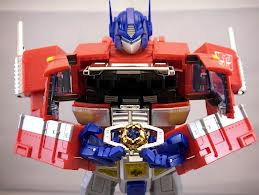
My office is sometimes known as “The Museum of Matt.” It has a host of my model ships, my reference library and a bunch of toys that somehow survived my childhood mixed in with the new ones I’ve picked up along the way. On my desk alone I have such things as: a model of the DeLorean from Back to the Future, a replica of the famous Egyptian sphinx, the Adam West-era Batmobile and a Warthog from Halo manned by the robots from Real Steel. (Long story). On one side of my monitor I have my autographed copy of Lindsey Stirling’s self-titled album. On the other side, I have my Masterpiece Optimus Prime holding up the Matrix of Leadership.

So, I set everything I’m carrying down on my desk, and I close the door. If you’ve read Stephen King’s On Writing, you’ll recognize the significance of that last act. Unless the house catches fire or there’s an alien invasion, the next few hours will be spent in service to the story. Closing the door is a symbolic gesture as well as a practical one.

images

You’ve got the touch! You’ve got the power!

I sit down and boot up my computer, then remove anything in my line of sight that doesn’t need to be there. Bill stubs, printouts, past edits – all of that goes away. When I’m nicely settled in, I switch on a brass banker’s lamp. Aside from the light from the monitor, this will be the only light in the office. Like closing the door, pulling the lamp chain is a signal that I’m getting down to the business.

Next, I pull up my playlists and select some appropriate music for what I’m about to write. The lists have names such as “Fleet Action”, “Loss and Sorrow”, “Heroes in Uniform” and so on. Sometimes it’s a single song that really calls to me. Just like a movie soundtrack, my musical selection sets the mood for the emotional states I will attempt to capture.

I take a few minutes to let the music soak in while I continue to visualize the scenes to come. At this point, I’ve taken my station as surely as Sulu sits at the helm or Uhura at the comm panel of the Enterprise. Everything’s in place.

My hands settle on the keyboard. It’s time to write.

______________________________________________________

Epilogue:

Do I follow this regimen each and every time I sit down to write? No, of course not. Sometimes there isn’t time to do it all. I’ve found, however, that the closer I get to what I’ve described here, the better and more productive the results. I don’t know why it works, but it does.

I’m not sure what, exactly, this says about me, but I’d like to think it means that I’m a sentimentalist  in my heart of hearts, that I like to surround myself from every angle with those things which hold special significance to me. At that moment, when I’m in my own little microcosm, I can more easily enter the worlds of my imagination.

I guess I’m just weird that way.

maxresdefault

What a strange person.

__________________________________________________

Do me a favor, okay? Subscribe to my newsletter for more news, updates, and information on Sector M’s current and upcoming projects!

Backwards Compatible – Part 3: Like Getting Punched By Batman

A quick note before we begin…

Normally I try to keep things upbeat and positive here. This time around, I’m going to offer some criticism, which could be taken as negative. Understand that these are just my personal opinions, and that they are stated here to show you where I picked up on The Backwards Mask. If you are a fan of Paul Brunette’s novels (or are Paul himself), you might want to skip this one.

Still with me? Okay, let’s continue.

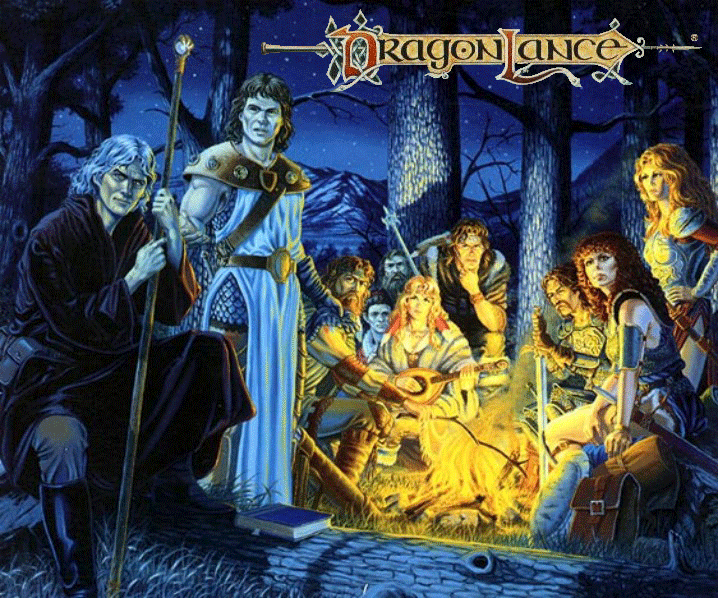
I admit that I found the first two novels of the New Era trilogy rather ‘meh.’  Game-based fiction is notoriously hit or miss. To me, game-based fiction should not just be a shallow commercial for the game world it represents as much as a good story that just so happens to take place in that setting. I mean, you can find some of the best and worst examples of game-based fiction in the Dragonlance setting alone. The core books (Chronicles and Legends) are brilliant, and some of my all-time favorites. Outside of Margaret Weis and Tracy Hickman? Well…

lance61x

Results may vary.

So, the first book of the TNE trilogy, The Death of Wisdom, seemed a bit bland, along with the characters and story. There were moments that were really engaging, but they were few and far between. It was not the worst thing I had ever read (far from it), but it was largely on the forgettable side. The premise of the book seemed like it should be far weightier than it came across. They were talking about the possible collapse of the Reformation Coalition, one of the only beacons of human civilization left in an otherwise dark and twisted universe. The characters just seemed rather nonchalant about the whole deal.

The next book, To Dream of Chaos, was better than the first one. It still left much to be desired in my opinion, but the characters seemed much more alive.  Most of the things that bothered me about this book were those staples of the setting itself (more on that later). There were some strange curveballs in there that left me scratching my head in places, but on the whole it was a improvement. It unfortunately left off on a mild cliffhanger.

not-impressed-mcKayla

What do you think of the story so far, McKayla?

That’s where I stepped in.

As I stated in Part 2, I had no idea where the story was supposed to go from there. I had some ideas, sure, but nothing unified. It was a just a loose mosaic of vignettes and scenes in my head. I knew that the third installment really needed to up the ante, and bring together the struggles of the first and second volumes. While I couldn’t change the characters, or their names, I could try to make them my own. The same went for the story. It had to be one that interested me or else it would never hold the reader’s interest. I pondered this during my months of research into the setting, and my endless re-readings of the first two novels.

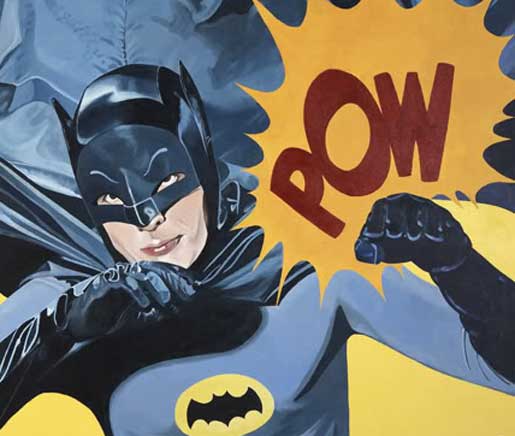
I remember when I finally had my “Eureka!” moment. I had created, and discarded, a dozen ideas of how I could do justice to the story, of how it all might work. Apparently my subconscious had been chewing away at the problems I faced, because when the story came to me, it was all at once. Zowie! It was as though the Adam West Batman had finally knocked some sense into me.

batman-tv-show-pow

Holy bolt of unforeseen lucidity, Batman!

There was the story, all laid out in front of me in a strange moment of clarity. Now all I had to do was get it on paper.

Should be simple, right?

[Check out the Backwards Mask on Kindle.]

__________________________________________________

Do me a favor, okay? Subscribe to my newsletter for more news, updates, and information on Sector M’s current and upcoming projects!

Thinking Around the Periphery

So, I watched World War Z recently.  I’m a fan of Max Brooks and the epistolary tale he created about life during (and after) the zombie apocalypse.  This big-budget  summer blockbuster starring Brad Pitt really only has the name in common with the book, however. While I’m not a huge fan of the zombie genre in general, I went in with an open mind. I wasn’t expecting Shakespeare or Joss Whedon, just a visually stimulating romp through zombie-infested cities.  Even with what could be considered modest-to-low expectations, I did not care for the movie overall. There were far too many coincidences that bothered me, too many things that seemed to ring false.

Don’t worry, this isn’t a movie review, but there’s some spoilage ahead both for World War Z and Star Trek: Into Darkness. If you are allergic to spoilers, and haven’t seen these movies, you should ‘opt out’ now. Consider yourself forewarned.

world-war-z-bb

Not to be confused with the book, World War Z.

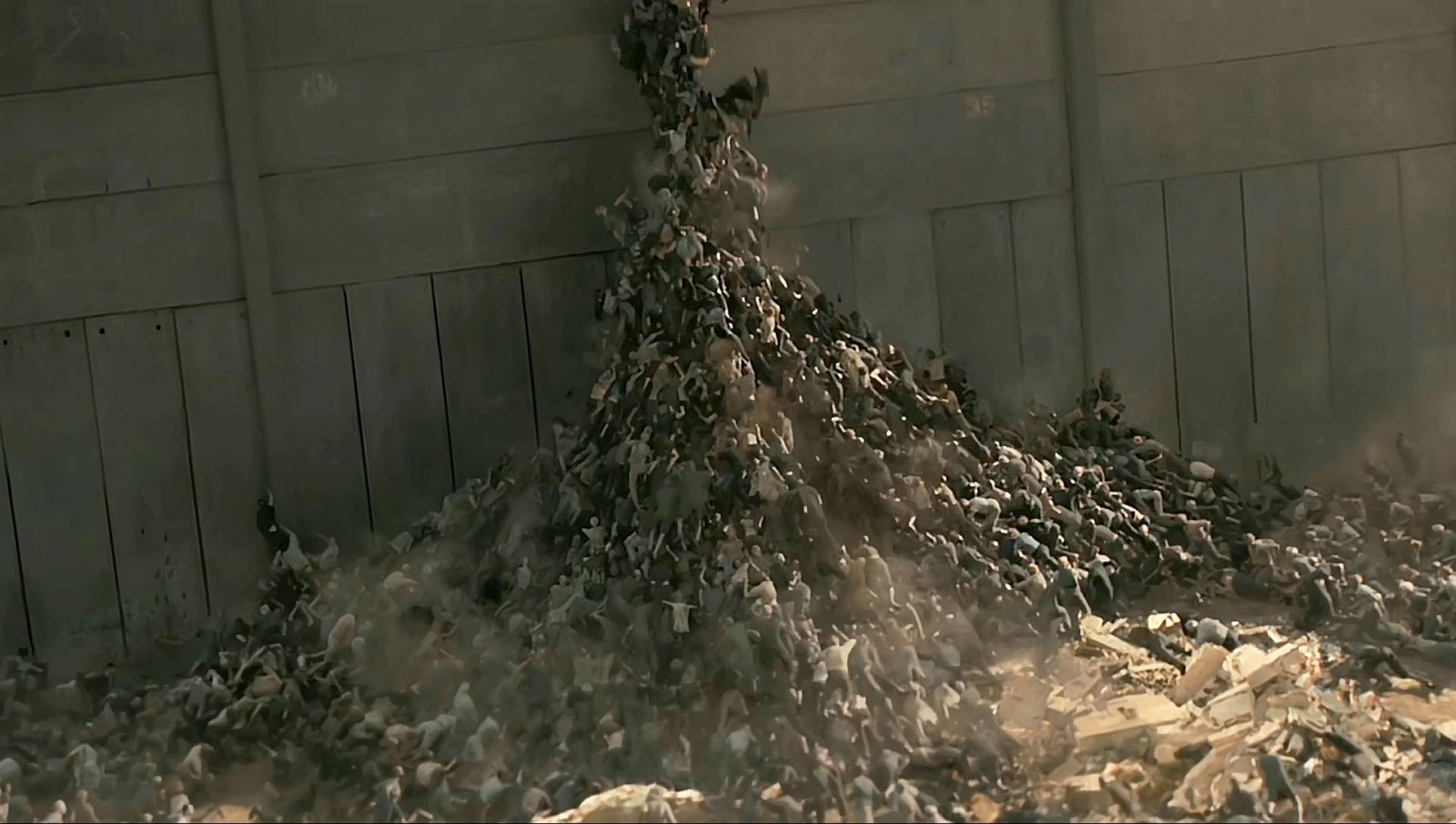
Okay, continuing on…there is one sequence in WWZ that takes place in Jerusalem. It was the breaking point for me. The Israeli government has erected an incredibly tall, seemingly unassailable wall to keep out the zombie swarm. When I say ‘swarm,’ I mean it. The zombies on the other side of the wall look like an overturned anthill or something from A Song of Ice And Fire. The Israelis even have armed helicopters running air patrol around the edge of the wall.

It wasn’t that a young Muslim girl singing over the PA was apparently loud enough to draw the zombies en masse (especially when there are a bunch of helicopters nearby). It wasn’t the zombies piling on top of one another (in what was certainly a concerted effort) to scale the gigantic wall in two minutes that was the breaking point either. No, it was the fact that there were zero guards up on the top of the wall keeping an eye out. When zombies start coming over the wall, everyone is surprised. You would think that if the Israelis were so intent on building this gigantic fortification, that it might look like something from a prison with watchtowers every hundred feet or so.  Nope, the zombies get all the way to the top and start pouring over, catching everyone flat-footed.

url-15

Really? Really?

That scene felt incredibly contrived when I saw it. It felt like that the various screenwriters attached to the project had needed the zombies to get over that wall because A.) It would make a striking visual and B.) Brad Pitt could make a daring escape. I answered my own question, and I didn’t like it.

Q: Why didn’t the Israelis have people on the wall to prevent something like from happening?

A: Because the story wouldn’t have worked if they did.

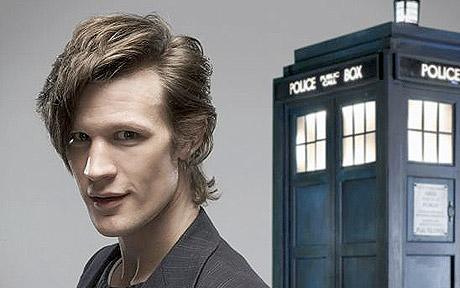
Of course, every fiction writer lives in the world of convenient contrivances, and I’m no exception. Fiction needs contrivances or else the story might be believable but bland. Say the Doctor lands the TARDIS and finds immediately that he’s in a dangerous situation. If he just said, “Forget it, I’m outta here!” slammed the door and got away, the episode would be extremely short and not very interesting. So, oftentimes the Doctor must stay where he is, or can’t get back to the TARDIS, or there’s something to keep him in the thick of things. I’m pretty forgiving of these contrivances because I see how necessary they are. So long as the justification for the Doctor hanging around (when he should just leave) is acceptable, I can suspend my disbelief long enough share in his adventure.

matt_smith_doctor__1215943c

I write a blog now. Blogs are cool.

It’s when that justification is weak or too jagged a pill to take that the wheels start to come off of a story. So, it’s that justification that holds things in place around the periphery. Think of a story, or even a specific scene in a book, movie, etc. as a trampoline. The black bouncy part is the scene/story itself while the justifications are like the springs that keep it all in place.  In the case of World War Z, it feels like not enough thought was given to the periphery of that particular scene, and so my suspension of disbelief came crashing down just like I had hopped on a trampoline with only a fifth of its springs.

Let me give you another example, also from a movie. In Star Trek: Into Darkness, there is a scene that really irked me. Kirk and Khan must get from the Enterprise over to the enemy dreadnought, Vengeance.  Conveniently the transporter system is down, but the Enterprise is damaged, so I give them a bit of a pass there. So, Kirk and Khan decide to physically launch themselves across to the other ship using spacesuits. There’s a debris field between the two ships that they have to navigate through to make things interesting. Okay, I’ll bite. The hatch that they have to hit at incredibly high speeds on the Vengeance is extremely small.  Um, sure, a small thermal exhaust port right below the main port. Got it.

Scotty, meanwhile, has infiltrated the enemy ship, and it’s his job to open the hatch when the two space jumpers get close. The controls to open the hatch are in a long, narrow bay with a high ceiling. Here’s the odd thing, though – the hatch is just a hatch, not an airlock. Opening the hatch will decompress that entire large compartment.

Wait, what?

when-someone-say-that-meme-sucks_gp_740720

How my face looked at the time. Maybe I just needed a Snickers.

On a starship wouldn’t you want all of your exits to be airlocks? What purpose does that bay even serve if the whole thing can be decompressed at the touch of a button? Could it be a cargo loading bay, where things either can or must be loaded/unloaded under vacuum? No, the hatch is barely big enough for two men to fit through at the same time. So, why is the hatch even there then? Once again, I answered my own questions.

Q: Why isn’t that hatch an airlock?

A: Because Kirk and Khan would smash into the inside door if it was.

Q: Why is that hatch so small?

A: To artificially inflate the drama of the scene.

Q: Why is the room so long and narrow?

A: So Kirk and Khan have enough room to skid to a halt.

The whole scene unraveled for me right there in the theatre.  My best guess is that the writers came up with the idea for a cool action scene and didn’t spare much on all those elements surrounding it. Once again, a trampoline without springs. Unfortunately, this is a trend I see in movies more and more these days.

trampoline-meme-generator-it-s-all-fun-and-games-until-the-trampoline-breaks-94ed0f

Yeah, in more ways than one.

So, where I am going with all this? This is a plea to fiction writers to think around the peripheries of their stories, the parts that are sitting just outside of the spotlight. I know fiction writers out there already have their hands full creating compelling characters, coming up with exciting storylines and so forth. Even still, please don’t forget to at least give the edges of your stories a once over, maybe even spend some quality time making sure the springs are secure before attempting a backflip.

Can you over-justify a scene? Can you make the springs so big that the black bouncy part is the size of a trashcan lid? Of course you can, but I would much rather be accused of putting far too much thought into something than not enough.

__________________________________________________

Do me a favor, okay? Subscribe to my newsletter for more news, updates, and information on Sector M’s current and upcoming projects!

Scalability

One of the hardest things about writing sci-fi (IMHO) is handling the technology. All too often the real world will catch up to science fiction levels in just years rather than centuries.  I may write about such things as invisibility fields or nanotechnology when all the while they may be just around the corner. Just do a google search for either of those, and the tech in the pages of a sci-fi novel may not seem so far off.

Even though we don’t have flying cars (yet), I am continually surprised at the things that modern scientific research discovers every day.  I mean, in the next few years, we might actually have found the Higgs-Boson particle or developed hand-held energy weapons, personally cloned organs, powered exoskeletons and life-extending treatments and/or drugs – all things that previously existed only in theory and imagination.

padd

Okay, Star Trek, we’re looking in your direction.

So what’s a lowly sci-fi writer to do to make sure that actual technology doesn’t exceed the set pieces that he creates? It might be a peek behind the curtain, but I’ll share with you one of the techniques I use on a pretty regular basis.

Scalability.

Let me give you an example of when this was not used. In the novelization of Star Trek II: The Wrath of Khan, we get a few scenes that do not appear in the movie. Consequently, we get to know some of the scientists aboard space station Regula 1. As it turns out two of the scientists are game designers, and they have just completed work on their latest video game, Boojum Hunt. It was supposedly the largest video game ever (by 23rd century standards) in terms of how much computer memory it occupied. It was so large that the computer mainframe of the space station only barely contained it.

Any guesses how at much space it took up? 60 Megabytes.  Megabytes with an ‘M.’ Yeah, it’s safe to say that modern technology blew that one completely out of the water. At the time of the novel’s release, 60MB might have seemed unthinkably enormous, but nowadays not so much.

Flash Drive

This flash drive holds 32 gigabytes.

Consider this, though − what if the novel had just said that the game was the “largest video game ever created,” and left it at that? Chances are someone reading it today would scale their expectations up to whatever the norm is currently. The same goes for someone reading it twenty years from now.

That’s scalability. It’s presenting a concept without the parameters that will eventually invalidate it. That way, it scales up to whatever the reader expects it to be. Certainly  Boojum Hunt’s claim would have held up without that troublesome measurement to sink it.  So, this idea can be applied to practically any claim we put on sci-fi set-piece technology. Saying, “A warship of the highest magnitude,” tells you everything you need to know in only a few words in the same way that saying, “She was the most beautiful woman he had ever seen,” can describe a character.  It’s a bit of ‘smoke and mirrors’ to handle it that way, and you do wind up speaking in superlatives quite a bit, but it works.

Social_Marketing_See_Behind_Curtain_Transparency

Hey, no peeking behind the curtain…ah, okay, just this once.

So what happens when you need to put some sort of real-world perspectives on your tech? Well, you can do that. Hard science fiction does it all the time, but they run the risk of being shown up by the onward march of human ingenuity and understanding.  For the sake of argument, let’s say that you have to put something down for one of your gadgets.

Here’s what I would do: I would figure out the modern measurement equivalent and then either quintuple or sextuple the order of magnitude.  I ran into a situation like this in The Backwards Mask when I had to give an indication of how large a particular hard drive was aboard the Hornet.  I didn’t want to make the same mistakes as Boojum Hunt, so I first thought of how large the ‘Canary Drive’ was in 21st century terms. I’m used to thinking of gigabytes (109 bits) in the here and now, so I then kicked it up to yottabytes (1024 bits). BTW, a single yottabyte equals a quadrillion (1,000,000,000,000,000) gigabytes.

original

That’s a big Twinkie.

As astronomical as that number may seem, there may come a day when devices store hundreds of yottabytes of information, and it’s no big deal anymore. They might look at my description of the Canary Drive and laugh to themselves at my short-sightedness.  Well, I think I’ve bought myself a few decades before that happens. If folks are still reading my book in 30 to 40 years, I still call that a win.

So, what’s the upshot of all this? I consider scalability an important tool in my writer’s toolbox. You can use it to bring technology up to the reader’s level of understanding (truly state-of-the-art) so it doesn’t get overrun by actual science quite as easily.  Of course no science fiction is bulletproof, but scalability at least allows it wear to Kevlar.

__________________________________________________

Do me a favor, okay? Subscribe to my newsletter for more news, updates, and information on Sector M’s current and upcoming projects!