Category Archives: Uncategorized

What I Miss About The ’80s

Okay, let me just lay it on the line here — my favorite decade is and was the ’80s. Pink legwarmers and parachute pants may be a bit dated now, but there’s a kind of zeitgeist about that time that really resonates with me. There are so many things we had in the ’80s that seem sadly extinct today, or at least not nearly as rad as back then.

Like what, you ask? Well, as it happens, I’ve put together a short list of things I miss most about those days.  Funny how that works, eh?

1.) Street Toughs

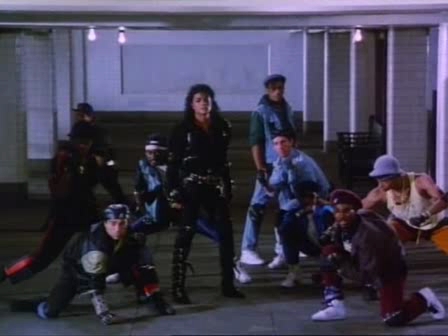
MJBadVideo

You know, back when MTV actually showed music videos.

Bonnie Tyler asks, “Where have all the good men gone, and where all the gods? Where’s the streetwise Hercules to fight the rising odds?”  That’s an excellent question, Bonnie. I sense a distinct lack of street toughs these days, too. It seemed like in the ’80s that the bandana-clad denizens of the streets were the coolest, most loyal people you could ever hope to meet.  Sure, you might have to demonstrate your street cred or ‘heart’ to them with an impromptu dance-off, or blistering guitar solo, but once you were in good with them, you had nothing to fear.  Luckiest were those street toughs who managed to impress the even rarer street goddess, who had short black hair, wore fingerless gloves, and either a suit jacket with padded shoulders and the sleeves rolled up or lots of really bright eye shadow (maybe both).

2.) Uber-Quotable Movies

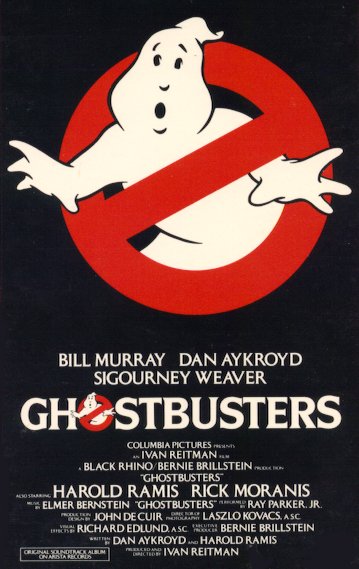
Ghostbusters movie poster

Oh yeah, that’s who I’m gonna call.

The ’80s were replete with dialogue that was either so incredibly memorable or so over-the-top ridiculous that it left an impression long after seeing it in the theatre or watching it on VHS. These are the movies that work their way into your everyday lexicon, the ones you find yourself reciting without even realizing it. While movies before and after this time still have plenty of pithy one-liners, the ’80s seems (to me, at least) to have the greatest concentration of movies with start-to-finish quotability. Here are my favorite examples:

Big Trouble in Little China, Ghostbusters, Top Gun, Bill & Ted’s Excellent Adventure, Ferris Bueller’s Day Off, The Princess Bride, E.T: The Extra Terrestrial., Airplane!, Back to the Future, Aliens, Terminator, Empire Strikes Back, Labyrinth, The Lost Boys, Say Anything, ¡Three Amigos!, Clue, Spaceballs, Star Trek II: The Wrath of Khan, The Goonies, Dirty Dancing, Adventures in Babysitting, Legend, The Breakfast Club, Bladerunner…and on…and on…

3.) Toy/Cartoon Tie-Ins

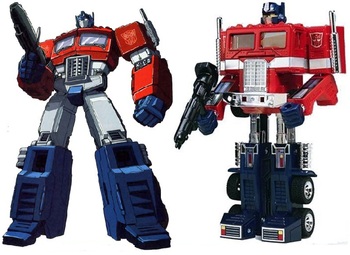
optimi_7791

Heeeey, wait a second…

In this author’s humble opinion, this was the single greatest decade for toys, especially those that had a strategically timed 30-minute commercial playing either before school or just after it. Voltron, Thundercats, Silverhawks, M.A.S.K., Masters of the Universe, Visionaries, G.I. Joe and, of course, my favorite…The Transformers.  These were the cartoons that were the stuff of modern morality plays, teaching us to do what was right, be true to ourselves, and stay in school.  They certainly weren’t a ploy to get us to buy more toys, no siree! I mean, if some of the most beloved characters from my childhood were just part of a massive marketing machine to move colored pieces of plastic off the shelves of the local Kmart, that would just be…sad.

4.) Mall Arcades

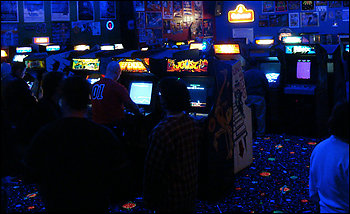
fi/atplay3

That’s more like it.

Arcades in the mall these days are total weak sauce. They might have a DDR knock-off, a multi-player racing game, and perhaps that rip-off toy grabber thingie — a far cry from the legendary arcades of yore. As a kid, the local Red Baron Arcade (Later Aladdin’s Castle and Tilt) was the place to go. The air was filled with a cacophony of overlapping, now-familiar video game sounds from Pac-Man, Tron, Galaga, Donkey Kong, Sinistar, Dragon’s Lair and the like. The colorful cabinets and 8-bit graphics were mesmerizing to my young mind. It all came together to create an atmosphere of fun the likes of which I have not seen since. To this day, building an ’80s-style arcade is one of my dreams.  Should I ever gain the means to do so, it will be Flynn’s Arcade all over again. Oh yeah…

5.) British New Wave

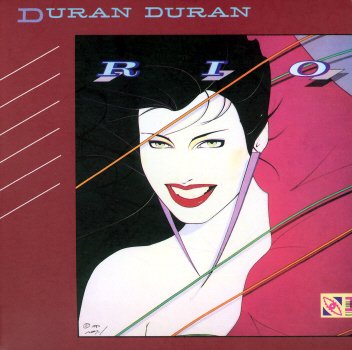
DuranRio

Nagle artwork meets Duran Duran…it doesn’t get more ’80s than that.

This was the time of the ‘Second British Invasion.’ Where The Beatles, The Rolling Stones, The Who, and The Moody Blues had crossed the pond in the ’60s, the ’80s were undeniably the time of Duran Duran, Depeche Mode, The Cure, The Petshop Boys, Tears For Fears, Dead or Alive, Howard Jones, A Flock of Seagulls, The Human League, and so many more. If you could mix a pop beat with some synth keyboard effects, and then have a male singer with an English accent sing over the top of it, you were golden.  Even though it can be hard to differentiate Level 42 from the Thompson Twins at times, there was just something about those bands that seemed to capture the fresh, optimistic spirit of the ’80s. There were a few hold-out bands who took this sound into the early ’90s (Cause and Effect comes to mind), but the fire of this genre largely died out with the decade itself.

Man, I miss the ’80s more than I realized. *Sniff, sniff.*

I really could use a hug right now…or maybe I just need to go play The Legend of Zelda again.


My Pre-Writing Ritual

Authors are a strange lot. Sure, some may be completely normal-looking on the outside, but there’s something about a person who’s willing to spend hours upon hours plinking away on a keyboard (or writing with pen and paper) that makes them…eccentric. Yes, eccentric. That’s a polite way of putting it.

I’m no exception. In fact, I revel in the knowledge that I’m just a little off. Always have been, always will be. Let me give you an example of the madness to my method. What follows is the ritual I go through before a writing session.

2005531-eddard_stark

Brace Yourself – Weirdness is Coming.

1.) The Encounter Suit

Do you know someone (or are someone) who has a game-day jersey, lucky hat or something similar? You know, it’s that article of clothing that can magically make the difference between victory and defeat for a favorite team? Well, I have a similar deal with what I put on before I settle in at my keyboard.

I’ve been known to wear pajama pants when I’m writing, the really eye-blistering plaid kind that look like golf pants gone horribly wrong. Or, it could be jeans or cargos, just so long as they’re comfortable. The real focal point of the garb, however, is the shirt. Most often it’s a printed T-shirt from a band, movie, TV show or something else that I really enjoy. It could be themed after Superman, House Baratheon, or the Official Stirlingites – just so long as it’s a physical representation of something that inspires me.

At times I even don what I refer to as my lumberjack shirt. It’s a black, beige and brick-red plaid shirt with a corduroy collar (yes, you heard that right) that I wear unbuttoned like a labcoat.  It’s a hideous throw-back to the coffee house culture of the 90s, but it also happens to be one of the most comfortable and durable shirts I’ve ever owned. It is, however, quite warm, so it doesn’t come out as much in the warmer months of Texas.

brawny

Remember, you’re never fully dressed without a smile.

Once I’m properly attired, I look sufficiently bizarre to ensure that I spend my time writing and don’t pop out to the grocery store. Although, even in that state, I’m sure I could get away with a trip to Walmart.

2.) Downstairs Pre-flight Checklist

Once I’m ‘in garb,’ it’s time to get all my stuff together for the trip up to my office upstairs. I may grab a light snack just to tide me over or something for an in-flight treat. Generally this takes the form of sliced apples, bananas and perhaps even a few of those individually wrapped wheels of cheese. If I have any reference books downstairs that I might need, I gather them up as well.

That’s when I reach for my cobalt blue U.S.S. Constitution mug, which I bought when I went to go see Old Ironsides in Boston.  I fill it with something hot to drink, either hot chocolate or Earl Grey (the drink of choice for all the best French starship captains!).  I then stir the drink with my TuxedoSam spoon from Yogurtland.  Don’t ask me why I do that; it is simply the way of things.  Iced drinks can sometimes replace this in the mug during the Summer months.

Picard

Onwards and upwards, Mr. Carson. Carry on.

If it sounds like I’m packing for a journey, you’re not far off. My writing sessions run about 3 to 5 hours at a stretch, so I need to make sure that I have everything I’ll need along the way. This is a non-stop flight.

So, once I have all that, I’m ready to make the walk upstairs – balancing all this stuff. I use that slow progression to mentally prepare myself for the scenes I’m about to write. I play them out across the movie screen in my head, trying to get inside the hearts and minds of the characters.

At this point I’m almost ready.

3.) Taking My Station

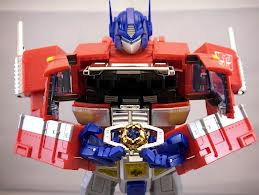
My office is sometimes known as “The Museum of Matt.” It has a host of my model ships, my reference library and a bunch of toys that somehow survived my childhood mixed in with the new ones I’ve picked up along the way. On my desk alone I have such things as: a model of the DeLorean from Back to the Future, a replica of the famous Egyptian sphinx, the Adam West-era Batmobile and a Warthog from Halo manned by the robots from Real Steel. (Long story). On one side of my monitor I have my autographed copy of Lindsey Stirling’s self-titled album. On the other side, I have my Masterpiece Optimus Prime holding up the Matrix of Leadership.

So, I set everything I’m carrying down on my desk, and I close the door. If you’ve read Stephen King’s On Writing, you’ll recognize the significance of that last act. Unless the house catches fire or there’s an alien invasion, the next few hours will be spent in service to the story. Closing the door is a symbolic gesture as well as a practical one.

images

You’ve got the touch! You’ve got the power!

I sit down and boot up my computer, then remove anything in my line of sight that doesn’t need to be there. Bill stubs, printouts, past edits – all of that goes away. When I’m nicely settled in, I switch on a brass banker’s lamp. Aside from the light from the monitor, this will be the only light in the office. Like closing the door, pulling the lamp chain is a signal that I’m getting down to the business.

Next, I pull up my playlists and select some appropriate music for what I’m about to write. The lists have names such as “Fleet Action”, “Loss and Sorrow”, “Heroes in Uniform” and so on. Sometimes it’s a single song that really calls to me. Just like a movie soundtrack, my musical selection sets the mood for the emotional states I will attempt to capture.

I take a few minutes to let the music soak in while I continue to visualize the scenes to come. At this point, I’ve taken my station as surely as Sulu sits at the helm or Uhura at the comm panel of the Enterprise. Everything’s in place.

My hands settle on the keyboard. It’s time to write.

______________________________________________________

Epilogue:

Do I follow this regimen each and every time I sit down to write? No, of course not. Sometimes there isn’t time to do it all. I’ve found, however, that the closer I get to what I’ve described here, the better and more productive the results. I don’t know why it works, but it does.

I’m not sure what, exactly, this says about me, but I’d like to think it means that I’m a sentimentalist  in my heart of hearts, that I like to surround myself from every angle with those things which hold special significance to me. At that moment, when I’m in my own little microcosm, I can more easily enter the worlds of my imagination.

I guess I’m just weird that way.

maxresdefault

What a strange person.


Backwards Compatible – Part 3: Like Getting Punched By Batman

A quick note before we begin…

Normally I try to keep things upbeat and positive here. This time around, I’m going to offer some criticism, which could be taken as negative. Understand that these are just my personal opinions, and that they are stated here to show you where I picked up on The Backwards Mask. If you are a fan of Paul Brunette’s novels (or are Paul himself), you might want to skip this one.

Still with me? Okay, let’s continue.

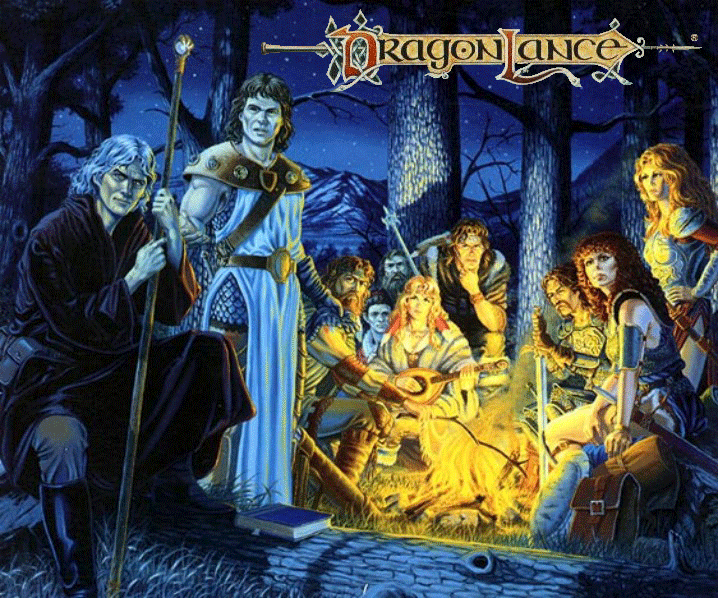
I admit that I found the first two novels of the New Era trilogy rather ‘meh.’  Game-based fiction is notoriously hit or miss. To me, game-based fiction should not just be a shallow commercial for the game world it represents as much as a good story that just so happens to take place in that setting. I mean, you can find some of the best and worst examples of game-based fiction in the Dragonlance setting alone. The core books (Chronicles and Legends) are brilliant, and some of my all-time favorites. Outside of Margaret Weis and Tracy Hickman? Well…

lance61x

Results may vary.

So, the first book of the TNE trilogy, The Death of Wisdom, seemed a bit bland, along with the characters and story. There were moments that were really engaging, but they were few and far between. It was not the worst thing I had ever read (far from it), but it was largely on the forgettable side. The premise of the book seemed like it should be far weightier than it came across. They were talking about the possible collapse of the Reformation Coalition, one of the only beacons of human civilization left in an otherwise dark and twisted universe. The characters just seemed rather nonchalant about the whole deal.

The next book, To Dream of Chaos, was better than the first one. It still left much to be desired in my opinion, but the characters seemed much more alive.  Most of the things that bothered me about this book were those staples of the setting itself (more on that later). There were some strange curveballs in there that left me scratching my head in places, but on the whole it was a improvement. It unfortunately left off on a mild cliffhanger.

not-impressed-mcKayla

What do you think of the story so far, McKayla?

That’s where I stepped in.

As I stated in Part 2, I had no idea where the story was supposed to go from there. I had some ideas, sure, but nothing unified. It was a just a loose mosaic of vignettes and scenes in my head. I knew that the third installment really needed to up the ante, and bring together the struggles of the first and second volumes. While I couldn’t change the characters, or their names, I could try to make them my own. The same went for the story. It had to be one that interested me or else it would never hold the reader’s interest. I pondered this during my months of research into the setting, and my endless re-readings of the first two novels.

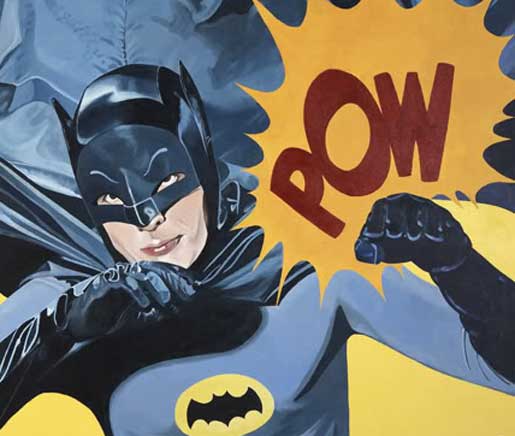
I remember when I finally had my “Eureka!” moment. I had created, and discarded, a dozen ideas of how I could do justice to the story, of how it all might work. Apparently my subconscious had been chewing away at the problems I faced, because when the story came to me, it was all at once. Zowie! It was as though the Adam West Batman had finally knocked some sense into me.

batman-tv-show-pow

Holy bolt of unforeseen lucidity, Batman!

There was the story, all laid out in front of me in a strange moment of clarity. Now all I had to do was get it on paper.

Should be simple, right?

[Check out the Backwards Mask on Kindle.]


Thinking Around the Periphery

So, I watched World War Z recently.  I’m a fan of Max Brooks and the epistolary tale he created about life during (and after) the zombie apocalypse.  This big-budget  summer blockbuster starring Brad Pitt really only has the name in common with the book, however. While I’m not a huge fan of the zombie genre in general, I went in with an open mind. I wasn’t expecting Shakespeare or Joss Whedon, just a visually stimulating romp through zombie-infested cities.  Even with what could be considered modest-to-low expectations, I did not care for the movie overall. There were far too many coincidences that bothered me, too many things that seemed to ring false.

Don’t worry, this isn’t a movie review, but there’s some spoilage ahead both for World War Z and Star Trek: Into Darkness. If you are allergic to spoilers, and haven’t seen these movies, you should ‘opt out’ now. Consider yourself forewarned.

world-war-z-bb

Not to be confused with the book, World War Z.

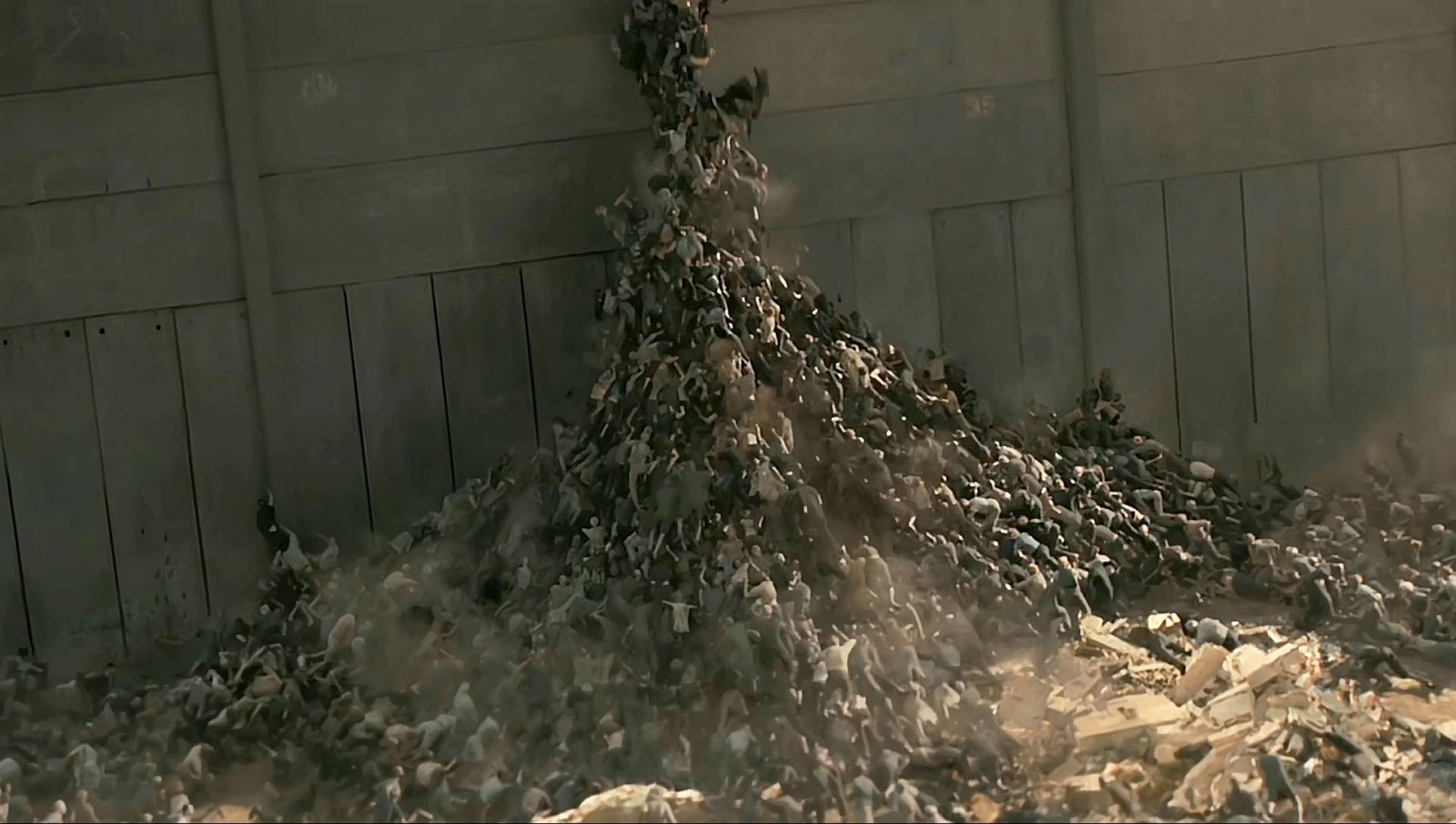
Okay, continuing on…there is one sequence in WWZ that takes place in Jerusalem. It was the breaking point for me. The Israeli government has erected an incredibly tall, seemingly unassailable wall to keep out the zombie swarm. When I say ‘swarm,’ I mean it. The zombies on the other side of the wall look like an overturned anthill or something from A Song of Ice And Fire. The Israelis even have armed helicopters running air patrol around the edge of the wall.

It wasn’t that a young Muslim girl singing over the PA was apparently loud enough to draw the zombies en masse (especially when there are a bunch of helicopters nearby). It wasn’t the zombies piling on top of one another (in what was certainly a concerted effort) to scale the gigantic wall in two minutes that was the breaking point either. No, it was the fact that there were zero guards up on the top of the wall keeping an eye out. When zombies start coming over the wall, everyone is surprised. You would think that if the Israelis were so intent on building this gigantic fortification, that it might look like something from a prison with watchtowers every hundred feet or so.  Nope, the zombies get all the way to the top and start pouring over, catching everyone flat-footed.

url-15

Really? Really?

That scene felt incredibly contrived when I saw it. It felt like that the various screenwriters attached to the project had needed the zombies to get over that wall because A.) It would make a striking visual and B.) Brad Pitt could make a daring escape. I answered my own question, and I didn’t like it.

Q: Why didn’t the Israelis have people on the wall to prevent something like from happening?

A: Because the story wouldn’t have worked if they did.

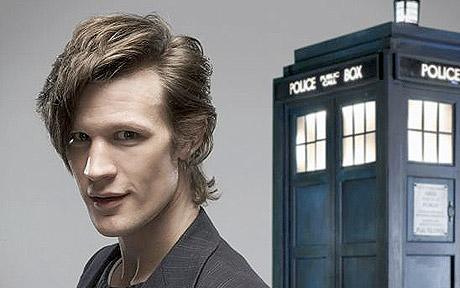
Of course, every fiction writer lives in the world of convenient contrivances, and I’m no exception. Fiction needs contrivances or else the story might be believable but bland. Say the Doctor lands the TARDIS and finds immediately that he’s in a dangerous situation. If he just said, “Forget it, I’m outta here!” slammed the door and got away, the episode would be extremely short and not very interesting. So, oftentimes the Doctor must stay where he is, or can’t get back to the TARDIS, or there’s something to keep him in the thick of things. I’m pretty forgiving of these contrivances because I see how necessary they are. So long as the justification for the Doctor hanging around (when he should just leave) is acceptable, I can suspend my disbelief long enough share in his adventure.

matt_smith_doctor__1215943c

I write a blog now. Blogs are cool.

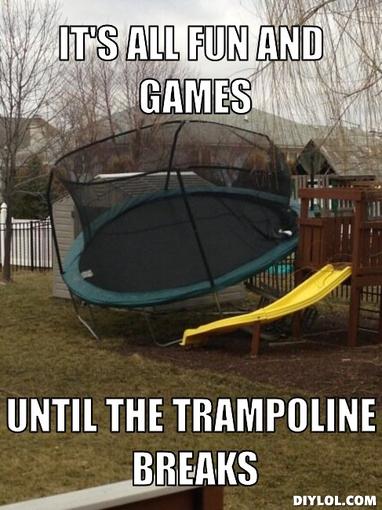
It’s when that justification is weak or too jagged a pill to take that the wheels start to come off of a story. So, it’s that justification that holds things in place around the periphery. Think of a story, or even a specific scene in a book, movie, etc. as a trampoline. The black bouncy part is the scene/story itself while the justifications are like the springs that keep it all in place.  In the case of World War Z, it feels like not enough thought was given to the periphery of that particular scene, and so my suspension of disbelief came crashing down just like I had hopped on a trampoline with only a fifth of its springs.

Let me give you another example, also from a movie. In Star Trek: Into Darkness, there is a scene that really irked me. Kirk and Khan must get from the Enterprise over to the enemy dreadnought, Vengeance.  Conveniently the transporter system is down, but the Enterprise is damaged, so I give them a bit of a pass there. So, Kirk and Khan decide to physically launch themselves across to the other ship using spacesuits. There’s a debris field between the two ships that they have to navigate through to make things interesting. Okay, I’ll bite. The hatch that they have to hit at incredibly high speeds on the Vengeance is extremely small.  Um, sure, a small thermal exhaust port right below the main port. Got it.

Scotty, meanwhile, has infiltrated the enemy ship, and it’s his job to open the hatch when the two space jumpers get close. The controls to open the hatch are in a long, narrow bay with a high ceiling. Here’s the odd thing, though – the hatch is just a hatch, not an airlock. Opening the hatch will decompress that entire large compartment.

Wait, what?

when-someone-say-that-meme-sucks_gp_740720

How my face looked at the time. Maybe I just needed a Snickers.

On a starship wouldn’t you want all of your exits to be airlocks? What purpose does that bay even serve if the whole thing can be decompressed at the touch of a button? Could it be a cargo loading bay, where things either can or must be loaded/unloaded under vacuum? No, the hatch is barely big enough for two men to fit through at the same time. So, why is the hatch even there then? Once again, I answered my own questions.

Q: Why isn’t that hatch an airlock?

A: Because Kirk and Khan would smash into the inside door if it was.

Q: Why is that hatch so small?

A: To artificially inflate the drama of the scene.

Q: Why is the room so long and narrow?

A: So Kirk and Khan have enough room to skid to a halt.

The whole scene unraveled for me right there in the theatre.  My best guess is that the writers came up with the idea for a cool action scene and didn’t spare much on all those elements surrounding it. Once again, a trampoline without springs. Unfortunately, this is a trend I see in movies more and more these days.

trampoline-meme-generator-it-s-all-fun-and-games-until-the-trampoline-breaks-94ed0f

Yeah, in more ways than one.

So, where I am going with all this? This is a plea to fiction writers to think around the peripheries of their stories, the parts that are sitting just outside of the spotlight. I know fiction writers out there already have their hands full creating compelling characters, coming up with exciting storylines and so forth. Even still, please don’t forget to at least give the edges of your stories a once over, maybe even spend some quality time making sure the springs are secure before attempting a backflip.

Can you over-justify a scene? Can you make the springs so big that the black bouncy part is the size of a trashcan lid? Of course you can, but I would much rather be accused of putting far too much thought into something than not enough.


My Favorite Mistakes

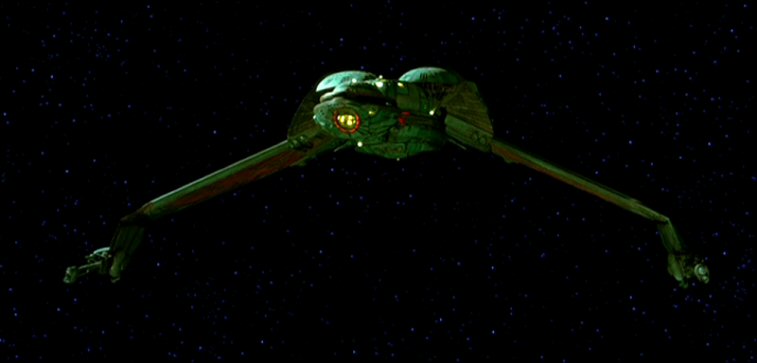
Some writers are naturally able to edit their own stuff. I envy those who fall into that category. Me? Not so much. Oh, I do okay to catch the majority of the boneheaded mistakes I make on a regular basis, but invariably there are some that slip past me. Many times I know what I meant to say, so I’ll confidently breeze past an error without seeing it. It might as well have a Klingon cloaking device strapped to it.

This can instantly undermine what credibility you have if people know you’re a writer.  They’ll read an email, blog post or something you did on the fly and think, “Wait, this guy’s an author? Are you sure? Shouldn’t he know better than to make mistakes like that? Shouldn’t his stuff be perfect?”

Klingon_Bird-of-Prey

He pressed SEND! Maltz, disengage cloaking device!

Truth is, I’m not a very clean typist as my editor, Beth, is all too aware. I routinely look over things I’ve written (including posts on this very blog) and find mistakes that have eluded me. Well, I’m a big proponent of knowing your weaknesses as well as your strengths. So, I put together this list of the Top 4 mistakes that  keep cropping up with me.

I mean, admitting you have a problem is the first step to recovery, right? Right?

1.) Missing “To” on the Infinitive

Two little keystrokes. Just two. T−O. Yet when they are missing, it can really foul up your sentence when your infinitive isn’t properly introduced by “to.” This is apparently my favorite-ist of favorite mistakes, since I make it more often than any other. I can’t tell you how many I corrected in my original manuscript of “The Backwards Mask.”  There are likely a few that made it past the filters, despite all my best efforts.

william-shakespeare-portrait11

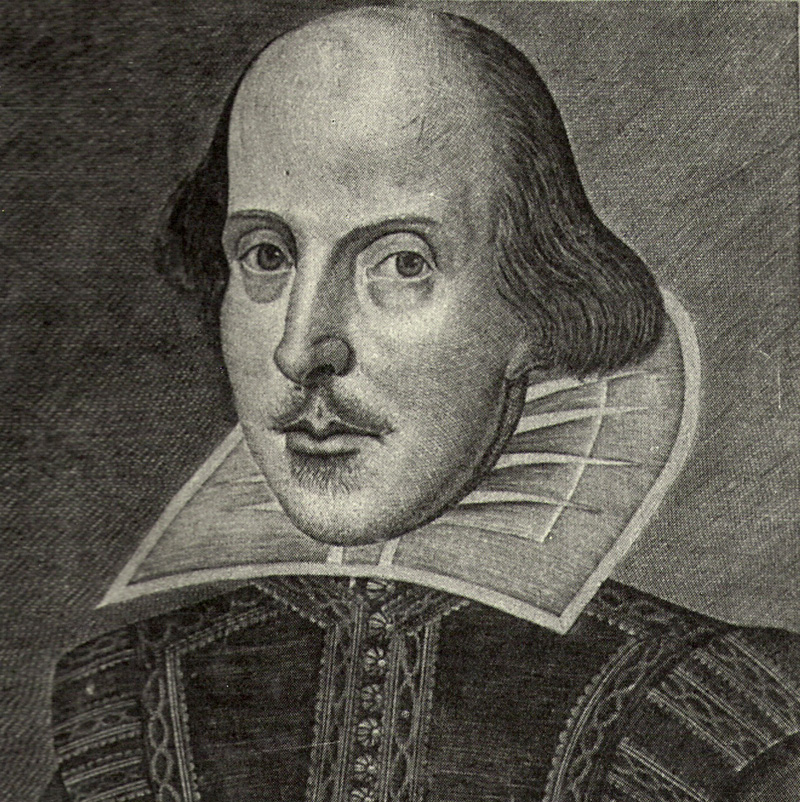
__be or not __ be.

2.) Dropped Word

Similar to mistake number 1, I will drop a key word from the sentence.  The word “not” seems to be a popular one (particularly when the sentence hinges on that one word), but I don’t limit myself just to that. Oh, no…quite the contrary. I’ll go back and look at something I wrote and find something like this:

With speed fueled by desperation, he spun around to find the glaring red eyes of a staring back at him from the darkness.”

So…is it a vampire? A Decepticon? A guy in dire need of Visine? What?

picard-riker-double-facepalm

Bad writer, no cookie.

3.) Repeated Word

Not content to leave words out, sometimes I put extra words in that don’t need to be there. Sometimes this comes from a line break temporarily fooling me into thinking I haven’t already typed it. I wish that was the case every single time. Nope. I merrily add in an extra “the” at random intervals along with “their” and “from.”  Sometimes it’s just a word I apparently liked so much I thought it needed to go in twice. You know, for emphasis.

Department-of-redundancy-department

Repeaters gonna repeat.

4.) Switching Gears Mid-sentence

Sometimes I pause in the middle of a sentence to think about what I’m really trying to get across in it. I’d like to think that I’m like Socrates in this regard (who would stop and stand in place for hours or days at time while thinking), but chances are that I’m really just second-guessing myself—the literary equivalent of changing horses mid-stream.  When I come out of my ponderings, sometimes the second part doesn’t quite match up with first part.  I tried to recreate this phenomenon here, but it just didn’t work. You’ll know it when you see it, though I hope they are all fixed by the time you read something of mine. *fingers crossed*

MV5BMTM3MjI5NDI3Ml5BMl5BanBnXkFtZTcwNjU4MzcyNA@@._V1._SX640_SY432_

In your own little world again, I see. Excellent!

Wow, two Trek references + Shakespeare + Socrates just in pictures alone? That has to be a personal fanboy/nerd best for me. In any case, these are my favorite mistakes…but, you know, not in a Sheryl Crow kind of way.

I put it to you – all my fellow authors out there − what are your favorite mistakes?


Backwards Compatible – Part 2: Just a Few Hurdles

When we last left off, our author was tasked with reigniting a milieu that had long since grown cold. We also secretly switched his coffee with new Folger’s crystals. Let see what happens (particularly since he doesn’t even drink coffee)!

Okay, so there were some immediate challenges facing me on this project, which I will outline here in a conveniently numbered format.

1.) Lack of Clear Direction

When we started, all we had to go on was the name (The Backwards Mask) and the existing cover art in black and white. There was no indication of where the storyline was going from the second book or how Paul Brunette intended to wrap up the trilogy.

After much debate and back and forth, Marc and I decided to create the new story as he put it “out of whole cloth.” I scoured the setting books and the two novels to figure out the core of the third story. In many ways it was harder than writing one from scratch. I needed to write a novel that was, if you’ll forgive the term, backwards compatible with the other books. At the same time, the series had been fallow for over a decade. While you could still find the first two novels in used book stores, Amazon and eBay, they weren’t readily available. That meant that the third story would need to complete the trilogy AND work well as a standalone story.

So how does one go about doing that?

Any which way you can

Whoah, thanks for the assist, Philo and Clyde!

2.) Literary Baggage

Since I was stepping in after two novels, I inherited characters and storylines that were not my own. It was not unlike a comic book author who takes over a title after the previous writer’s run. You want to tell your story, but you don’t want to break faith with what has gone before too much, even if it’s terribly inconvenient. Sure, you can wave the ‘retcon’ wand around if you want, but that can work against you if you give your readers too much of a disconnect.

Much of the crew of the aboard RCS Hornet did not have given names. Instead, they were known by their taccode, or callsign. Even though it was part of the property, the excessive use of callsigns felt a little artificial to me, and seemed like a throwback to Top Gun.  I understand that many pilots in the armed forces (in real life) do use their monikers in place of their real names, but this wasn’t just limited to pilots. Practically every character involved with the Reformation Coalition had to have one, seemingly from the highest commanding officer to the professors at the academy. Did the janitors and the mailmen have them in the Coalition as well? When a character’s mother, a politician or someone outside of the military addresses them, did they use their callsign then as well?

Negative, Ghostrider. Clearly, I would have to fill in the blanks in some places, and explain away things that didn’t make sense in others. In short, I needed to write my way around certain elements to get free and clear to tell my story.

baggage_claim-660x420

What do you mean Whizbang and Bonzo have no real names? Seriously?

3.) Inconsistent Background Material

Besides all of the story elements, characters and history that I had to account for in the third installment, I had to contend with something else. The novels were not entirely consistent with the game books of the setting. There was some definite rule bending when it came to ships and how they operated. Even the game books varied at times from the ‘classic’ canon of the rest of the Traveller universe.

Worse yet, the game books themselves were not consistent with each other. One of the New Era books couldn’t decide who the Empress of Solee was (the leader of the bad guys) within its own pages. Was she an ex-naval officer who used her expertise to overthrow a planetary government and crown herself Queen, or had she been born a noble, inherited her throne by nefarious means, but had no real military expertise whatsoever?

There was also a ship named the Ashtabula, which was pretty much like the Enterprise in Star Trek (any of the non-Scott Bakula ones at any rate). In one place it said that there were only two people alive who had served aboard the ship before she disappeared. In another place it mentions that one of the intelligence types attached to the government (who was still alive) had once served aboard her. And on…and on…

This left me on shaky ground. I couldn’t trust the previous novels to be entirely faithful to the setting, and I couldn’t trust the setting to be faithful to itself.

150463353649_rimqPmdb_l

But then…how do you know?

Once I had a solid look at the wall I was expected scale, it suddenly seemed much taller than I had originally thought.

But this was me…not giving up. *Cue the 80s inspirational power chords.*

[Check out the Backwards Mask on Kindle.]


Why I Love Villains

Okay, I’ll go ahead and say it—I love villains. Most of the time, I find villains far more compelling than the heroes who face them. To clarify—before anyone goes there—I’m talking strictly about fiction here, and not the real world.

My interest in the bad guys goes way back to my earliest childhood. The first truly awe-inspiring villain I discovered as a kid was (surprise of surprises) Darth Vader. He was a mystery behind that all-too familiar mask of his, with that raspy respirator, hissing and sighing to announce his presence. He instantly commanded respect from those who served him, and brooked no sharp tongue. (I find your lack of faith disturbing!)  Vader was just cool, from the way he walked to his deep basso James Earl Jones voice. Like some Black Knight out of legend, he was powerful, strong and—if you’ll forgive the pun—a force to be reckoned with.

You, um, might say that I was more than a little inspired by him.  Just a bit…

Sith_04LIT

That’s me as a Sith Lord.
No, really, that’s me in there.

Vader started a trend with me. I found as I grew up that I seemed to gravitate towards the villains in the various cartoons I watched as a kid. (A notable exception is Transformers, where I liked the good guys better overall.) Take for instance COBRA from G.I. Joe. They get all the sharp-looking  vehicles, armor, and suits. Most of them wear ninja-esque balaclavas or use masks to hide their faces. Compare that to the Joes, who look like a bunch of regular people. Boring. The only one on the good side who had that level of panache was Snakes Eyes, and let’s face it—he should have been on COBRA’s side. Come on, his name is Snake Eyes for crying out loud!

Unfortunately, for all their style, COBRA wasn’t very competent.  Your average Viper can’t hit the broad side of an aircraft carrier, but then again, neither can any member of the Joe team. In fact, all of them in that franchise seem pretty incapable of basic marksmanship. Be that as it may, even though COBRA is constantly thwarted in their diabolical schemes, they look great while losing.

Especially the Baroness. Ahem…

CobraLogo-500x500

Cooooooo-braaaaaaa!

It took me a while to figure out what it was about the likes of Boba Fett, Skeletor, Storm Shadow, and Magneto that really called to me. Yeah, they were enigmatic and looked imposing, but it was more than that. It was because villains don’t play by the rules, or more to the point, they play by their own rules. One of the reasons they are so powerful is because they are not constrained like the rest of us. They operate by their own code. They’re rebels, they’re renegades. They are the ones who break from the pack and do what they want, when they want. And, you know, there’s something very attractive about that idea.

When I discovered James Bond films, I found another deep well of villainy. Bond villains are a special breed. While they are all too eager to tell Bond about their master plan, and tend to have a predilection for Nehru jackets, they are all very smart (though not all that wise). Many of them are doctors, scientists, secret agents, and the like. Intelligence is something that I think all great villains share. Moriarty, Lex Luthor, Brainiac, Doctor Doom, Voldemort, Dracula, Sauron, Ozymandias, Roy Batty, HAL-9000—geniuses all. And let’s not forget one of the most brilliant villains of all time…

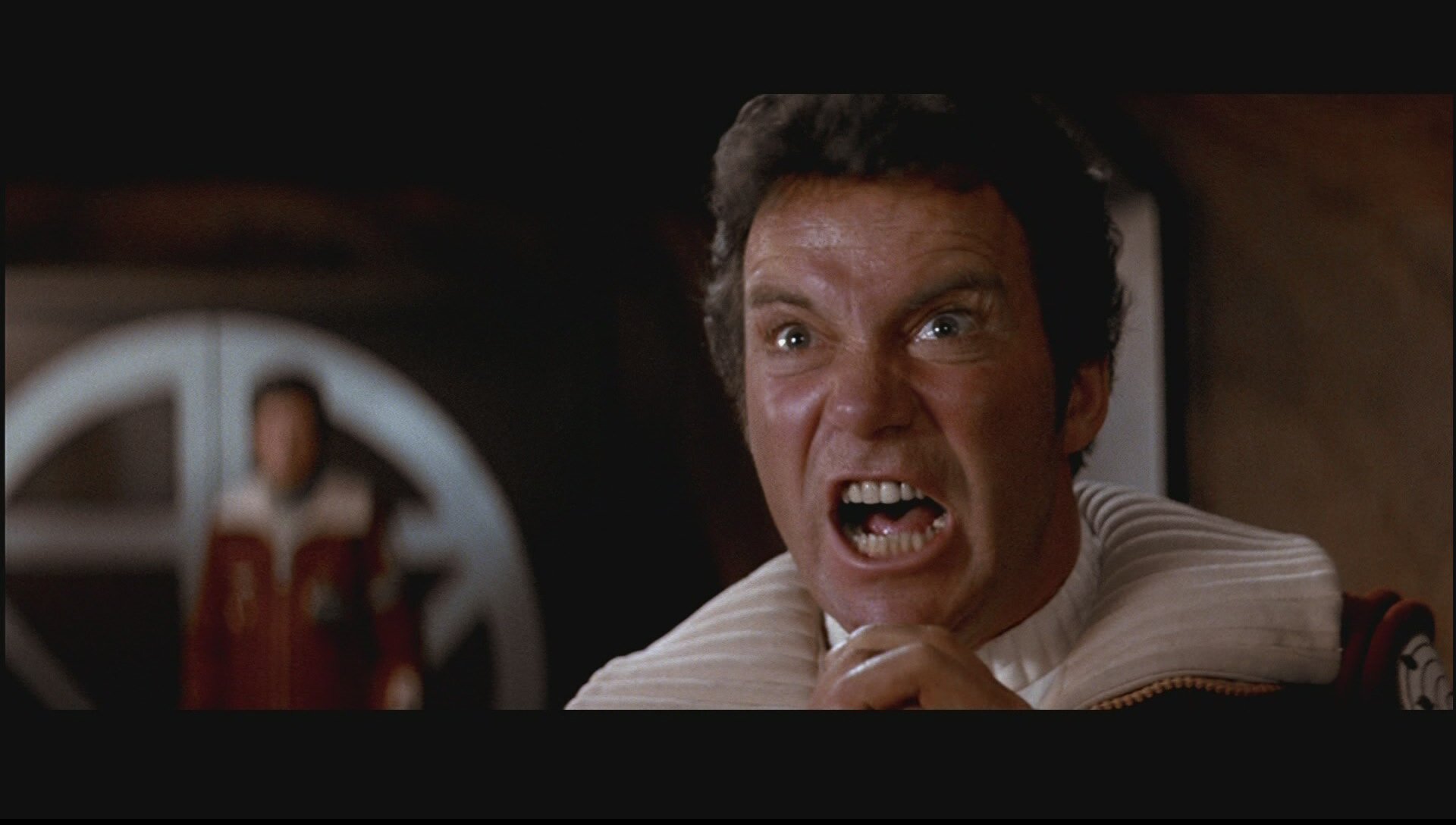
Wreath of KhanII

Come on, you know you wanna yell it out!

When it comes to a villain’s role in a literary sense, I think this old saying about sums it up: “It is the presence of the wolf, not his absence, which makes the deer strong and fast.” There is a symbiotic relationship that exists between heroes and villains. A hero is often defined by his nemesis, and vice versa.

Do me a favor—think about the last few movies, books, comics, stories, etc. that you found particularly powerful or moving. Now think of the villain of each one. Chances are they had a particularly memorable and/or potent opponent playing opposite the protagonist. Villains can make or break a story.  Even in those tales where the heroes are up against nature, society, or even their own natures, it is the obstacles they must overcome, the hardships they have to endure, that really make you empathize with them.

Villains are great at forging that pathos between the reader/viewer and the hero. Why? Villains are engines for conflict. Without some sort of conflict, you don’t have much of a story. That’s also why antagonists can be, and often are, much cooler/lethal/stronger/smarter/more awesome than the protagonist.  They have to be…or rather they need to be.

Sherlock-Holmes-and-Moriarty

Can you imagine one without the other?

If you didn’t have an incredibly competent, seemingly unbeatable opponent for the protagonist to face off against, victory would seem hollow and meaningless. When our heroic lead manages to succeed, even when all hope seems lost, it feels so much more satisfying, right?

We as humans love underdogs, the ones who bravely soldier on against impossible odds. We love to see underdogs succeed even when all conventional wisdom says they should fail. So, the greater the villain, the greater the sense of achievement when our hero emerges triumphant in the end.

And that is why I love villains. At once they represent power, mystery, intelligence, style, and the crucible in which heroes are made.

Oh, and the maniacal laugh. Definitely the laugh.


Sci-fi’s Strongest Heroine?

Female characters in science fiction have come a long way since the pulp-era days. No longer are they always the cliché ‘maiden in distress’ or merely a means to have a love interest in the story.  Oh, there’s still quite a lot of that goes on, but it’s not quite so omnipresent throughout the genre anymore.

Speaking as an author, I love strong female characters (both reading and writing them). I feel privileged to live in a generation of great sci-fi heroines. We’re talking names such as Nyota Uhura (past and present), Ellen Ripley, Katie Sackoff’s Starbuck, Katniss Everdeen, Honor Harrington, Buffy Anne Summers (or practically any female character from Joss Whedon’s brain), Dr. Dana Scully, Sarah Connor, Susan Ivanova…the list goes on and on.

947010_517880768248241_141481184_n

OOOH YEEEAH…
*said in the Kool-Aid Man voice.*

These are the ladies who don’t need anyone to make them powerful, because they are already.  Helen Reddy songs would not be out of place blasting in the background as they go about saving civilization, humankind or the universe.

In this author’s humble opinion, there is one leading lady who takes the crown of strongest sci-fi heroine, and, wow, talk about a tough choice! But if I had to pick just one it would be…(drum roll)…Trinity from The Matrix.

jumpkick288

Hear me roar…and soar, apparently.

Note that this is the Trinity from the first Matrix movie, not the ones that followed. Sure, she was cool in those too…in the same way that Connor McLeod was also cool in Highlander 2: The Quickening. Cool, but just not the same. For the sake of this post, forget that the Reloaded and Revolutions movies ever existed. I do.

Here are the top three reasons I think this, along with the stereotype that Trinity shatters with a ‘bullet time’ slow-motion jump kick.

1.) She Looks Like She Can (And Will) Kick Your Butt

5-the-matrix-trinity-dodge-this_thumb

Dodge this.

The first scene in The Matrix shows her taking out several SWAT team guys with martial arts moves that border on anime. I remember the first time I saw this in theatre. I was completely sold on the character’s capacity to kick butt.  Carrie-Anne Moss was in incredible physical shape in that role, and she completely owned the physical stunts necessary to convince us of Trinity’s formidable hand-to-hand skills.

Have you noticed in the movies how many times we see a rather diminutive female character going toe-to-toe in a fistfight with goons more than twice her size and weight? Yet she wades through tons of them as though they were nothing. Does that really seem believable to you? Most of the time it looks pretty forced, leaving many of us thinking um, what? With Trinity, her combat abilities don’t seem out of place at all. Once you know that she can bend the Matrix, it makes even more sense that she can go through even highly trained special ops-types without breaking a sweat.

2.) Not Just Another Pretty Face

trinity-matrix

Whoah…

Carrie-Anne Moss (and thus Trinity) is beautiful, no doubt about it. At no time in the film, however, was she so glammed out that she no longer fit the role. Trinity comes from a dark and hard world, one where she risks her life on a daily basis to fight a system that has enslaved humanity without its knowledge.  If she couldn’t pull her own weight on missions, she wouldn’t have survived for so long. In that sense, she doesn’t suffer from “Bond Girl” syndrome, where her usefulness and contribution to the story are just skin deep.  Quite the opposite, in fact − she’s integral to the story.

Also, Trinity is uber competent at what she does. Even after Ted “Theodore” Logan came along to become the Kwisatz Haderach, she remains one of Zion’s elite operators.  When Neo goes in to rescue Morpheus, who’s the other half of the assault team, in what was surely a suicide mission, the one he could not have done it without? Sorry, rhetorical question.

3.) Her Femininity Doesn’t Clash

tumblr_mi6ln1hZb01qmwg3ao1_500

Trinity à la Nagle.

Okay, ladies, here’s a question for all of you. Does it feel like some female characters are stripped of their femininity when they are put in what would be traditionally considered a ‘man’s’ role? It’s almost as if the idea of a woman who knows how to mix it up in a brawl or a firefight can’t be considered womanly.

I disagree with that idea, of course. More than that, I disagree with the underlying assumption that puissance at arms is something uniquely masculine, or (more to the point) not feminine. While The Rules would not approve of ladies who know how to field strip an M-16, set explosives or do anything else a Navy SEAL might be trained in…I do. For me, femininity and masculinity are not about what you do, but who you are.

In the case of Trinity, she is very much a woman. At no time does she come off as mannish or butch, and she doesn’t need to adopt the caricature of male persona to be brave in the face of nearly impossible odds, or to fight for her cause or for those she loves. She doesn’t have to give up one to have the other, and I love her for that.

So that’s how I see it. Of course, I’m a guy, so me going on about all this might be comical to some of the ladies out there. Let’s just remember that this is an opinion piece, after all.

What do you think?


Backwards Compatible – Part 1: Genesis

You knew it was coming…the inevitable post about my novel. This is, in fact, the first in a series of posts explaining how my novel came about.  The road from its inception to execution was a long and twisting one.

Well, let’s start at the beginning.

header-1161698270

No caption required, really.

In the mid-90s, Games Designers’ Workshop (hitherto referred to as GDW) launched their expansion to the popular Traveller RPG universe, entitled “Traveller: The New Era.” Unlike previous milieus of the game, which centered around a massive star-spanning Empire, this one was post-apocalyptic. Now I’m not talking your run-of-the-mill Mad Max/Tina Turner post apocalypse. No, this was devastation on an interstellar scale.

In the time period of The New Era, the great Empire is toast, laid waste thanks to an insidious, self-aware computer virus that makes Skynet look shy and retiring by comparison. The virus (appropriately named “Virus”) has ravaged the Empire and its citizens, leaving trillions dead in sector after sector of smashed and ruined worlds.

skynet

Geez, I’m bad, but not that bad.

Yet not all hope is lost. There are little islands of civilization among the vast ocean of cemetery worlds and boneyards that struggle to recover in the wake of the worst calamity in all of human history. It’s an uphill climb for the survivors to avoid a descent into barbarism and darkness. If that weren’t enough, Virus is still out there, waiting to finish what it started. Civilization itself hangs by a very thin thread.

Pretty bleak stuff, huh? Well, many fans of Traveller thought the same thing, including yours truly. The epic scope of the previous settings shrank dramatically. Instead of focusing on an empire of 11,000 star systems, the new setting introduced the Reformation Coalition, a small polity with a little over 20. It was a controversial move and one that would divide fans of the ‘classic’ Traveller universe from those of the New Era to this day.

sci-fi-post-apocalyptic-28081_942730_1492542

Welcome to the new age, to the new age.
I’m radioactive, radioactive.

To promote this new setting, GDW added a trilogy of science fiction novels to their lineup to explore the setting in detail.  Paul Brunette was chosen to tackle this project. He produced The Death of Wisdom and To Dream of Chaos. Before the third novel − The Backwards Mask − could be commissioned, however, GDW went out of business. The New Era trilogy went into limbo.

Years passed, until I happened to meet Marc Miller (the creator of the Traveller universe) at a convention. At the time I was working as a writer for a game company. Though I was just a fan, Marc took the time out of his busy schedule to sit and talk with me. There was a great richness to the Traveller universe that I felt lent itself to fiction, and Marc agreed. After the convention, we started an email dialogue where we discussed possible Traveller fiction ideas. It was during this time that Marc dusted off the unfinished TNE trilogy and offered me the chance to write the third installment.

Of course, I jumped at it.

[Check out the Backwards Mask on Kindle.]


My Origin Story

So, how did it all start for me? What’s my origin story? Sadly it does not involve radioactive spiders or being launched from Krypton as it exploded. At least, I’m pretty sure it doesn’t.

The following is a look at how I became a storyteller. Note that I use the word ‘storyteller’ instead of ‘author.’ As you’ll see, I was telling stories before I ever started writing them down. Parts of this are shamelessly cannibalized from the ‘About’ section of my website and this blog.

So, I grew up in a pretty small town rural Texas. I often describe it as being a lot like The Dukes of Hazzard, though with far fewer car chases. I was an only child. Though I had plenty of cousins who were like brothers and sisters (and still are to this day), I was often in need of ways to entertain myself. Television of the ’80s played a big part of my childhood. Sure, many of the shows like The A-Team and Knight Rider really don’t hold up all that well when you watch them now (even if they have very hummable theme songs), but they were fertile soil for my young imagination. It also sowed the seeds of my eventual fanboy-dom.

A-Team_logo_2

Try to be in a bad mood while humming it.
Go on, try it.

Both of my parents were big fans of Star Trek. Some of my earliest memories of watching TV include scenes of Kirk, Spock, and Scotty arrayed in their bright ’60s uniforms. I think the Enterprise (1701) started me on my life-long love of ships. I was pretty young when I started creating stories in my head. Sure, most kids make up stories at that age, but I found that I built up a repertoire of stories that I could recite consistently and on command. And, well, I never really stopped after that.

Many of those early forays included cartoon characters from the ’80s teaming up to go on adventures together. (The tale of Optimus Prime and Rick Hunter teaming up to defeat the mechanized legions of Mumm-Ra springs to mind.)

optimus_prime

Mumm-Ra must be stopped…no matter the cost.

I also found my love of reading at an early age, which was the gateway drug into writing stories. In 2nd Grade, I wrote a story in the form of a Twilight Zone episode entitled “Identity Crisis.” When I read it to the class I did my best impression of Rod Serling speaking the intro, complete with the intense eyebrows.

tumblr_mcel510Mbu1r0zmy0o1_1280

Not bad for a total n00b.

Even back then, I knew that the fantastical side of fiction was what really called to me. It wasn’t that I found real life boring. No, it was largely the creative canvas that fiction afforded me. If I wanted the colors of the rainbow arranged in a different order than they appeared in the sky, no problem. Say I wanted the Pacific War fought with dragons launched from giant turtles instead of aircraft carriers. Done. Not even the sky was the limit. I could take reality and reshape it as I saw fit.

Since that time, the thrill I get from creating worlds and writing fiction has never left me.

Sure, I could go into my years at school, which led to college, and my eventual writing career, but all of that is mundane, the kind of stuff they skip in the comics or at the beginning of a movie.

Without a doubt, those early influences put my life on its current trajectory. While I didn’t uncover a powerful alien artifact or find that I’m a latent telepath, I did discover a deep and abiding love of stories, characters, and far away horizons.

That love is a big part of who I am today.

True story.